
Why Soap Can Keep Changing After Most Weight Loss Has Stopped
Select an image to view it at full size.
A soap bar's mass can change very little while its behavior in use continues to change. A scale records the bar's total mass, not its internal arrangement or every aspect of lather and wear. A slowing weight-loss curve is therefore useful information about that bar under those storage conditions, but it is not a complete definition of cure.
The available sources describe later changes differently. Some makers report improved performance and discuss developing soap structure; another commonly cited FAQ disputes later changes in lather after saponification. Keep those claims distinct from what your own scale and washing observations actually establish.
What a Flat Weight Record Really Says
Suppose an unused monitoring bar reads 102.4 g at one review and 102.3 g at the next. The observed difference is 0.1 g. Whether that is a meaningful trend depends on the scale's resolution and repeatability, the interval, and comparable handling. Those two readings alone cannot tell you the bar's remaining water percentage.
A nearly stable mass does not mean that all the water has left. It means little net mass change was measured. Room humidity can also affect the direction and rate of moisture exchange. An unchanged display may hide smaller changes than the scale can resolve, or changes between the dates you measured.
Classic Bells recommends tracking the same identified bar during cure. Preserve the actual readings and dates rather than replacing them with a single “finished” label. Our weight-tracking guide explains the baseline calculation and why an unused bar matters.
Different Properties Need Different Observations
Mass, resistance to indentation, behavior when wet, lather development and wear are different endpoints. A bar can feel firm when dry and still become soft on a poorly draining dish. A bar that lathers readily in one water supply may behave differently in another. One measure cannot stand in for all the others.
In Kevin Dunn's study of water discounting, moisture and hardness were measured separately across several oils and water levels. Their trajectories depended on the soap examined; some moisture loss continued beyond 60 days. The study's controlled preparation and analytical methods matter, and its results do not establish a universal day when every handmade bar stops changing.
Nor does its use of calculated moisture justify reading moisture content directly from your kitchen scale. To derive a composition, you need the relevant starting composition and assumptions about what was lost. A household record normally supplies a mass trend, which is useful without pretending to be a laboratory analysis.
Why Structure Enters the Explanation
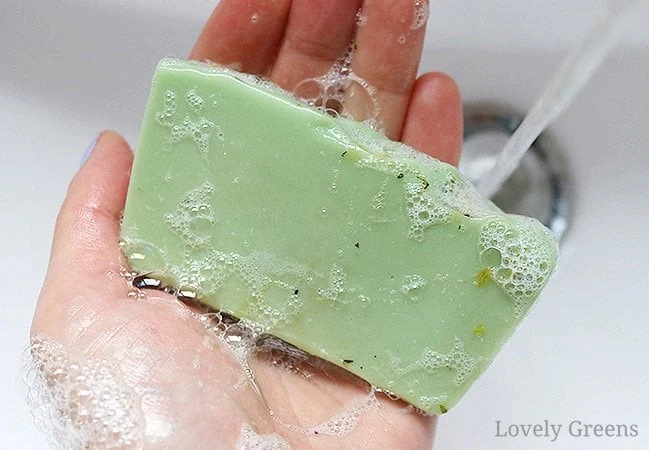
Classic Bells describes cure as more than evaporation and discusses changes in the organization of soap as a reason performance can develop over time. Lovely Greens discusses crystal development but also reports an updated account from Kevin Dunn: much of that development occurs in the first hours and days, with later drying reducing space between crystals rather than necessarily growing new crystals for months. These are attributed explanations, and they do not establish one universal mechanism for every later performance change.
Think of mass as an amount measurement. It does not show how material is arranged within the bar or how that arrangement interacts with water during use. A scale cannot confirm that a particular structural change occurred, however. Seeing a plateau followed by different lather is an observation; attributing that difference to a specific internal mechanism requires additional evidence.
It would also go too far to promise that every formula keeps improving indefinitely. Recipe, storage, fragrance and deterioration all matter. “Older” describes a storage history, rather than guaranteeing a better result on every property.
A Real Example Shows Both the Interest and the Limits
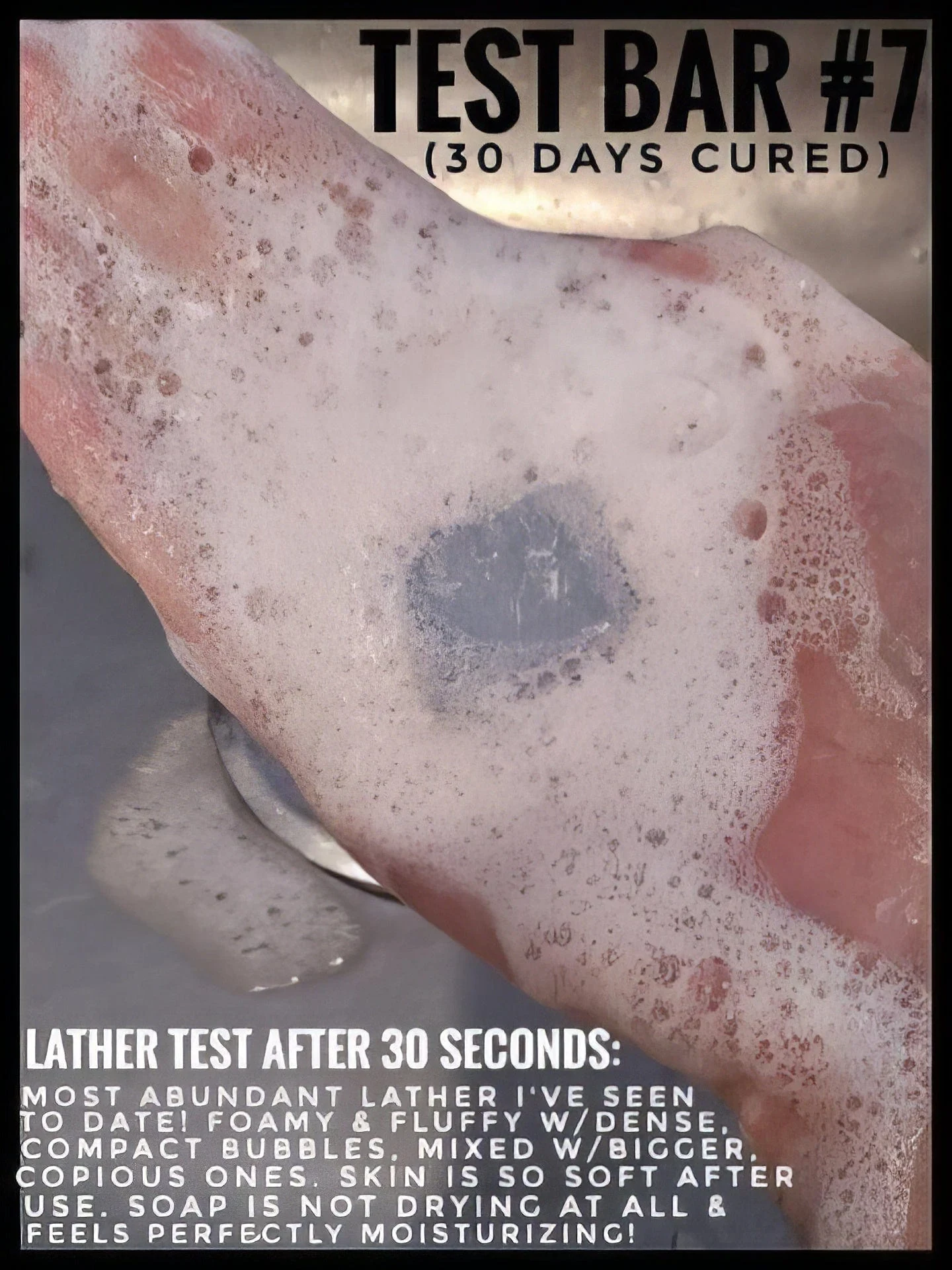
Amber Beltran's Nurture Handmade article follows seven separate pieces from one batch through a 30-day schedule. The pieces were initially trimmed to 12 g and used at their assigned ages. The day-25 and day-30 pieces both weighed 9.9 g before use, while the author described the day-30 lather as more abundant. The photographs below accompany those observations.

That is a concrete example of a maker reporting different lather alongside equal displayed masses. It is not two measurements of the same piece, and it is not a replicated demonstration that all soap improves between those dates. The author assessed lather by hand, described personal skin feel, and reported changing humidity during the project.
Earlier in the same series, the day-10 piece weighed more than the day-5 piece. The author associated that result with humid weather. Because these were separate specimens, sample differences also belong among the limits of interpretation. The honest takeaway is that mass and reported use experience did not follow one simple, steadily improving line in this particular record.
Preserve the Disagreement in the Sources
Humblebee & Me's soap FAQ states that lather and conditioning do not change through aging once saponification is complete. That differs from the later-performance accounts discussed above and from Beltran's personal observations. It should not be silently folded into a claim that all sources agree.
These sources are not interchangeable controlled tests of every recipe. They discuss different evidence and sometimes use different meanings for properties such as conditioning. Personal reports of softer-feeling hands do not establish a measured moisturizing effect, and a photograph of bubbles does not reveal their chemical cause.
For a maker, the practical response is to observe the property that matters under repeatable conditions. You can take a report seriously enough to test a question without treating its explanation or timetable as a universal rule.
Check the Pattern in Your Own Batch
Keep an identified unused bar for weighing and reserve similar, separately labeled pieces for use at later ages. Compare them using the same water source, washing method, observation time and drying arrangement. Record changes in storage conditions. Do not keep washing the mass-monitoring bar and then interpret its loss as evaporation.
Write down what changed: how quickly lather appeared, what the bubbles looked like at the chosen observation, how the surface behaved after drying, or how the bar wore over comparable use. Photographs help when timing, lighting and framing remain consistent. “Better” alone leaves too much room for memory and expectation.
The long-term comparison guide explains how to allocate samples and schedule reviews. Repeat a promising pattern with another independently made batch before using it to set a general policy for the recipe.
Keep Safety Separate from the Plateau
Neither stable weight nor attractive lather establishes that the formulation was correct or that free alkali is acceptably controlled. Waiting longer is not a substitute for resolving a suspected weighing error, separation or unsuitable formulation. Saponification and later curing behavior are different questions, as Dunn's study also emphasizes.
Use the mass record for what it measures, and the use record for what you observed. If later samples perform differently, retain the dates and conditions without claiming that the scale proved the explanation. That gives you a useful basis for deciding how long to hold this particular recipe, while leaving room for results that differ from another maker's experience.