
How to Plan a Long-Term Comparison of Curing Soap
Select an image to view it at full size.
Plan a curing comparison before you use up the batch: reserve identified samples, choose review ages, keep storage and washing conditions consistent, and record mass separately from use performance. A months-long record can show how your particular soap behaves as it ages. Its usefulness depends on whether you can distinguish age from differences in the bars, their surroundings, and their treatment.
The most manageable first project follows one well-recorded batch. Comparing several recipes at several ages is possible, but it needs more specimens and adds more explanations for every difference. Start with a question that your available bars can actually answer.
Define the Question and the Endpoints
For example, ask, “How do lather development and wear differ between this batch at six weeks, three months and six months?” These are illustrative review ages, not an assurance that every batch is suitable for use at six weeks. Establish the batch's suitability separately; do not use a washing comparison to investigate a suspect or improperly calculated soap.
Choose observations that address that question. Lather might mean how easily it starts, the appearance after a fixed washing period, and how it rinses. Wear might mean mass lost over a defined sequence of uses with a consistent drying interval. Record scent and appearance too if those matter to the intended use, but do not turn every possible property into an obligation.
Write the procedure before seeing the first result. That prevents an unexpectedly attractive bar from changing what you call success halfway through the project. Keep the original question visible beside later notes.
Preserve the Batch Identity
Save the recipe version, actual ingredient quantities, oil identities, lye discount, water setting and any additions. Record the making, unmolding and cutting dates; note whether your age labels count from making or cutting. Include meaningful deviations such as an unplanned substitution or a noticeably uneven loaf.
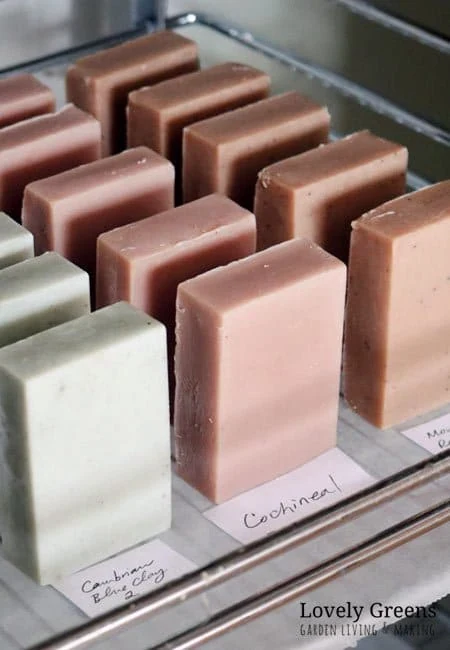
Use a short identifier on the sample map, storage label and every observation. A label such as “B12—six-month use sample” is more useful than “old soap.” Lovely Greens illustrates identified groups on a curing shelf and recommends keeping batch dates with the bars. The organizational detail matters months later when several similar batches occupy the same space.
Photograph the initial layout and bar faces. Retain the originals with their dates. Later photographs should show the same relevant face under similar lighting; changing warm artificial light to daylight can make a color comparison misleading.
Reserve Different Samples for Different Jobs
Keep at least one identified bar unused if you want to follow mass during storage. Washing removes soap, while wetting and drying introduce another water cycle. Once that bar enters ordinary use, its later mass cannot continue the same unused-bar record.
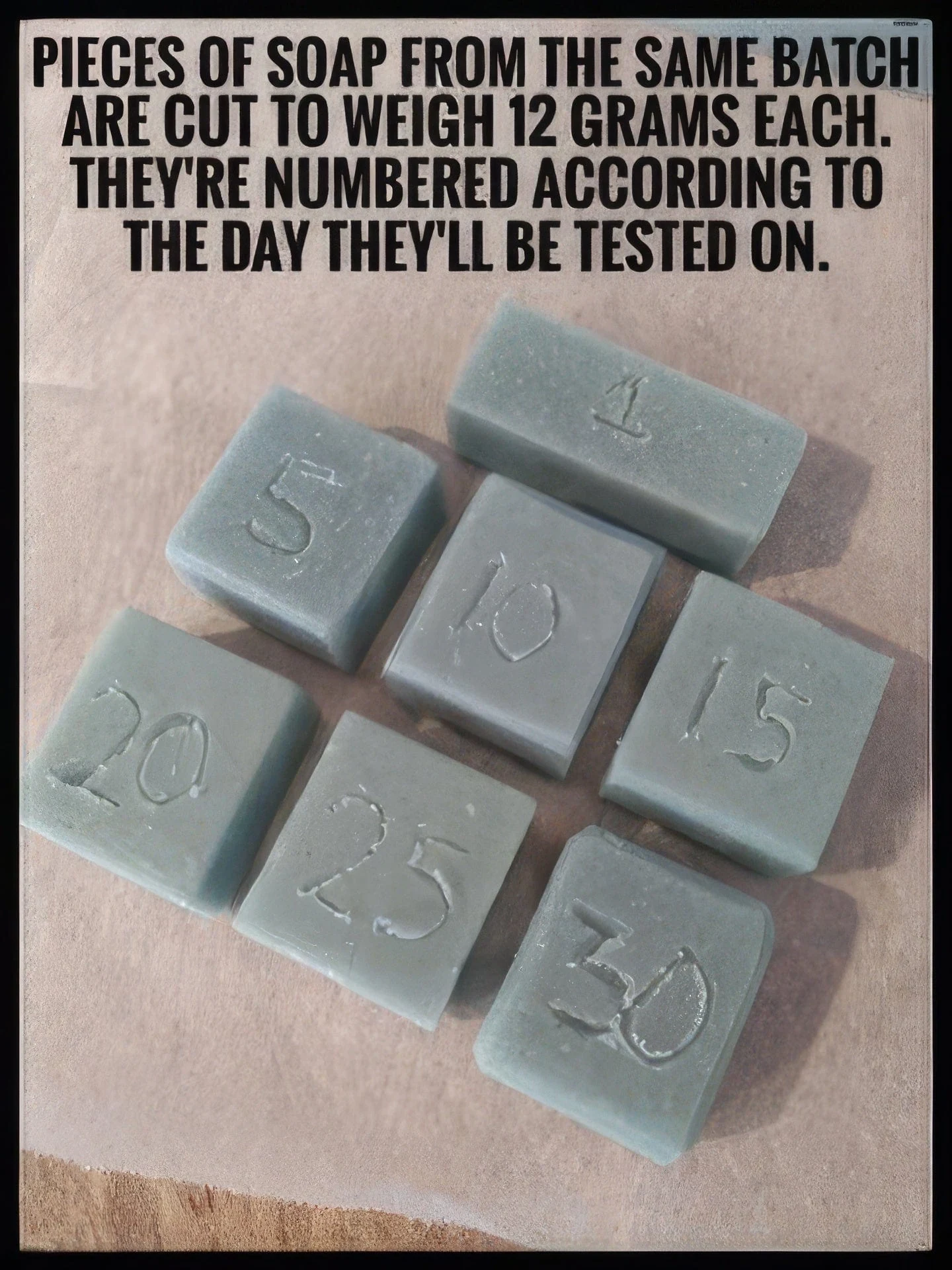
For age-specific washing comparisons, reserve similar pieces for each review age. Assign them before testing rather than selecting the nicest-looking survivor at each date. Bars with similar dimensions and starting masses reduce one source of variation: a thin offcut and a thick center bar do not expose the same surface relative to their size.
An illustrative allocation for three review ages uses two use samples at each age, plus an unused monitoring bar and a spare. Record each sample's own initial mass and dimensions. Two pieces help reveal obvious within-batch variation, but they are still pieces of one batch, not two independently made repetitions. If you have fewer bars, reduce the scope and say what you actually compared.
Nurture Handmade's Amber Beltran used seven separate pieces, initially trimmed to 12 g, and assigned them to observations from day 1 to day 30. Her photographs make the physical sample allocation concrete. That is a useful organizational example, rather than a reason to reproduce the article's early skin-use schedule.
Keep Storage Conditions Comparable
Give the bars airflow, protect them from direct sunlight and record the curing location. Keep sample groups in comparable positions rather than putting one beside a heater and another in a closed box. Use suitable supports that do not introduce staining or other unwanted contact effects. Lovely Greens discusses airflow and humidity as practical curing conditions.
Record room temperature and relative humidity if you have a suitable monitor, or at least note meaningful events such as moving rooms or a prolonged damp spell. Do not invent precise values from a weather app for the room itself. If you rotate shelf positions, use the same planned rotation for all groups and record it.
Seasonal change is especially important over six months. A later sample has experienced a longer storage history and possibly different conditions. Your result describes that history; one comparison cannot isolate age from every change in the environment.
Separate the Mass Record from the Wash Record
Weigh the unused monitoring bar on the same scale, in the same unit, with any tray excluded. Use comparable measurement intervals and retain the actual dates. Inspect unexpected changes for transcription errors, crumbs, contact with moisture or a changed scale setup before inventing a chemical explanation.
Our guide to tracking soap weight loss explains the calculations. Keep the observed mass alongside any percentage. A nearly flat curve means little net mass change at that scale's resolution over that interval; it does not measure the water remaining or certify safety. Classic Bells recommends following an identified bar and discusses longer changes in soap behavior.
For each use sample, record its mass before the planned use sequence. Define the number and approximate duration of washes, the water source and temperature, the washing method, and the drying arrangement. Weigh again only after the same specified drying interval. The difference includes the consequences of that use-and-drying procedure; it is not a pure measurement of dissolved soap unless moisture is separately controlled.
Make the Washing Comparison Repeatable
Use the same person and method where practical. Keep hands versus washcloth, water source, washing duration and drainage consistent. A phone timer can keep the observation period similar. If you photograph lather, use similar framing and take the picture at the same point in the procedure.
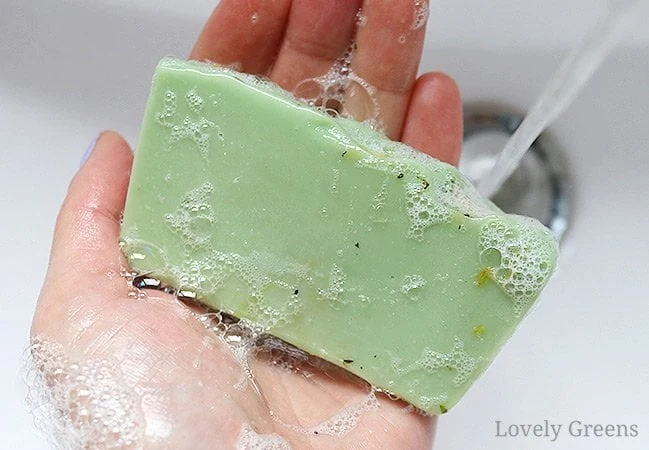
Describe visible observations rather than giving an unexplained score. “Lather starts after several strokes and is mostly small bubbles at the timed observation” lets you interpret the note later. A private rating can help, but define its meaning once and keep that meaning fixed.
Personal skin feel belongs in the record as a personal observation. It is not a clinical measurement of mildness or hydration. Stop using a sample that irritates you. Do not repeatedly expose skin to a troublesome bar simply to complete the calendar.
Compare Results Without Hiding the Exceptions
At each review, use a row for each specimen rather than averaging away a damaged bar without explanation. Keep age, storage events, unused-bar mass, use-sample observations and deviations visible together. Mark a missed date as missed; do not fill it with an assumed intermediate result.
Kevin Dunn's water-discount study measured moisture and hardness separately and found different trajectories among the oils and water levels examined. It also used controlled processing and analytical methods beyond a home observation log. Its useful lesson here is to keep different endpoints distinct, rather than borrowing a universal cure deadline from one graph.
If both three-month pieces seem easier to lather than the six-week pieces, record that pattern with its conditions. If the six-month samples disagree, keep the disagreement. A second independently made batch using the same plan is a stronger follow-up than repeatedly washing the one favorable piece.
Close the Comparison with a Practical Decision
Decide what the record supports for this recipe and storage arrangement: keep the present waiting period, reserve older stock for a particular use, or repeat the comparison because the difference was unclear. Retain the baseline recipe and sample map with the notes.
When the next question concerns formulation rather than age, use the cured-batch notes guide to choose a controlled change. Keep that as a new comparison. Altering the oils halfway through an aging record would replace a clear question with several competing ones.