
Why Handmade Bar Soap Needs Weeks to Cure
Select an image to view it at full size.
A solid loaf can be ready to cut long before it has reached the condition you want for washing. Fresh handmade soap still contains water, and drying changes its firmness and how readily it wears away during use. Makers also report changes in lather and other properties as bars age. Curing gives those changes time to develop; it is not simply a long wait for a loaf to stop looking like batter.
Keep three questions separate: was the formula made correctly, has saponification completed, and how does the bar perform after storage? A firm surface, an old date or a nearly unchanged weight cannot answer all three. Waiting is not a correction for a missing ingredient, a mistaken alkali quantity or serious separation.
Solid Enough to Cut Is Only an Early Milestone
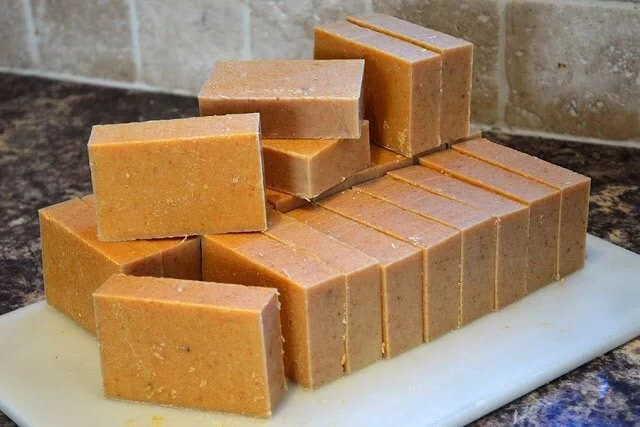
The opening photograph shows freshly cut bars from Lovely Greens' curing guide. Cutting creates individual pieces with exposed faces, but it does not remove the water inside them. A dry-looking outside can therefore be misleading when you are deciding whether a batch has had enough time to develop its intended use properties.
The relevant milestones answer different practical questions. Unmolding asks whether the loaf can be removed without excessive damage. Cutting asks whether it can be sliced cleanly. A curing assessment asks how the resulting bars change during storage and how they behave under the intended washing conditions.
Do not use a clean cut as a chemical test. Conversely, a bar that is softer than expected does not have one automatic explanation. Recipe, water amount, processing, storage and weighing errors can all matter. Keep the original calculation and actual batch record available so a genuine formulation problem is not mistaken for a need for another few days on the rack.
Water Has to Leave the Bar
Water is used to dissolve the sodium hydroxide before it is combined with the fats. The fact that those materials have formed a solid bar does not mean that all of the added water has disappeared. During cure, water can evaporate from the exposed surfaces, with the surroundings affecting how quickly that happens.
Classic Bells describes weight loss, some shrinkage, increasing hardness and changes in solubility as soap dries. Lovely Greens likewise emphasizes that insufficiently dried bars can wear away quickly when wet. These are useful reasons to allow time between making and ordinary use; they do not supply one final weight that every recipe should reach.
An unused monitoring bar can make the drying process visible. Weigh the same identified piece at comparable intervals, on the same scale and in the same unit, while recording its location and any changes in conditions. Keep washing-test pieces separate. Otherwise, soap removed during washing becomes mixed into what looks like storage weight loss.
A slowing loss tells you that little net mass change was measured over that interval under those conditions. It does not tell you that no water remains or that all later properties have stopped changing. The detailed weight-loss guide explains a baseline calculation and how to keep the record interpretable.
Hot Process Speeds the Reaction, Not Every Part of Cure
Hot-process cooking is often the reason somebody expects to skip the wait. Classic Bells distinguishes the faster saponification associated with cooking from the subsequent loss of water and development of the bar's use properties. Elly's Everyday makes a similar practical point: its author still cures hot-process bars for weeks because water used to keep the cooked batter workable remains in the bars.
| Question | Cold-process bar | Hot-process bar |
|---|---|---|
| What happens during making? | The mixed oils and alkali saponify as the fresh batch develops. | Added heat is used to advance saponification during cooking. |
| Does forming soap remove all water? | No. Water remains when the loaf is unmolded and cut. | No. Cooking may evaporate some water, but a workable cooked mixture can still contain substantial water. |
| Does the method alone establish readiness for ordinary use? | No. Correct formulation, reaction completion and subsequent condition remain separate questions. | No. A completed cook is not a certificate that drying and the desired use performance are complete. |
Do not turn that comparison into a fixed rule that hot-process soap always needs a shorter—or longer—calendar cure. The water used, amount lost during processing, bar dimensions and storage arrangement vary. The important result is that cooking does not automatically remove the reasons for curing a solid bar.
Aging Is More Than One Number on a Scale
Classic Bells also discusses the internal organization of soap as part of its explanation of cure. Lovely Greens reports a newer account attributed to Kevin Dunn, in which much crystal development happens in the early hours and days, with later drying reducing space between crystals. These explanations should not be collapsed into a universal claim that new crystals must keep growing for months.
For a maker, the immediate lesson is simpler: mass, dry firmness, lather and resistance to wearing away are different things to observe. A scale does not reveal the bar's internal arrangement. An improvement in lather alongside nearly stable mass can be worth recording without claiming that the scale has proved a particular chemical mechanism.
Not every published author agrees about later changes in lather, and “better” depends on which property is being discussed. Humblebee & Me's aging FAQ explicitly disputes later lather changes once saponification is complete. Our guide to changes after weight loss slows examines those differences and the limits of individual maker observations. Cure should not become a promise that every soap improves indefinitely simply by getting older.
Give the Bars an Appropriate Place to Dry
Once the soap can be handled and cut appropriately for its recipe, place the bars in an airy location out of direct sunlight. Space them so the exposed faces are not all pressed together. Lovely Greens' rack photograph shows the physical arrangement: separate bars with gaps around them rather than a tightly packed block.
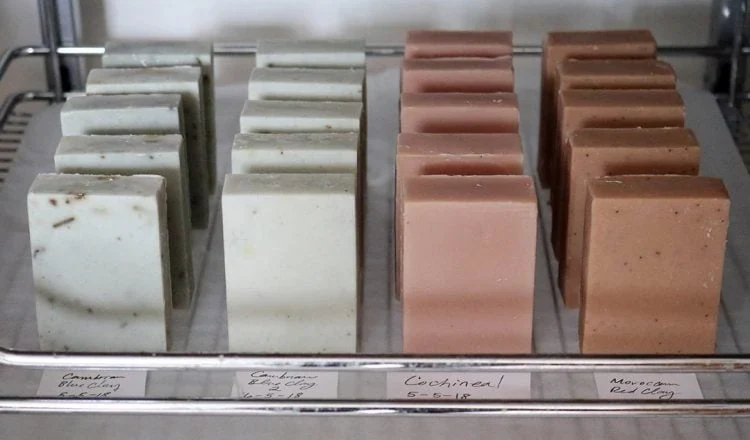
Use a suitable support that does not stain or react with the soap. The material underneath the bars matters as well as the space above them. In its guide, Lovely Greens lines curing surfaces with baking or greaseproof paper and keeps batch labels with the soap. A support should also remain stable when bars are moved for weighing or inspection.
Stack and Label Without Blocking Airflow
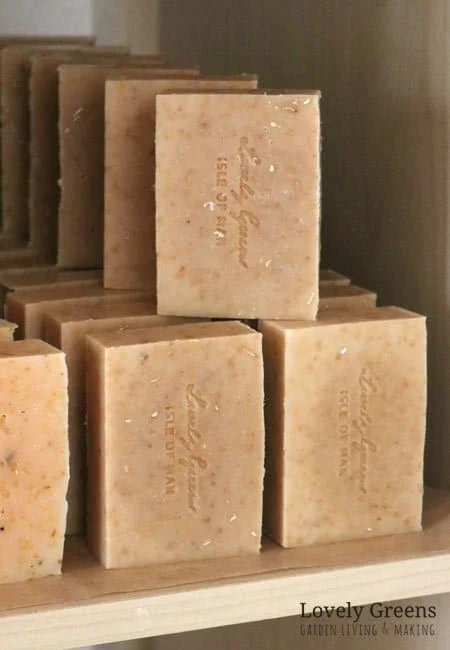
Stacking is possible when the arrangement still allows circulation; piling bars tightly together defeats the reason for separating them. The source's stacked example illustrates spaces between the pieces. It is a particular arrangement, not a measurement of how much faster stacked soap will cure.
Keep the batch name or identifier and dates nearby. Be clear whether an age in your notes is counted from making, cutting or placement on the curing shelf. Moving a bar to another room does not reset its physical history, but the move should be recorded because conditions have changed.
Use a Starting Schedule, Then Learn the Recipe
Published makers often suggest several weeks for ordinary bar-soap recipes. Elly's general guidance uses four to six weeks, while Classic Bells discusses four to eight weeks and longer development for some formulas. These are useful planning ranges rather than interchangeable safety deadlines or proof that every formula has the same optimum.
Oil blend, starting water, dimensions and the drying environment all affect the result. A thin offcut in a dry airy room is not a fair match for a thick bar stored in a damp enclosed space. Keep those differences in the record before attributing a different result solely to age.
If the question is performance at different ages, reserve comparable pieces from a properly made, suitable batch and evaluate them consistently. Record what changes instead of writing only “good” or “fully cured.” The long-term comparison guide explains how to keep unused weighing bars separate from age-specific washing samples.
Finally, avoid shortcuts that replace observation with a single reassuring sign. A hard outside is not an assay of the formula; a weight plateau is not the absence of water; a completed hot-process cook is not the end of drying. The weeks of cure are useful because the bar's condition takes time to develop, and a clear batch record helps you decide what that time actually accomplished.