
How to Compare an Oil Substitution Before Recalculating a Recipe
Select an image to view it at full size.
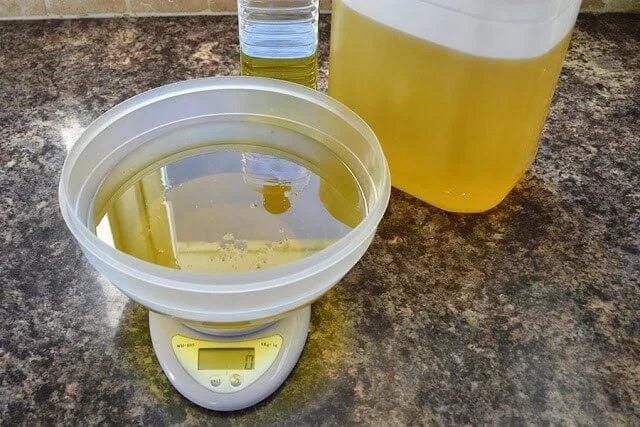
An oil substitution has two separate jobs: change the formulation in a way that fits your purpose, and recalculate the alkali for the new ingredients. Getting the second job right does not guarantee that the new bar will behave like the original. Compare the exact material and its role, then review the complete changed recipe.
A useful first comparison keeps the oil total and other intended settings fixed. That makes the proposed replacement visible. Replacing one oil, increasing the batch size, changing the water setting and adding a fragrance at the same time leaves several possible explanations for any later difference.
Identify What You Actually Have
Read the ingredient’s full name, supplier product description and relevant grade information. “Coconut,” “palm” and “sunflower” are not sufficiently specific descriptions of every material sold under those family names.
Soap Draftbook distinguishes ordinary sunflower oil from high-oleic sunflower oil. Its reference notes also distinguish ordinary palm mesocarp oil from palm kernel oil and fractions; coconut entries do not automatically cover fractionated products; and the shea reference describes whole butter rather than separated olein, stearin or an unspecified blend.
This is more than a spelling problem. The high-oleic sunflower specification documented by the site calls for at least 75% oleic acid in its fatty-acid composition, whereas an ordinary sunflower entry represents a different grade. Selecting the ordinary name because it is the first search result hides the very difference you need to assess.
Keep the product label or supplier specification beside the recipe. Check the botanical or material identity, refinement or fractionation where relevant, whether the product is a blend, and the meaning of any SAP figure. A marketing phrase such as “light,” “natural” or “premium” does not supply those missing details.
Compare the Role Rather Than Just the Physical State
Amanda Aaron’s substitution guide distinguishes broad groups of liquid oils, butters and lauric-rich oils, while pointing out that their contributions are not identical. It also treats castor and olive as exceptions to a simple like-for-like rule. Use those groups as a starting question, not a promise of equivalence.
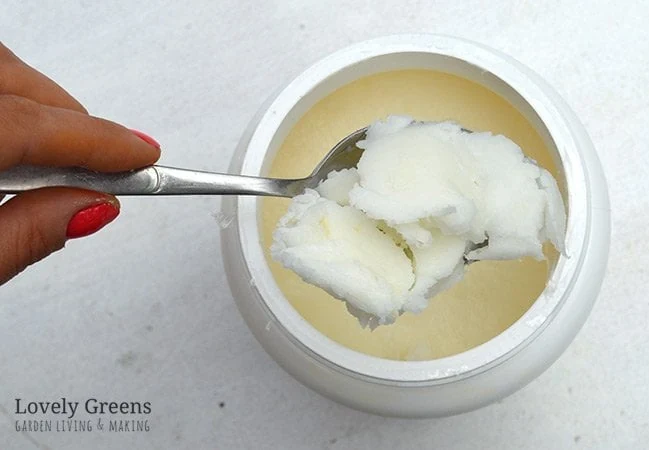
For example, coconut oil’s role in many bar-soap blends is different from olive oil’s. Castor’s ricinoleic-rich composition is another distinct contribution; choosing another liquid oil does not reproduce it merely because both pour from a bottle. Solid shea and cocoa butters also have different compositions and reference alkali requirements.
Physical appearance helps you handle a material but cannot establish its full fatty-acid profile. A solid oil may melt in a warm room; two clear liquids can contain very different proportions of fatty acids. Use the identity and supplier data, rather than color or whether an oil looks thick, to choose the calculator entry.
| Question | Useful evidence | What it does not establish alone |
|---|---|---|
| Is it the intended oil or fraction? | Exact product identity and specification | Suitability for every soap formula |
| What role might change? | Fatty-acid information and relevant formulation observations | Identical cured-bar performance |
| How does the alkali calculation change? | Matching SAP reference and complete oil weights | Finished soap safety or quality |
| Did the change meet the goal? | A controlled, dated comparison of appropriate batches | A conclusion from one visual impression |
A sensible comparison is therefore “what does this ingredient contribute, and what am I prepared to change?” It is not just “which other oil is available at the same price?”
Define a Limited Replacement on Paper
Begin with the complete original oil list. Express the proposed replacement as a clear mass or oil-percentage change, keeping the total explicit. If you replace 50 g in a 500 g blend, that is a 10-percentage-point part of the oil formula, regardless of the water and lye later added.
For a worked accounting example, start with 300 g olive, 150 g coconut and 50 g shea. Replacing the shea portion with 50 g cocoa butter keeps the oil total at 500 g and the proportions at 60%, 30% and 10%, but changes the identity of the final 10%. This example demonstrates calculation steps; it does not establish cocoa as an equivalent sensory replacement for shea.
If you replace only 20 g of that shea, the new list is 300 g olive, 150 g coconut, 30 g shea and 20 g cocoa: 60%, 30%, 6% and 4%. Preserve both butter rows rather than renaming the whole 50 g portion as cocoa. The specific change should remain understandable when you reopen the recipe later.
For a replacement that adds a new oil instead of removing an equal amount, the total changes too. Add all the new masses and recalculate the shares. Do not keep an old 100% table beside a new list of weights that represents a larger formula.
Recalculate the Changed Blend from Its Identities
Soap Draftbook’s documented current KOH reference values are 190 mg/g for olive, 256.5 for coconut, 183 for shea and 196 for cocoa. Its calculation converts each to NaOH demand and sums the contributions before discount and purity adjustments.
At a 5% lye discount and a nominal 100% NaOH purity assumption, the original 300/150/50 g olive/coconut/shea example calculates to about 70.86 g NaOH product. Replacing the 50 g shea with 50 g cocoa changes the result to about 71.30 g. The difference follows from the different reference coefficients, even though the total oil weight stayed at 500 g.
Do not treat 0.44 g as a universal correction for substituting those butters. It belongs to this particular weight, reference set, discount and purity assumption. If the amount, grade or other settings differ, calculate again.
In the calculator, save the original recipe, change the relevant oil identity and amount, and review all oil rows. Check total oils, NaOH product and added water together. At constant concentration, changing the calculated lye changes water too; at water as a percentage of oils, the same oil total holds that water amount fixed.
If the exact material is unsupported, do not choose a nearby entry just to complete the form. The present workspace supports twelve stated oils and variants. A generally plausible substitution involving an unsupported material still needs a suitable calculation method and matching data.
Use Indicators Without Declaring a Winner
Fatty-acid profiles and calculator quality numbers can flag the direction of a change, but they do not cover every influence on a finished bar. Classic Bells notes that common quality-number sums omit the effects of superfat, additives, process and cure. Different oils and production conditions may also change the handling of the batter.
Do not raise or lower an ingredient solely until every score turns into a suggested color range. Instead, retain the actual goal: for example, comparing the effect of a particular butter replacement while leaving the rest of the formula fixed. A score change can help describe the proposal without settling whether the outcome suits your use.
Also keep ingredient sensitivities and suitability separate from arithmetic. A successful lye recalculation does not establish that a substitute is suitable for a particular person, nor that two products with related names have the same allergen or processing history. Obtain the relevant product information rather than inferring it from a recipe category.
Record a Comparison You Can Interpret Later
Give the revised version a name and a note that identifies the exact replacement, amount, reference set and unchanged settings. Keep the source recipe available instead of overwriting it with an unexplained alternative. Record actual weighed quantities and deviations separately from the planned calculation.
When an appropriate batch is made, compare like with like: bar age, storage, water conditions and observation method all matter. Record handling observations such as thickening or unmolding alongside later lather and wear observations, rather than treating a fresh appearance as a cured result. Changing fewer variables makes those notes easier to interpret.
The outcome may be an acceptable alternative rather than a duplicate of the original. That is a useful result when it matches your stated purpose. The essential sequence remains identify the material, assess its role, define the replacement, recalculate the complete formula, then judge the actual comparison under recorded conditions.