
Why Your Soap Batter Will Not Reach Trace
Select an image to view it at full size.
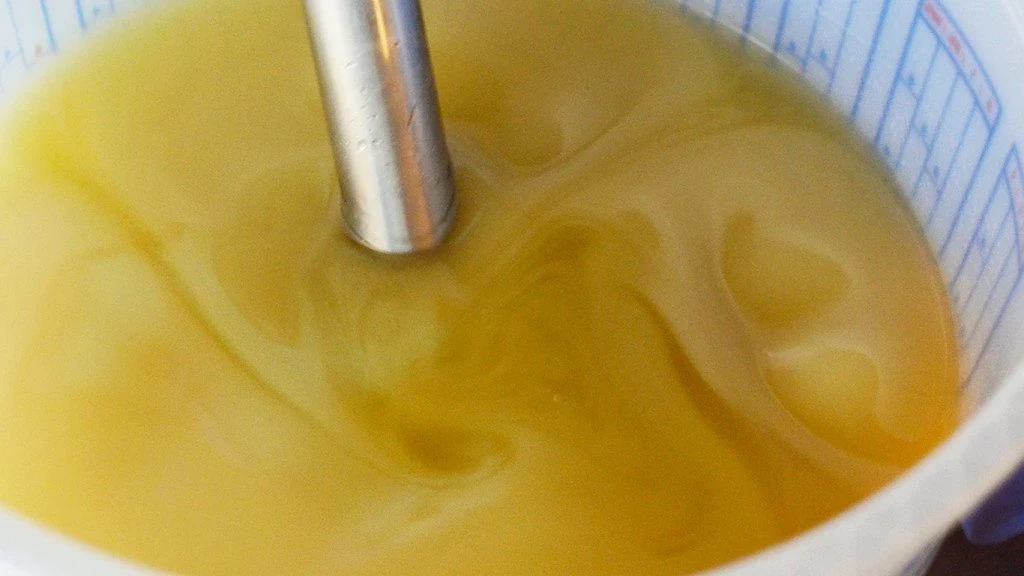
Soap batter that stays thin is not always failing. A high-olive-oil formula, a larger water amount or hand stirring can take longer to show visible trace. But a missing or mistaken lye addition, inaccurate records or weakened sodium hydroxide can also be involved. The useful first step is to check the actual mixture and batch record, rather than adding more alkali because a timer has run out.
Keep the fresh mixture in a protected work area and retain suitable gloves and eye protection. Treat both the mixture and any remaining lye solution as hazardous while you investigate. Do not taste it, touch it with bare fingers or infer its composition from a photograph.
Is It Thin Emulsion or Still Separate Phases?
Modern Soapmaking distinguishes emulsification from visible trace. The phases can be evenly incorporated while the mixture is still thin; later, a trail of batter briefly remains on the surface as thickening develops. A pudding-like appearance is not the only useful mixing state.
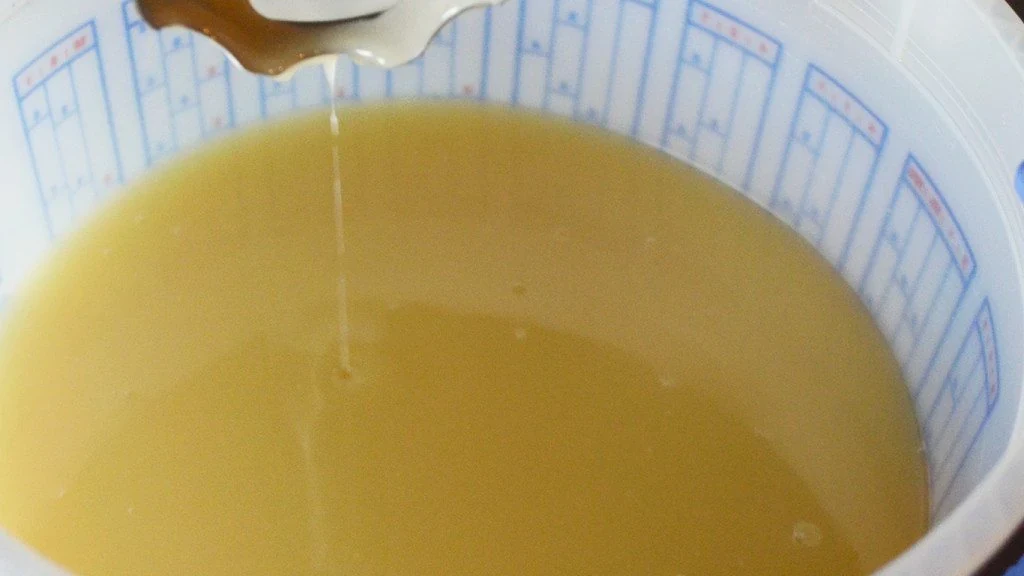
Compare the source's two actual photographs. The opening photograph shows visible oil ribbons before emulsification. This section's photograph shows a thin mixture the source identifies as emulsified. They illustrate the distinction you need to observe, rather than proving that your own pot has the correct ingredients.
If you still see oil streaks or a layer forming when you pause, do not pour simply because you have stirred for the expected number of minutes. If it appears uniform but thin, first ask whether you are waiting for a heavy trail that the intended design does not require. Continue the particular recipe's method while checking the record; do not replace observation with either automatic pouring or endless powered mixing.
Confirm Which Container Went Into the Oils
Jan Berry describes once mistaking a container of plain rinse water for the cooled lye solution. The batch would not trace as expected because the intended alkali solution had not actually been added. This is an attributed maker experience, not a conclusion that every slow batch lacks lye.
Check the labeled containers and written sequence without handling unknown liquid casually. Was the weighed sodium hydroxide actually dissolved in the intended water? Was that solution the one combined with the oils? Is another labeled container still sitting nearby? Record what you can establish, including anything you cannot reconstruct.
Then compare the actual recorded weights with the intended formula. Check units, scale use and any ingredient substitution. A recipe recalculation shows what the intended combination requires; it does not reveal the amount that actually entered an unrecorded pot. Do not assume the difference can be fixed with a guessed extra spoonful of alkali.
If the amounts or container identities remain unknown, keep the batch identified and separated from completed soap. A sudden change in consistency after an improvised addition would not establish that the proportions are now correct.
Consider the Oil Blend and Water Amount
Berry identifies a high-olive-oil formula and a larger water amount as reasons a batch may be slow to thicken. Modern Soapmaking likewise describes oil composition and water amount as contributors to trace behavior. These factors are especially relevant when the mixture appears uniform and the actual ingredient record is intact.
Review the formula you used, rather than comparing it with an unrelated quick-tracing demonstration. Did you replace a substantial amount of a hard fat with a liquid oil? Did you use the calculator's default water setting without noting its basis? Did extra liquid enter with an additive?
For a later recipe adjustment, distinguish water as a percentage of oil weight from lye concentration. The first compares water with oils; the second describes alkali as a proportion of alkali plus water. A number copied from one setting into the other can create an unintended change. Recalculate a deliberate modification before the next batch rather than trying to remove water from the current mixture by guesswork.
These are planning variables, not a reason to declare an unexplained batch normal. A known slow-moving formula and a missing alkali addition can both leave you looking at a thin pot. The record and observed mixing state are what distinguish those possibilities.
Check Sodium Hydroxide Storage and Identity
Read the original chemical label. A solid-bar recipe calculated for sodium hydroxide should not silently become a potassium-hydroxide recipe because a different product was nearby. Also check any stated purity and the condition and storage history of the container.
Berry describes hard clumps as a warning that lye may have absorbed moisture during storage, so the weighed material no longer represents the intended quantity of dry sodium hydroxide. The official safety card also identifies sodium hydroxide's interaction with moisture. This makes poor storage a real issue to investigate, but it does not provide a way to measure current purity by looking at the lumps.
Do not crush suspect material and decide it is equivalent to fresh product, or increase the next amount by an invented percentage. Use appropriately identified material with suitable supplier information, keep it tightly closed as directed, and avoid unnecessary exposure while inspecting the container. A known storage problem supports changing the material for a future correctly calculated batch; it does not tell you how much corrective alkali an existing pot needs.
Match Mixing Expectations to the Method
Hand stirring can be much slower than an immersion blender. Berry notes that it can take a very long time, even hours in some cases. That observation explains why a short video using powered blending is a poor timing reference for a hand-stirred formula. It is not an instruction to keep stirring every unexplained batch indefinitely.
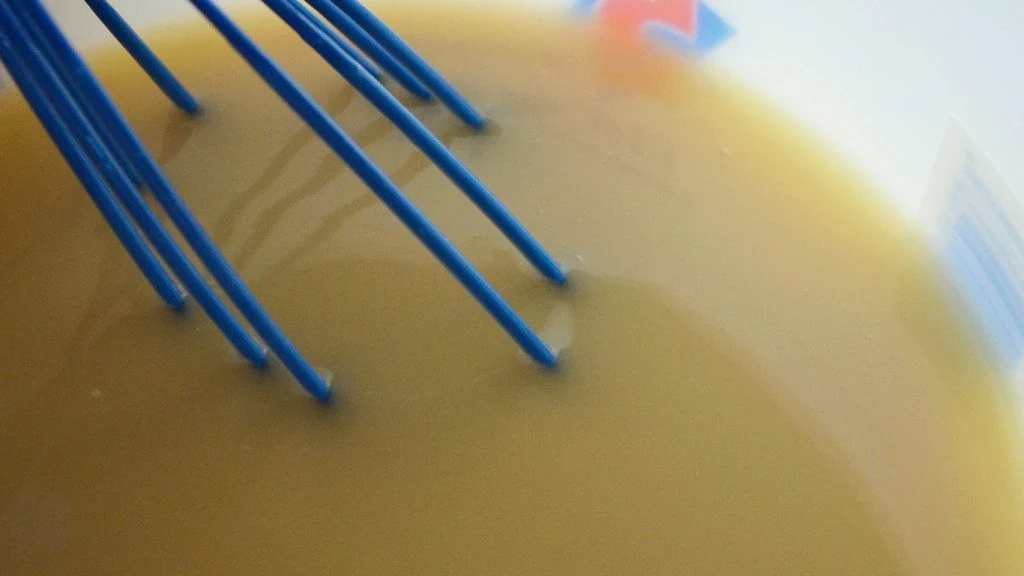
When the recipe calls for an immersion blender, use suitable equipment and short bursts with hand stirring between them, maintaining control and limiting splashes. Berry specifically distinguishes this tool from a cake-style hand mixer. More vigorous aeration is not a substitute for the appropriate mixing method.
The photograph in this section shows the source's light trace: a small trail has appeared, while the batter remains relatively fluid. It gives a visual reference for a modest endpoint. You do not need to keep powering toward a stiff mass simply because the first visible trace seemed too subtle.
Decide What the Evidence Actually Supports
If the actual quantities and solution identity are established, the mixture is becoming uniform and the known formula is slow-moving, continue observing according to that method rather than treating a few extra minutes as a failure. Record what changed and when visible trace developed.
If you have confirmed a missing ingredient, wrong container, suspect chemical or unrecorded quantity, stop calling it merely “slow trace.” Keep the batch isolated while the exact discrepancy is assessed. Neither waiting longer nor achieving a thicker appearance resolves an unknown formulation.
For the next batch, label every solution, separate rinse water from ingredient containers, record weights as they are added, and note mixing equipment and water basis. Those details make a repeat slow batch easier to diagnose and reduce the temptation to correct a visual symptom with an unmeasured chemical addition.