
How Should Soap Age and Softness Change Rebatching Liquid?
Select an image to view it at full size.
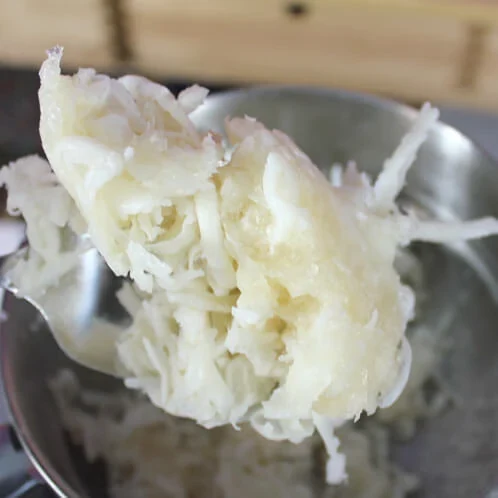
Use the soap's actual condition, not its age alone, when deciding how much liquid to add for rebatching. Fresher, softer soap often needs less additional liquid than older, drier soap. Start from a known, suitable base and the method you have chosen; aim to wet the prepared pieces enough to soften, rather than make the mixture behave like a freely pouring melt-and-pour base.
Record every addition. More liquid may help a dry base soften, but it also changes what must happen after molding. It can leave the reworked soap softer and extend the time before it is firm enough to release and handle. A fixed amount copied from a different base is not a reliable substitute for that judgment.
Establish That the Base Is Suitable to Rework
This liquid decision assumes you know what soap you are starting with. A documented base being recolored or remolded is different from an unidentified batch that happens to feel soft. If there may have been a weighing error, separation or missing ingredient, investigate that problem first. Liquid cannot supply a missing alkali calculation or make an unknown mixture balanced.
David Fisher's rebatching guide explicitly limits repair to mistakes that are understood. Do not take “softer soap needs less water” to mean that any unusually soft batch is ready to grate, heat and use. The condition may be relevant to how the material handles, but it does not establish its suitability.
Keep the base recipe or supplier identity, original making date and any earlier additions with the record. If a known correction involves adding a solution, its water also belongs in the liquid accounting; it must not disappear merely because it was introduced for another purpose. Fisher notes this distinction in his discussion of understood corrections.
Describe the Condition Before Choosing an Amount
Note whether the soap can be grated, breaks into dry pieces, feels pliable or is too soft to grate cleanly. Fisher distinguishes small chunks for very fresh soft soap from grated pieces once the soap can be handled that way. Preparing small, reasonably consistent pieces helps the reworking process; a large intact block is a different starting geometry.
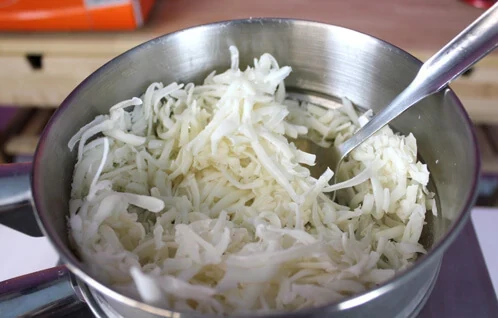
The source photograph of grated soap in a pan shows that prepared form. It is not a picture of a particular cure age, and it should not be used to assign an age or moisture content by appearance alone. A bar's recipe and storage history also matter when you compare it with another base.
Write down the base mass and its condition. “Six weeks old, firm enough to grate, stored on an open rack” is a more useful starting record than simply “old soap.” Do not assume two six-week bars from different formulas need the same liquid addition, or that a hard surface proves a particular amount of moisture remains inside.
Wet the Pieces Without Chasing a Thin Pour
Fisher describes using enough liquid to wet the grated soap, while emphasizing that the amount varies with its age and softness. His example quantities belong to that discussion of a particular starting condition. They are not a universal ratio that every fresh or fully cured base must receive.
Use the selected method's appropriate starting guidance and measure what you actually add. Give the material the opportunity to soften under that method's controlled conditions before deciding that every visible piece means it needs more liquid. The spoon photograph shows a thick softened mass with remaining shreds; rebatch texture is not the same thing as a clear, thin melt.
If a small additional amount is needed, record it and reassess the actual mixture rather than pouring an unmeasured splash. The aim is a workable softened base that can be incorporated and molded by the chosen method. A smooth, flowing consistency may be an unrealistic target for ordinary rebatched soap.
Avoid changing several factors at once while trying to judge the liquid. Adding more liquid, changing the heating arrangement and introducing a different base all make it harder to understand which change affected the result. For a cosmetic trial in a suitable base, keep those choices traceable so that a later batch can be compared meaningfully.
Choose Water or Another Liquid Deliberately
Plain water is an option in Fisher's guide. He also describes personally preferring milk in some rebatches because he finds it helps achieve a smoother consistency. That is an attributed observation, rather than proof that all kinds of milk work equally in every base or that a particular amount produces a guaranteed result.
Changing the liquid introduces another formulation choice. Record its identity and quantity instead of treating “liquid” as though every option were identical. A familiar milk, tea or other household ingredient should not be added merely because the soap is difficult to soften.
Appearance goals can also change the choice. Jan Berry identifies heat darkening as a drawback when discussing the reworking of an existing milk soap. If a pale result is important, include that possibility in the decision rather than assuming a second process will leave the color unchanged.
Start with a comprehensible method and base rather than combining several separate tutorials' liquid choices, starting amounts and heating instructions into a new recipe. The quantity that worked for one commercial rebatch base or one maker's week-old bars does not automatically transfer to your material.
Account for Liquid After Molding
Both Fisher and Soap Queen describe the tradeoff between added liquid, softer reworked soap and further drying. The original bar's time on the rack does not remove the effects of liquid you introduce during the second process. Allow the remolded soap's actual condition to determine when it can be released and handled without damage.
If an established rebatch is much wetter than intended, first check the record: base mass, total liquid introduced and whether a separate solution supplied additional water. Do not assume that any soft mixture is only a water problem, especially if the underlying formulation is uncertain.
An unusually wet result is not a reason to improvise uncontrolled heating or add dry alkali to absorb or “balance” the liquid. Revisit the actual method and known composition. More time for the established rebatch to dry may be part of the answer, but firmness alone is not proof that a suspect formula has become appropriate to use.
Keep a Reusable Record of the Result
Record the initial base mass and condition, prepared piece size, liquid identity, initial addition, later additions and the chosen processing method. After molding, note release and handling observations at recorded ages. Keep the reworked version linked to its original base.
For the next comparable cosmetic batch, those observations can inform a more suitable starting point. Retain the fact that the first base was newer, older, softer or stored differently. The useful rule is not a fixed spoonful count for each week of age: it is that the amount already present in the soap and the workable texture you actually need should guide a measured, recorded addition.