
Pure or Diluted Essential Oils for Cold-Process Soap?
Select an image to view it at full size.
When a checked soap formula specifies an essential oil, use the documented ingredient form that the formula expects. An undiluted essential oil and a roll-on diluted in a carrier oil do not supply the same amount of aromatic material per gram. The carrier also becomes an additional part of the oil mixture unless it has already been accounted for. Do not substitute the two by matching the bottle size or the weight named in the recipe.
“Pure” and “natural” are not complete soapmaking instructions. Identify the exact material, its full ingredients, any dilution and its suitability for the intended cold-process use before deciding an amount. A product sold for direct topical use answers a different application question from a soapmaking ingredient.
Read the Ingredients, Not Just the Scent Name
A label saying “lavender” may describe undiluted lavender essential oil, an essential-oil blend or a ready-to-use product containing a carrier. Those identities matter even when the bottles smell similar. Record the supplier, exact product name and the full ingredient list alongside the checked recipe.
Elly's Everyday specifically recommends pure essential oils for the recipes discussed in its FAQ, explaining that a diluted product supplies less fragrance and introduces carrier oil that changes the intended base formulation. The practical point is to keep the actual ingredients consistent with the formula, rather than treating any scented oil as equivalent.
Look for a stated botanical identity where relevant, plus any carrier or other ingredients. For a diluted product, obtain the dilution and its basis. “Ten percent” without saying how it is expressed is not enough information to perform a reliable by-mass conversion. If those details are unavailable, choose an appropriately documented ingredient instead of estimating from how strong it smells.
Compare Two Actual Product Identities
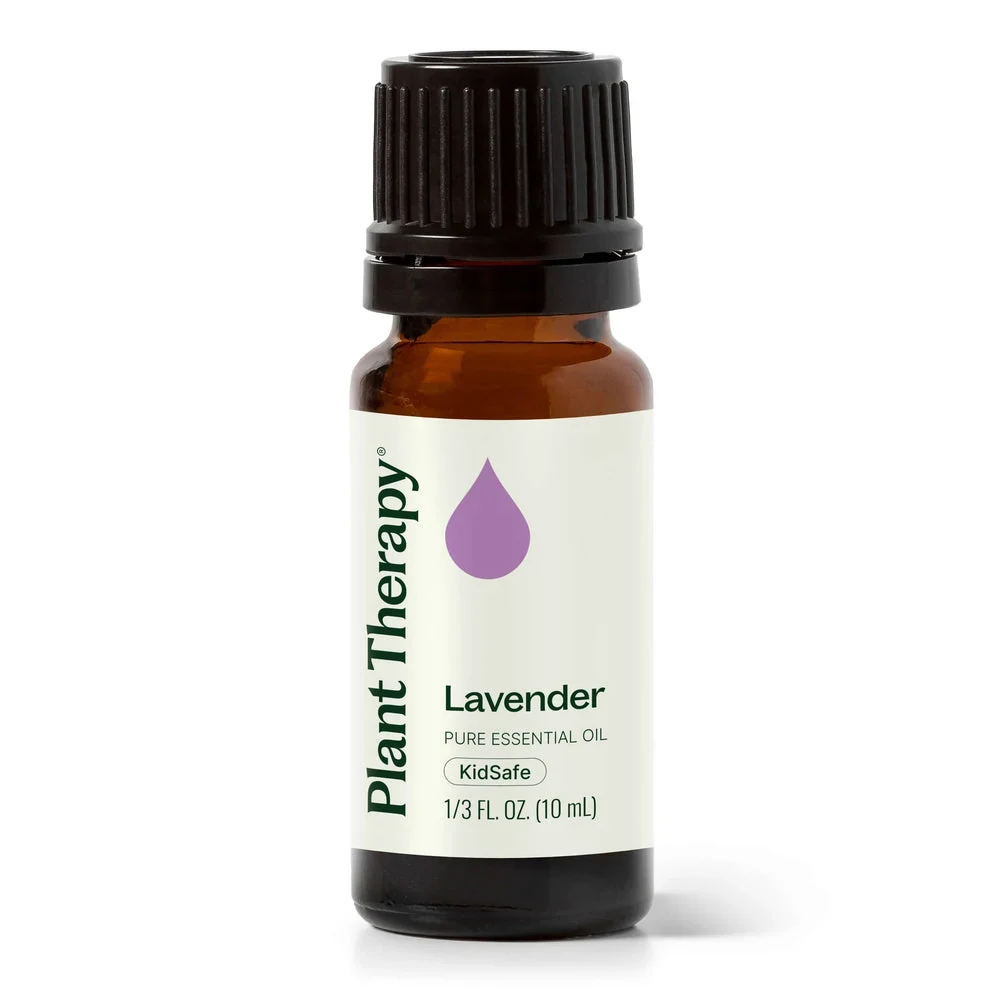
Plant Therapy's current Lavender Essential Oil page lists Lavandula angustifolia oil alone in its full ingredient list. The bottle shown at the beginning is that product. Its separate Lavender Essential Oil Pre-Diluted Roll-On lists caprylic/capric triglyceride—identified as fractionated coconut oil—alongside lavender oil. The roll-on is therefore a different formulation, even though both names contain lavender essential oil.
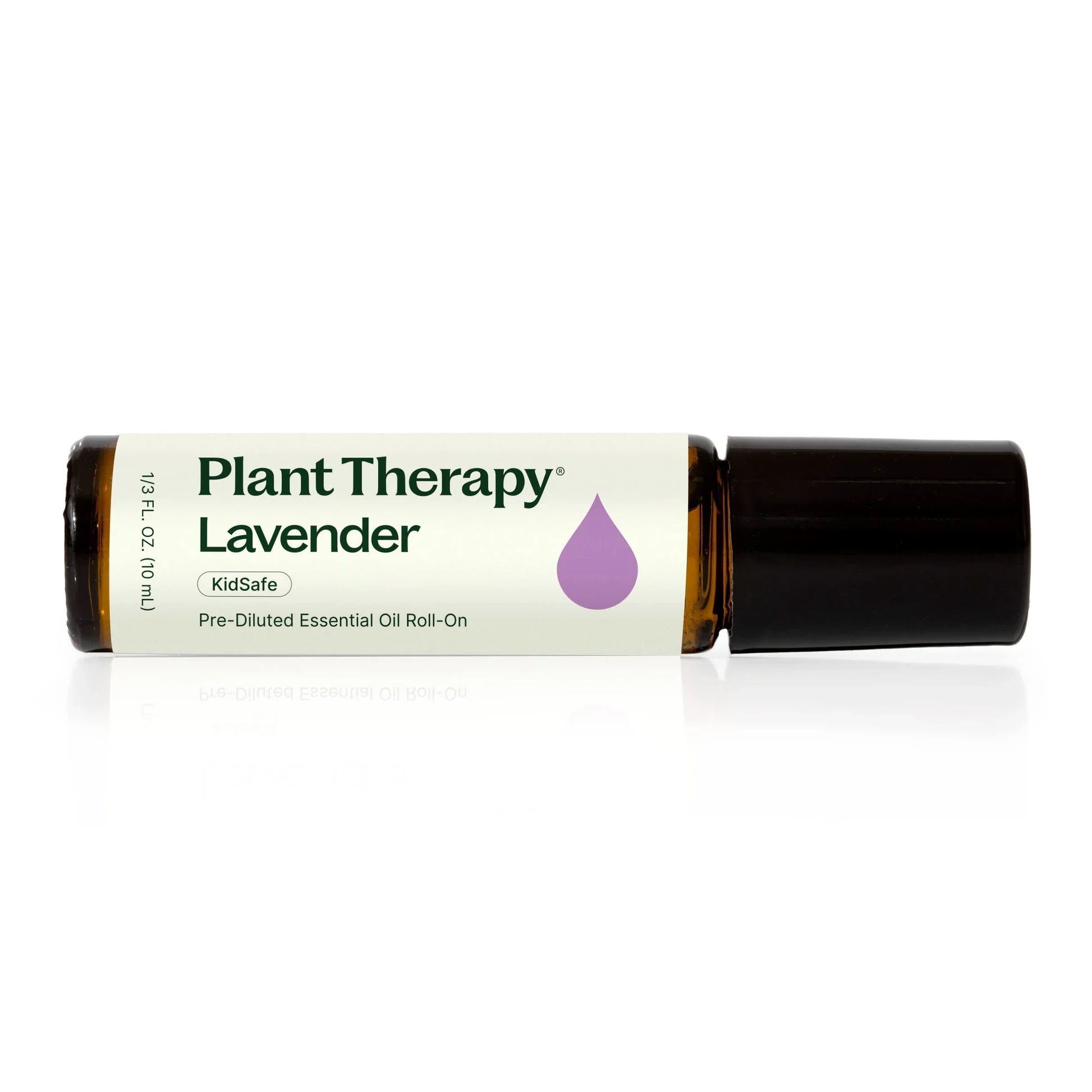
The roll-on page describes predilution to 10%, but the adopted page does not state the percentage basis. Do not silently interpret that statement as a verified mass fraction for a soap calculation. It is enough here to establish that a carrier-containing version exists; a real formulation decision needs the applicable details confirmed.
These are identity examples, not a recommendation to pour either product into a soap batch. The supplier's topical or aromatic instructions are not cold-process usage guidance. Likewise, claims on a retail page about wellness or skin effects do not become claims about your finished soap.
See What Dilution Does to the Weighed Amount
For an arithmetic example only, imagine a documented blend containing 10% essential oil by mass and 90% carrier oil. Twenty grams of that blend contain 2 g essential oil and 18 g carrier. Twenty grams of undiluted essential oil contain 20 g of that aromatic ingredient. The scale can show the same total while the composition is very different.
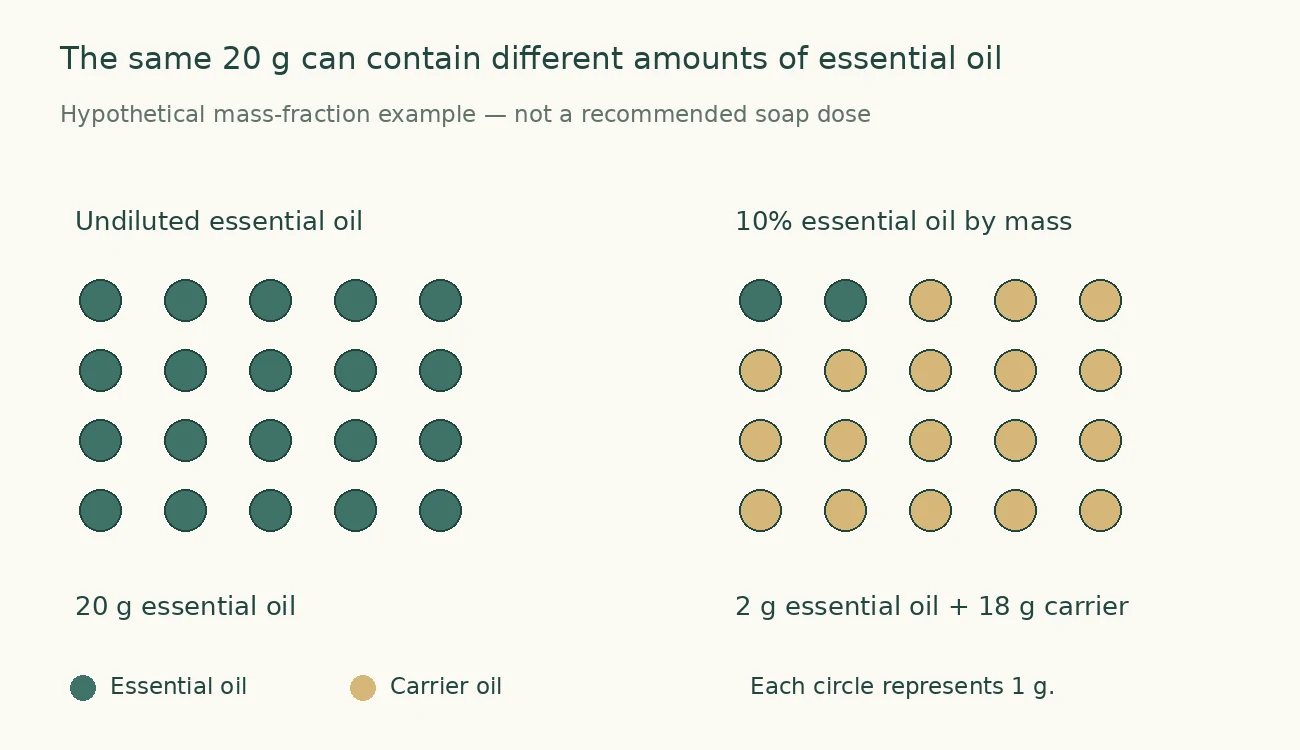
In the diagram, each circle represents one gram. The two green circles in the diluted example are the essential-oil fraction; the other eighteen represent carrier. This is an explicit hypothetical mass calculation, not a claim about the photographed roll-on's confirmed percentage basis or a recommended soap dose.
The calculation also shows why simply using more diluted product is not an innocent adjustment. To obtain 20 g essential oil from that hypothetical 10%-by-mass blend would require 20 ÷ 0.10 = 200 g of the blend. That would introduce 180 g carrier along with the 20 g essential oil. It is a different ingredient addition, not a direct replacement for a 20 g line in the original formula.
The reverse calculation is useful when documenting an actual known blend: essential-oil mass equals blend mass multiplied by the verified mass fraction. Carrier mass is the remaining amount. Keep the measured total and both components in the record; do not call the whole blend “essential oil” and lose the carrier quantity.
Account for the Carrier in the Base Formula
An unplanned carrier-oil addition changes the formula you originally checked. If you add a diluted fragrance product after calculating the base oils and treat it as though it were all essential oil, you have omitted some material from the accounting. That is the mismatch Elly highlights when warning about diluted products.
A documented dilution is not chemically impossible to formulate with, but doing so is a deliberate formulation task. The carrier's identity, actual quantity and relevant calculation properties must be known and included appropriately. Do not assume every material called a carrier has the same saponification value, or select a vaguely similar oil entry merely to make a calculator accept it.
For a beginner following a checked recipe, sourcing the specified, appropriately documented essential-oil form is usually a clearer path than redesigning the formula around a retail roll-on. If the carrier or concentration is unknown, do not guess an extra lye amount to compensate. Preserve the original calculation and resolve the ingredient choice first.
Keep Ingredient Purity Separate from Use Limits
Undiluted does not mean suitable at any amount. You still need applicable use guidance and restrictions for the exact essential oil or blend and the intended soap application. Do not transfer a supplier's direct-skin dilution, diffuser instruction or a different product's usage recommendation into the soap formula.
Nor does an undiluted ingredient promise strong scent after cure. Ingredient identity, permitted amount and cold-process scent performance are separate questions. The fragrance-performance guide discusses how to evaluate application-specific evidence; this ingredient check comes before that comparison.
Before weighing, make a short record: exact ingredient, full composition, dilution and basis if any, mass to add and how any carrier is handled in the checked formula. If one of those entries remains unknown, pause that substitution. Matching the expected ingredient form gives you a comprehensible starting point; matching only the fragrance name does not.