
Choosing a Manual Soap Cutter: Slab Grid or Loaf Wires?
Select an image to view it at full size.
Choose a manual cutter around the shape and dimensions of the fresh soap you actually cut. A slab grid divides a broad, shallow slab into bars along two directions. A loaf cutter divides a long loaf into repeated slices, usually setting the thickness of each bar. Neither arrangement is automatically better: the useful choice depends on your molds, desired bar shape, working clearance, physical effort and batch size.
Before comparing prices, draw the cutting layout and measure a representative fresh loaf or slab. A finished bar's target weight is not enough information. Ask the manufacturer to confirm that the equipment can accommodate the complete workpiece and complete the cut with a manageable load and effort.
Establish What Your Current Cutter Does Poorly
If you currently cut with a knife or single blade, identify the actual difficulty. You might need more even thickness, less time measuring each slice, better alignment with a molded pattern or less repeated effort. Those are different buying problems. Buying the largest multiwire frame will not necessarily solve all of them.
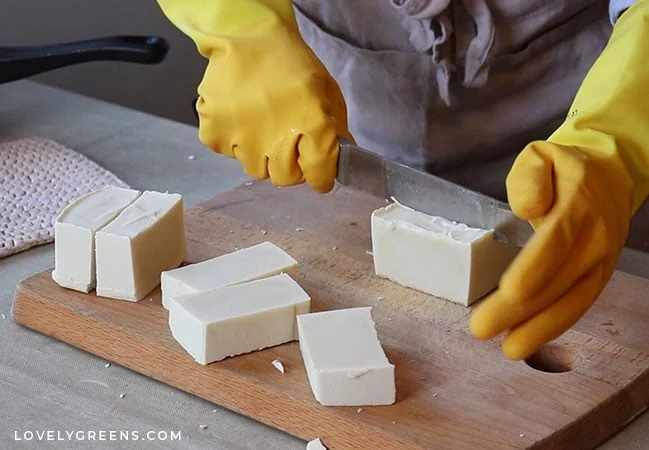
The opening photograph from Lovely Greens shows a gloved maker cutting a loaf with a straight knife. It illustrates the simple starting arrangement: one cut at a time, with the maker positioning the blade. It does not demonstrate the performance of a grid cutter or supply dimensions for a product recommendation.
A guide may help alignment while preserving flexible spacing. Fixed multiwire spacing trades some of that flexibility for repeated cuts at one setting. Consider whether you routinely change bar thickness, trim different tops or make several loaf sizes before committing to a fixed spacing. In Choosing a Cutter, Linda Stevens describes gradual equipment upgrades rather than treating an automated setup as every maker's starting point.
Compare the Cutting Geometry
A slab grid places crossing cut lines over a broad slab. Its rows and columns determine the bar faces; the slab's pour depth determines the remaining dimension. This arrangement can suit a maker already using slabs or embossed slab molds, provided the grid aligns with the actual design and the workpiece fits.
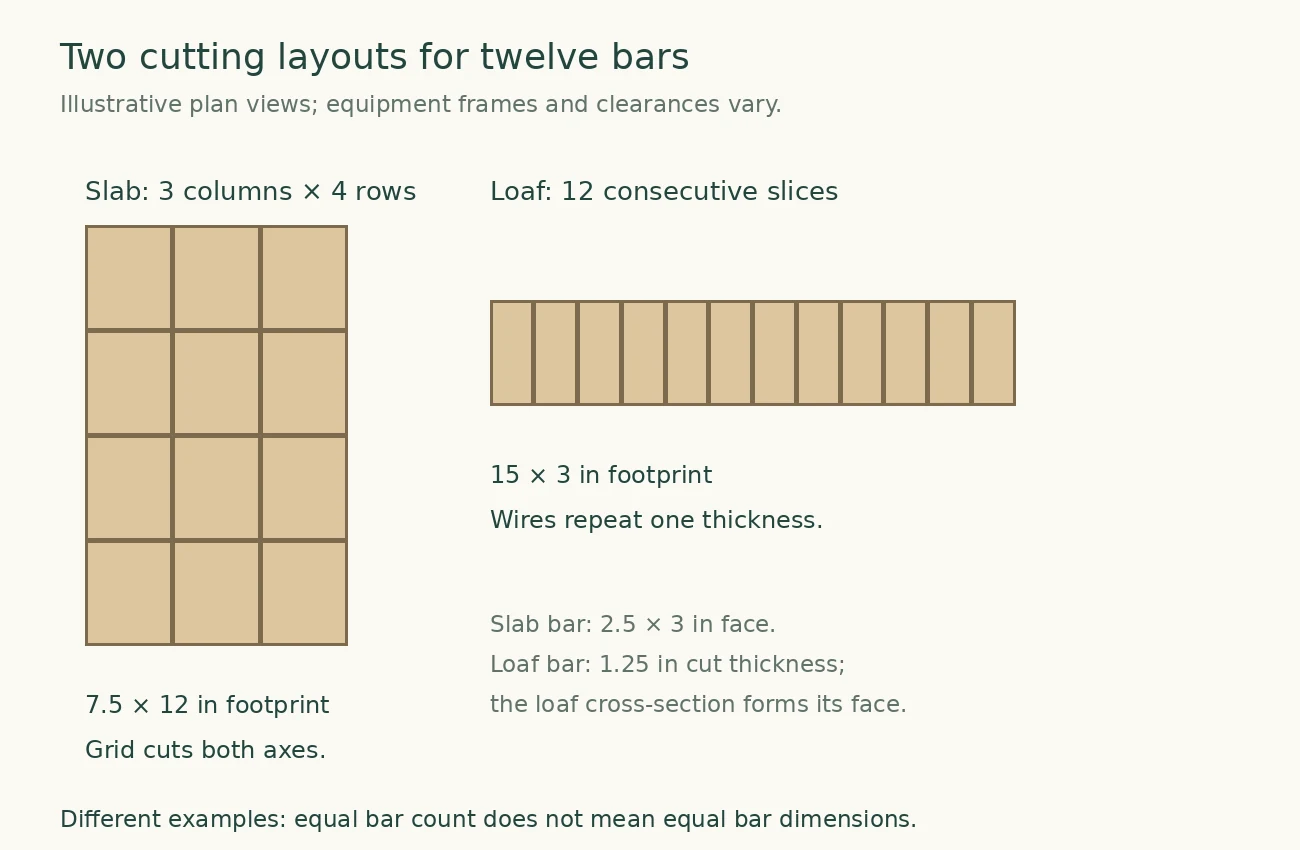
A loaf multiwire cutter places repeated wires along a loaf. The wire spacing determines slice thickness, while the loaf's cross-section determines the other two bar dimensions. The length that the equipment can accept determines how much of a loaf can be cut at once. A long loaf may need a separate splitting step if it exceeds the usable cutting length; confirm that arrangement rather than assuming it will fit.
For a hypothetical slab divided into three columns and four rows, twelve bars result. A loaf cut into twelve slices also produces twelve bars, but the footprints, orientations and bar dimensions can differ substantially. The diagram uses different example dimensions to make that distinction visible; equal bar count does not mean interchangeable molds.
Use fresh dimensions in this layout. If you want a particular cured bar, first work backward from measurements of the same recipe at the fresh and cured stages. The neighboring mold-sizing guide covers that calculation. An assumed drying percentage should not decide a permanent wire spacing.
Separate Wire Span from the Number of Cuts
A grid's broad cutting area is useful only if the wires and frame work across that area. Stevens notes that long wires can bend and that the maker's strength also limits a manual grid. Increasing the number of bars being cut together can increase the required manual effort. Ask about the manufacturer's intended workpiece size and operating arrangement; a photograph cannot tell you the force you will need.
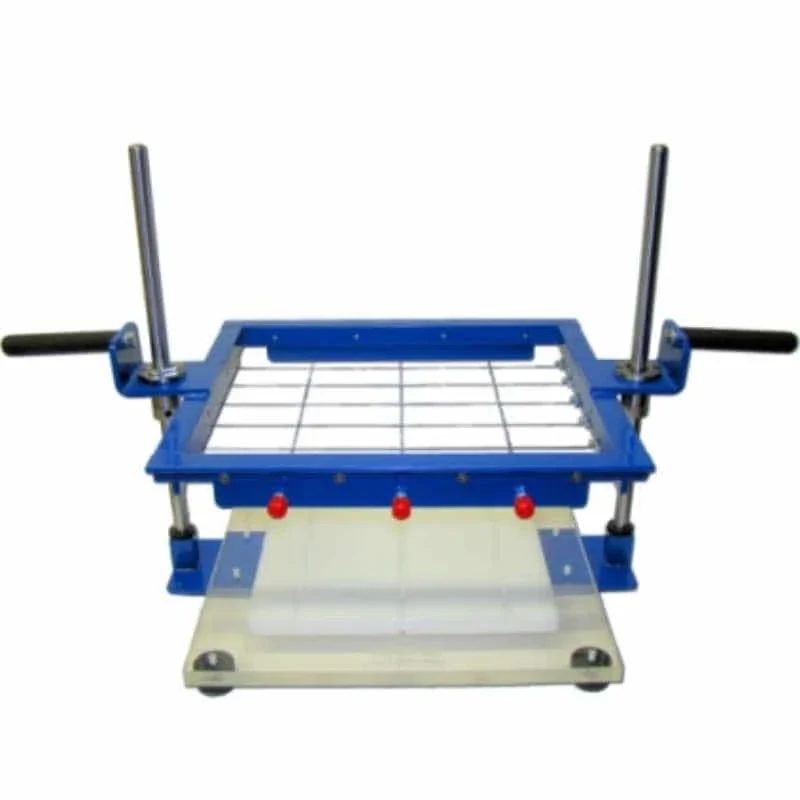
SoapEquipment's Manual Cutter photograph makes the grid arrangement visible: crossing wires sit inside a blue frame, with vertical guide posts and a support table below. The supplier describes interchangeable frames and matching cutting tables. This is a larger block-cutting system shown as a structural example, rather than a claim that every slab grid has this construction or capacity.
For a loaf cutter, check the loaf width and height as well as length. Those dimensions affect wire span, the quantity of soap engaged and clearance through the frame. A cutter advertised for a particular number of bars may assume a smaller cross-section than yours.
Do not reduce this comparison to “grid is hard, loaf is easy.” Soap condition, workpiece dimensions, number of engaged wires and the mechanism all matter. Ask the supplier how the specific cutter is operated with a loaf or slab of your size. If a demonstration or sample cut is available, use it to assess the complete action rather than extrapolating from the product's bar count.
Check the Complete Cut and Any Rotated Position
Confirm where the workpiece sits at the beginning, where the frame or handle travels, and what supports the soap at the end. Measure the usable opening and depth rather than only the outer frame. Include any liner folds, uneven top or raised decoration that changes the workpiece's maximum dimensions.
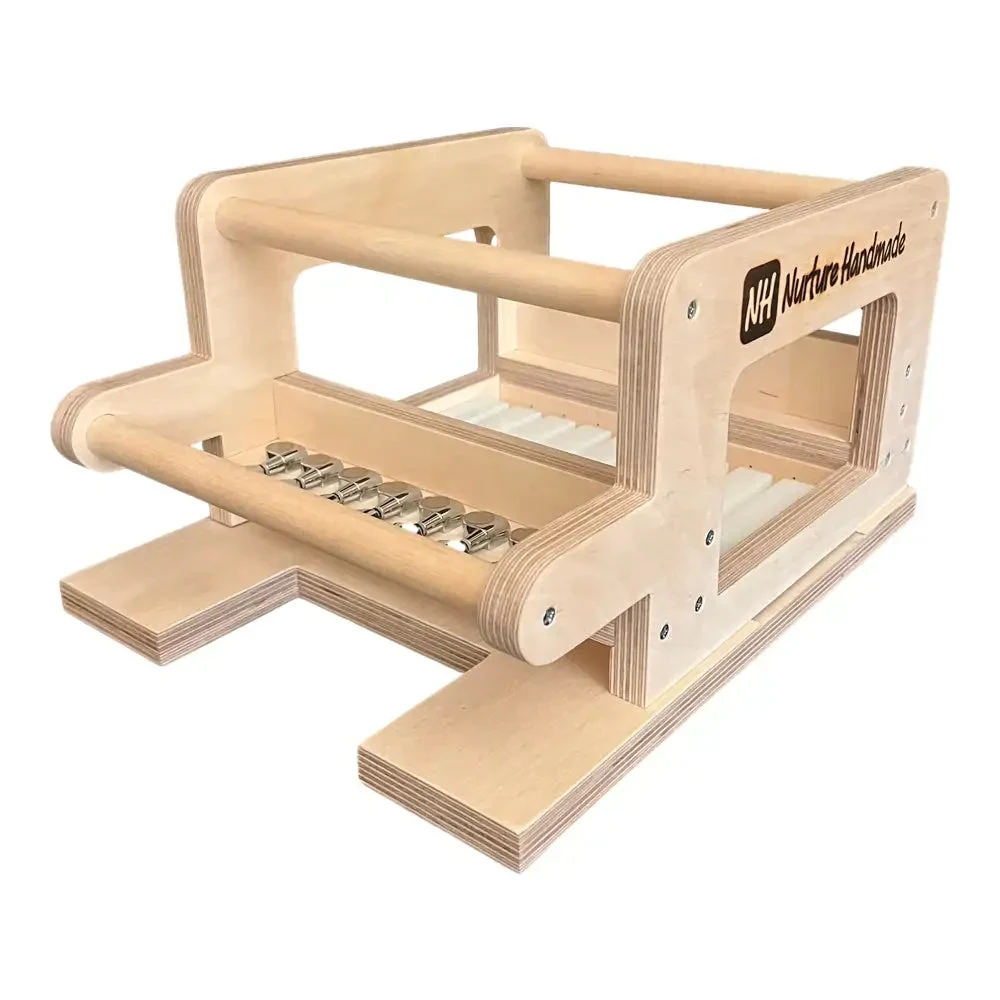
Nurture Handmade's 9-inch wood cutter provides a different visible arrangement: a loaf rests inside its guide box, with parallel tensioned wires carried by the surrounding frame. The manufacturer describes pulling the wires through the loaf. Compare the support and wire travel with your own workpiece; the photograph does not establish that another loaf size or rotated position will fit.
The orientation you plan to cut can be important. In a 2012 pencil-line soap account, Jenny of I'd Lather Be Soaping turned a loaf onto its side to avoid dragging the decorative line. The rotated loaf was too tall for her mold's cutting guides, and the thick handle of her cutter prevented it from going all the way through. She marked the positions and cut separately, but reported less uniform bars than she wanted.
That example does not show that all guides fail. It shows why checking only the normal upright position can miss a real fit problem. If you need side cutting, give the supplier the rotated width and height. A frame that fits the loaf length may still obstruct the blade or wire travel.
Keep the intended operation within the manufacturer's method. An improvised arrangement that requires holding soap in an unstable position or pushing past a physical stop is not a satisfactory equipment fit. Resolve the obstruction before treating the cutter as suitable.
Include Mold Compatibility, Trim and Waste
For a slab grid, confirm the actual usable slab dimensions after lining and unmolding. Stevens notes that some arrangements need additional edge cuts to remove wrinkled sides. If you plan to trim, include that border outside the bar-producing grid rather than discovering afterward that the edge bars are undersized. Embossed molds may need a matching cutting layout and alignment method.
For a loaf cutter, check fixed spacing, usable loaf length and the treatment of both ends. A twelve-bar plan does not prove that every wire frame will produce twelve usable bars from your exact loaf. Depending on the design, there may be an end allowance, a separate trimming cut or a limit on how the loaf is positioned. Obtain the supplier's actual cutting pattern.
Also consider what happens before cutting. A large slab or block may reduce the number of pours, but it still has to be unmolded, carried and loaded. Include the mold's weight when planning handling. If a block must first be split into logs, the splitter is another operation and potentially another piece of equipment. Stevens describes this as a tradeoff between molds, cutting equipment and labor, rather than an automatic saving.
Match the Upgrade to Your Actual Work
List how many batches and bars you normally cut, which shapes recur and how frequently you change them. A repeated loaf size may justify fixed wire spacing. A broad decorative slab may favor a matching grid. Occasional varied batches may still be better served by a simpler adjustable arrangement than a large fixed system.
Avoid treating historical production thresholds or old prices as current buying rules. The Guild article was republished in 2019 from a 2006 journal piece. Its equipment categories and measurement questions remain useful, but a present-day price comparison needs current quotations for the exact cutter, accessories and shipping location.
Ask about replacement wires, intended cleaning and maintenance, permitted soap condition and any adjustments the manufacturer supports. These details determine whether the cutter fits your routine. Do not assume that a manual model can later be motorized unless the supplier confirms that specific upgrade path.
Send a Measured Brief to the Supplier
Prepare a sketch showing the fresh workpiece length, width and height, desired bar dimensions, cut direction, bar count and trim allowances. Add any rotated position or embossed pattern. State whether you need to cut one whole loaf, split a block first or cut several different sizes.
Then ask the supplier to confirm usable clearance, the complete cut pattern, expected manual effort, workpiece support and relevant operating limits. Compare the complete workflow and total equipment needed, rather than choosing solely by price or the largest advertised bar count. The right manual cutter is the one whose actual geometry and operation fit your soap and your working arrangement.