
Can Herbs or Herbal Tea Replace Essential Oils in Soap?
Select an image to view it at full size.
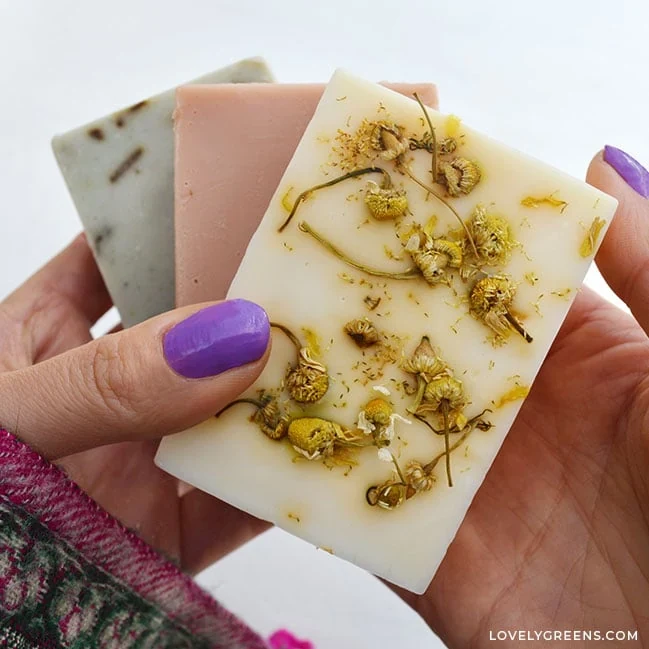
You can make soap with herbs or herbal tea and leave out added fragrance. What you should not expect is a comparable scent simply because the plant smells wonderful in the garden or teacup. Herbs, tea and essential oils are different ingredients with different roles in a recipe.
Elly's soapmaking FAQ says herbs and teas generally do not provide enough fragrance for a recognizable scented bar, while allowing that some strong herb infusions can contribute scent. Tanya Anderson of Lovely Greens likewise describes botanical fragrance as usually subtle and diminishing over time. Neither makes a spoonful of herbs equivalent to a measured amount of essential oil.
Decide Whether You Want Scent or a Botanical Ingredient
Start with the result you care about. A peppermint-themed bar might contain peppermint leaves for visible flecks, a suitable infusion for another formulation purpose, and a separately chosen fragrance. These roles can coexist, but the presence of one does not establish the others.
The finished botanical bars pictured here show visible plant material and different colors. A photograph can demonstrate those features. It cannot tell you how strongly the bars smell, whether that scent survives storage or which ingredient supplied it.
If your main goal is to avoid buying essential oil, a deliberately unfragranced herbal bar may be a satisfying choice. Do not keep adding more leaves or stronger tea until it supposedly matches a scented recipe. That changes the botanical or liquid addition without providing a reliable measure of fragrance.
If a recognizable lavender, mint or rose aroma is the main goal, investigate a suitable concentrated fragrance ingredient separately. A plant's familiar name does not give an essential oil or fragrance oil its use amount; keep the exact ingredient and its applicable guidance with the formula. You can also choose to make the checked base without fragrance rather than substitute an uncertain material.
Fresh and Dried Plant Pieces Change More Than Scent
Whole petals, chopped leaves and powders are visible additions. Their size, amount and placement affect the feel and appearance of the bar. The bowls in the workshop photograph contain quite different materials; they are not interchangeable scoops of “herbs.”
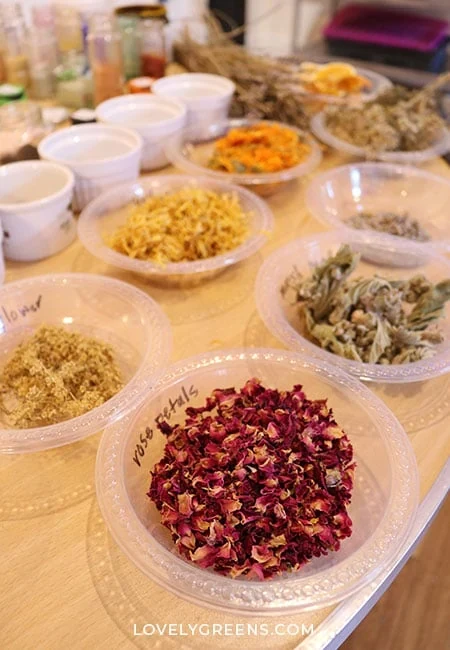
Choose an identified plant suitable for the intended skin-contact product. Attractive flowers or culinary familiarity alone do not establish that suitability. Anderson emphasizes plant safety and notes that some botanicals can irritate skin. She also warns that excessive or coarse plant material can make soap unpleasantly scratchy or interfere with lather.
Dried material is the usual starting preference in her guide, although she describes some limited thin or finely divided fresh additions. That does not mean every fresh herb is interchangeable with every dried one. Moisture, piece size, the selected recipe and storage conditions still matter. A handful of fresh leaves is not a fragrance substitute just because an individual fresh ingredient can work in a particular recipe.
Keep color expectations separate from scent expectations too. Anderson describes many herbs changing toward brown in soap, including lavender buds mixed inside it. Calendula and safflower petals are examples she treats differently. A purple flower in a bowl does not promise a purple fleck throughout the life of a bar.
For a first attempt, use an applicable botanical recipe instead of adding large amounts to chase the smell of the raw plant. Record the plant identity, preparation and actual quantity, then observe the bar's appearance and wet-use texture as well as its scent.
An Infused Oil Is Still a Base Oil
A jar of herbs steeped in olive oil is not a jar of essential oil. The carrier remains part of the oil formula. The three photographed jars show different botanical infusions and their colors; they do not demonstrate three concentrated fragrances or predict the exact color of the finished soap.
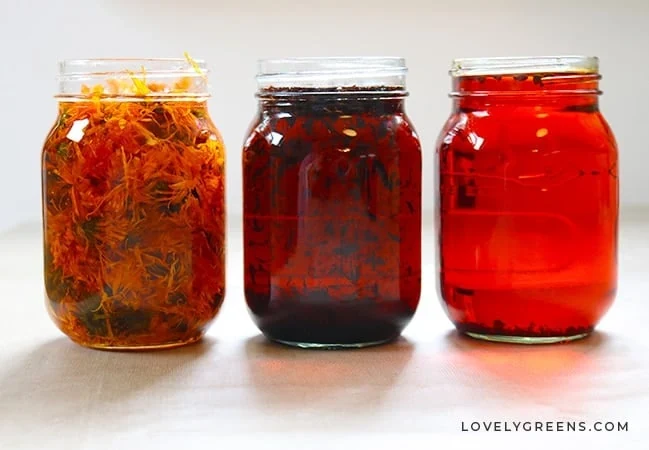
Anderson describes using a strained infused oil to replace the corresponding oil in a recipe: infused rice bran oil for rice bran oil, for example. Preserve that identity in your calculation and record the actual usable oil amount after preparation. Do not add an uncounted quantity of infused carrier oil merely because you think of it as an aromatic additive.
This also means a substitution must be described accurately. Replacing part of an existing olive-oil allocation with an appropriately prepared olive-oil infusion is different from replacing an essential-oil entry with the same mass of infused olive oil. The latter introduces base oil where a concentrated fragrance was expected.
Whether a particular infusion offers worthwhile color or scent depends on the plant and the method. Judge the result you actually want, rather than assuming all desirable qualities of the fresh plant transfer into oil and then survive soapmaking.
Herbal Tea Belongs in the Liquid Plan
The tea photograph shows an aqueous infusion, another distinct form of botanical material. Its color and aroma in the cup are not measurements of the result after soapmaking.
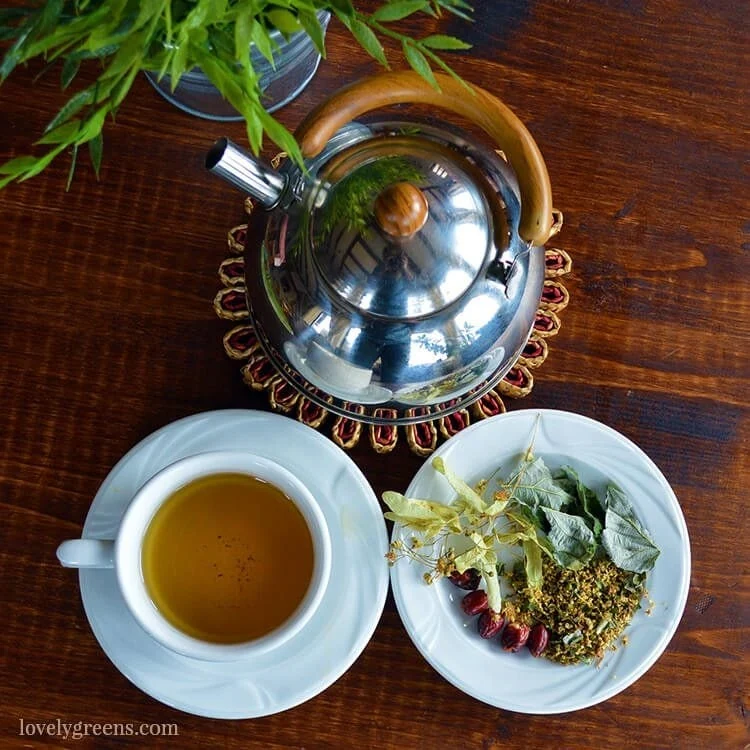
For an applicable soap formula, a strained herbal tea can take the place of some or all of its planned water. Anderson describes that use while noting that the resulting soap may be tinted yellow to beige. Treat the tea as part of the recipe's liquid accounting, rather than extra liquid added on top of the full water amount.
Choose a method specifically suited to your botanical and formula. Preparing a familiar drink does not settle how it should be incorporated into a soapmaking process. Keep the planned total liquid, the portion supplied by tea and any other liquid additions visible in the batch record.
If you are only trying to remove fragrance, you do not need tea to fill the essential oil's former place. Tea is an optional formulation choice with its own preparation and accounting, rather than a required compensation for omitted scent.
Choose a Combination You Can Evaluate
Give each ingredient a clear job. You might choose a known base with a restrained dried botanical for appearance and no added fragrance. Or you might use an appropriate tea-based recipe while choosing its scent independently. An infused oil may serve a color goal without being assigned a fragrance job it cannot reliably perform.
For a compatible small trial, label the exact recipe version, botanical form and amount, fragrance choice and observation dates. Compare the bar after making, after its normal curing process and later in storage. Keep a mild or fading aroma in the record instead of treating it as permission for an unlimited increase in either plants or fragrance.
Herbs can make worthwhile soap ingredients even when they contribute little scent. Choosing them for their actual role gives you a more useful result than asking plant pieces or a cup of tea to behave like concentrated essential oil.