
What Does a Hard Crust at the Bottom of the Lye Container Mean for My Batch?
Select an image to view it at full size.
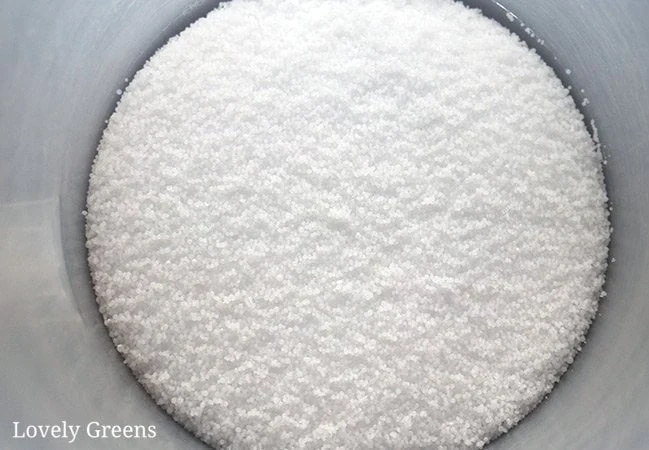
A hard deposit left in a lye-mixing container can mean that some of the sodium hydroxide did not dissolve and therefore did not reach the oils with the liquid you poured. Jan Berry identifies incomplete dissolution as a cause of this problem. If the deposit is discovered after pouring, the important consequence is a quantity uncertainty: the batch may not have received the alkali amount written on its calculation. The deposit's appearance alone does not tell you its composition or mass.
Keep the container and the batch secured and labeled while you investigate. Do not scrape the deposit with bare hands or assume it is harmless because the liquid above it was clear. Sodium hydroxide is corrosive, and contact with water generates heat. Adding a guessed rinse or extra alkali is not a way to reconstruct an unknown quantity.
Separate the Before-Pour and After-Pour Decisions
If you have not yet combined the solution with oils, stop before the transfer. Check that the actual alkali identity, weighed quantities and intended water allocation match the method. Do not skim off or pour away just the clear part while leaving an unexplained solid layer behind.
Berry's prevention guidance is to make sure the alkali is completely dissolved rather than judging the mixture only from its surface. Look through the suitable container, where possible, for a deposit at the bottom or undissolved material. Maintain the method's protection and handling controls; do not put your face over the vessel or handle the deposit to identify it.
If you have already poured, keep that fact in the record. Note how much of the original liquid was transferred, whether anything was spilled, and whether the residue is still in the original container. “The calculated amount was weighed initially” and “the calculated amount reached the oils” are different claims.
Do not infer an exact correction from the intended formula alone. Once the transferred material differs from the plan, a new calculation needs actual quantities, not just the original target. If those quantities cannot be reconstructed reliably, keep the uncertainty explicit.
Why the Alkali Amount Can Be Different
Consider a hypothetical accounting example, not a soap recipe. You planned 100 g of pure NaOH with 200 g water. Suppose 10 g of that pure NaOH remained as a known solid residue and all the water transferred. The transferred material would contain 90 g NaOH and 200 g water, totaling 290 g; it would not contain the planned 100 g NaOH.
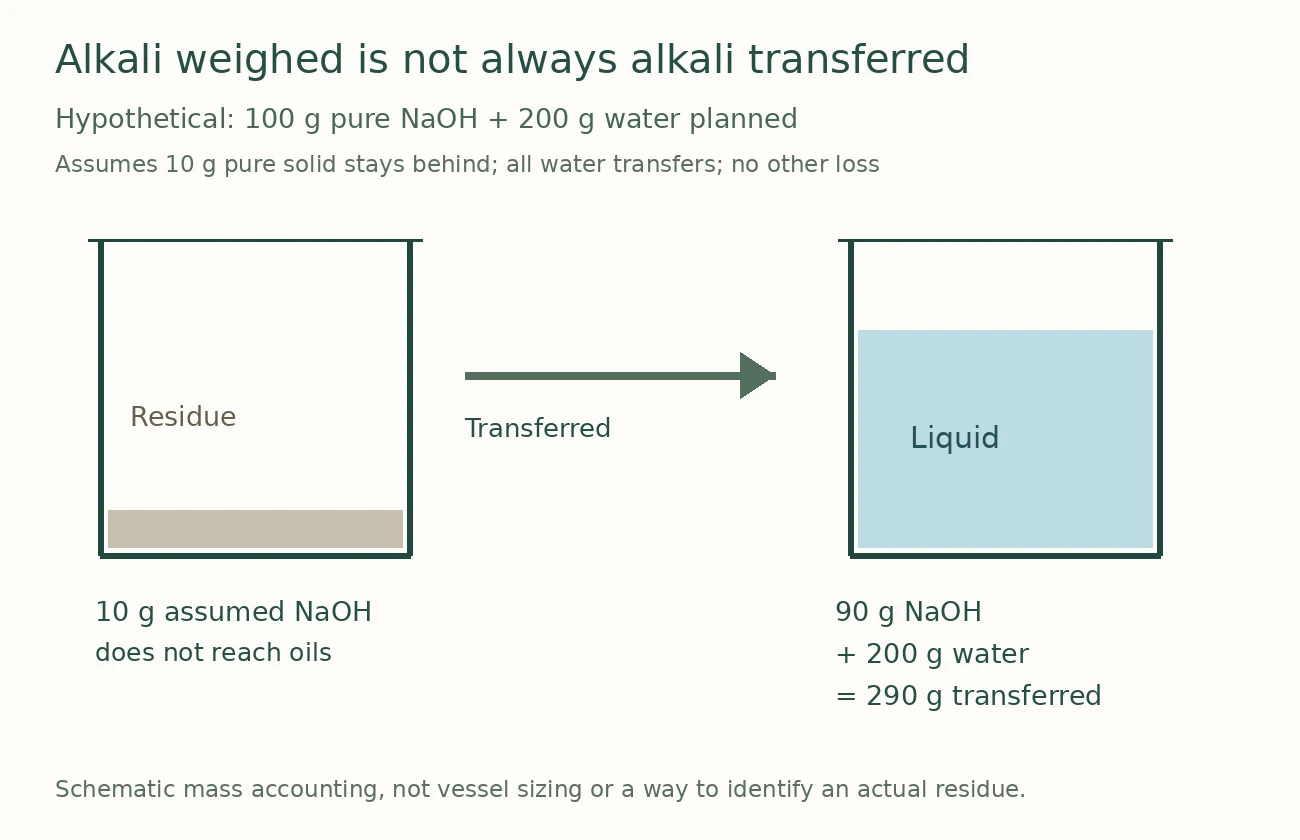
The illustration keeps those assumptions visible. In a real incident you usually do not know that an unidentified crust is exactly 10 g of pure sodium hydroxide, or that all the water transferred. The example explains why the difference matters; it does not provide the missing measurement for your batch.
The liquid concentration also changes under those hypothetical assumptions: 90÷290×100 is approximately 31.0%, rather than 100÷300×100, or 33⅓%. Pouring only a liquid phase while leaving solids behind cannot automatically be treated as transferring a uniform solution at its originally intended strength.
Nor can you assume the resulting soap merely needs a longer cure. Cure time cannot supply an ingredient quantity that never reached the batch. An oily or soft result may be consistent with a shortage of alkali, but that appearance does not reveal the size of the shortage or establish what else happened.
Do Not Turn a Rinse Into a Guess
The original troubleshooting source suggests trying to dissolve a residue with some warm water after the liquid has been poured. That short suggestion does not establish the deposit's identity, how much alkali remains, or a corrected water quantity for your particular batch. It should not become a general instruction to rinse any unknown crust into already mixed soap.
Adding water to sodium hydroxide also has a heat and splash implication. ICSC 0360 instructs that, when dissolving or diluting, sodium hydroxide is added slowly to water; it warns against pouring water into the substance. A stuck deposit at the bottom of a vessel is not a reason to improvise that mixing order.
Do not chip, grind or forcefully dislodge the material while it is accessible to splashes or dust. Keep the container isolated and consult the actual product's safety data sheet and an applicable handling method. If the batch cannot be assessed from known ingredients and quantities, do not proceed with a guessed salvage calculation.
Check the Original Record Before Blaming One Cause
Review the ingredient label and the quantities actually weighed. Confirm which vessel held the water, which held the dry alkali, and whether any water was reserved for a later addition. Check whether the method's concentration and cooling conditions were followed.
A deposit noticed immediately after incomplete mixing is not automatically the same situation as crystals appearing after a concentrated stock solution has been stored cold. The timing changes the investigation. Neither kind of unidentified solid should be assigned a composition solely from a photograph.
Also check the container's condition and previous use. An unknown residue already in the vessel makes the identity problem worse. Keep the material separate from ordinary kitchen utensils and from other ingredients while deciding how it is to be handled.
Prevent the Transfer Error in the Next Batch
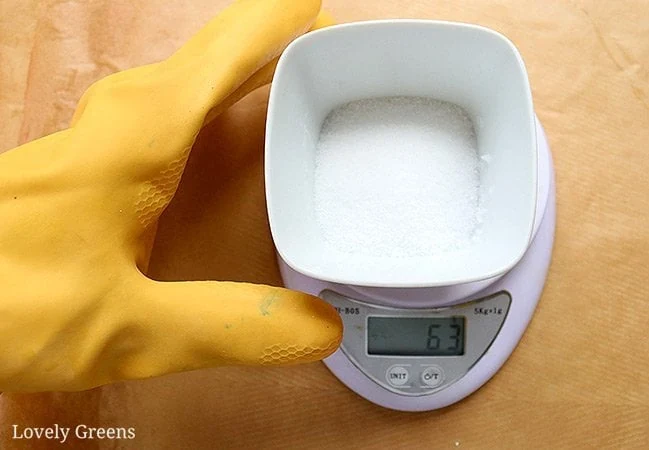
Prepare clean, compatible equipment and separately identified, weighed ingredients before starting. The source photograph in this section shows Lovely Greens' dry alkali measured in its receiving dish on a digital scale. It illustrates the weighing stage; it does not show a residue or prove that a later solution has completely dissolved.
Use one checked formula and mark actual quantities as they are weighed. Follow the established method for combining the ingredients, controlling heat and allowing the solution to reach its intended working condition. Include a deliberate inspection of the whole solution before transferring it, rather than treating the absence of floating particles as the only check.
If a deposit is found, record it before the next step and resolve its meaning before the solution enters the oils. That prevents the main avoidable mistake: carrying an uncertain quantity forward while continuing to describe the batch as though it received the original calculation exactly.