
Why Flakes or Floating Bits Appear in Lye Solution
Select an image to view it at full size.
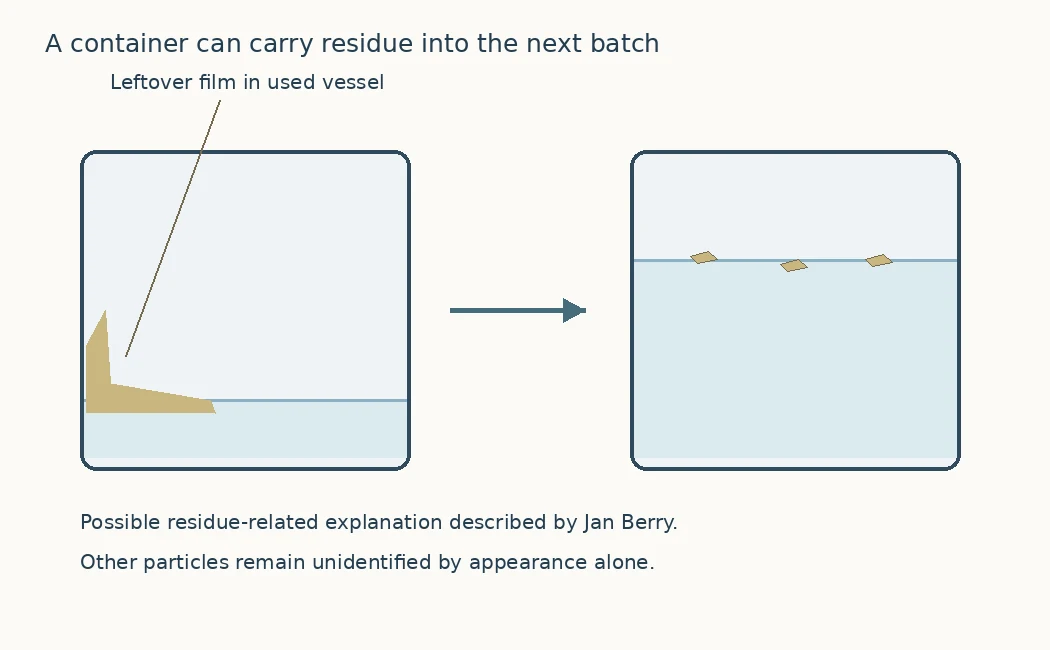
One possible cause of floating bits in lye solution is residue from an earlier use of the container. Jan Berry describes small amounts of leftover material interacting with a new lye solution and producing visible floating bits. That is a specific possible explanation, not a way to identify every flake from its appearance.
Before using an unexplained solution, check the container's history, ingredient labels and actual preparation record. Keep suitable chemical-resistant gloves and eye protection on. Sodium hydroxide solution remains corrosive whether it looks clear, cloudy or speckled.
Describe Where the Material Is
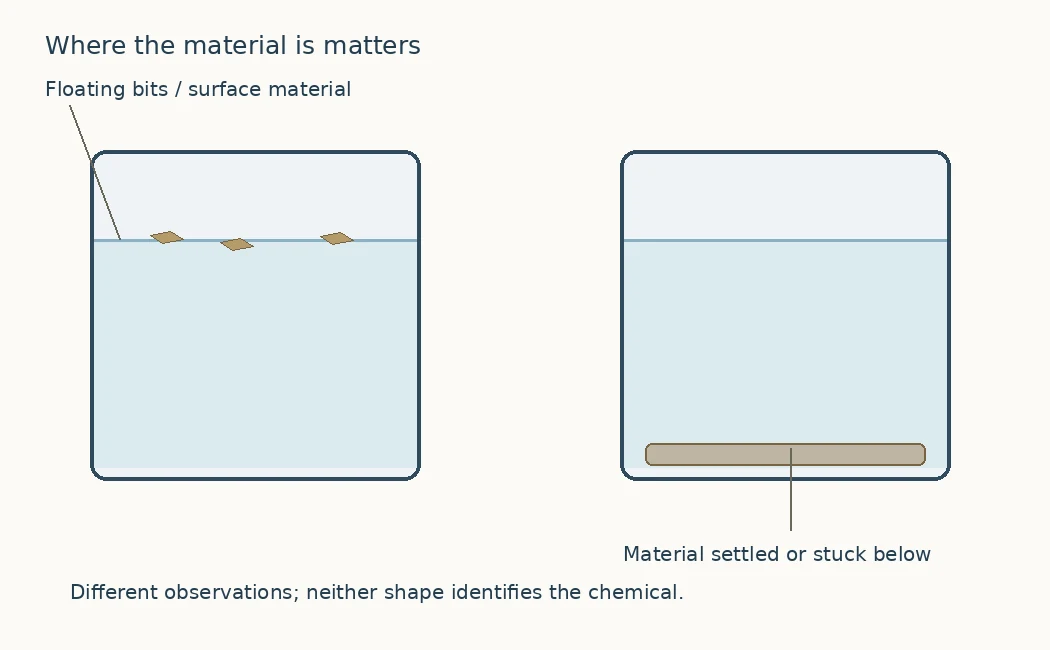
Note whether the material floats, appears suspended, or sits on the bottom. A thin floating fragment is a different observation from a substantial deposit stuck at the base. The illustration above shows the location distinction; the drawings do not assign a chemical identity to either shape.
Also record when it appeared. Was the container already visibly dirty before mixing? Were bits present immediately, or noticed only after the solution had stood? Did this happen with plain water, or with a documented alternative liquid? These details are more useful than describing everything as “lye flakes.”
Do not test the material with a bare finger or try to identify it by taste. Nor should you assume it is undissolved sodium hydroxide solely because the recipe contains sodium hydroxide. A visual description starts the investigation; it does not complete it.
Consider Residue from the Previous Use
Berry's troubleshooting account points to residue left from a prior batch or another use of the vessel. An oily film or old material is a reason to examine cleaning and equipment separation. The illustration in this section shows that possible route from a previously used container into a later solution. It is a conditional explanation, not a photographed result or a claim that every floating fragment has this origin.
Check whether the jug and stirring tool were clean before the new solution was made. A container can appear empty while retaining a film on its side or around a seam. If the same equipment is moved among different ingredients, the preparation record should make clear which use came last.
Berry reports not worrying about this occasional problem in the context of her own work. That experience does not establish the identity of particles in a reader's unknown vessel. Keep the reported benign explanation separate from a blanket recommendation to use any speckled solution.
Do Not Use Straining as a Chemical Diagnosis
Removing visible material cannot tell you what it was, whether the intended alkali amount remains in solution, or whether anything else entered the container. A solution that looks clearer after straining is not thereby shown to have the intended composition.
Berry mentions that some makers strain floating bits and explicitly warns about handling the concentrated lye solution. This article does not turn that observation into a generic recovery procedure. Extra transfers add handling steps while leaving the underlying identity question unresolved.
If there is an unexplained deposit, unknown contamination or doubt about quantities, keep the labeled solution in its protected location and pause its use while the discrepancy is assessed. Do not blend it into the oils simply to see whether the particles disappear. That would spread the uncertainty into the next stage of the batch.
Prevent the Same Uncertainty Next Time
Use suitable, clearly identified soapmaking equipment and check it before measuring ingredients. Clean away prior residue and make sure the vessel and tool are in the intended condition for the method. Record the water or alternative liquid and the chemical product used, including the actual weighed amount.
Keep ingredient preparation separate from cleanup and rinse-water containers. Cover or otherwise protect stored materials as appropriate to their supplier instructions and label prepared solutions clearly. When an unexpected change occurs, that separation helps you reconstruct what could have entered the vessel.
For a repeat problem, compare the container, cleaning history and preparation sequence across the affected batches. If the common factor is a vessel with persistent residue, address that equipment problem before making another solution in it. If the history is clean but the particles remain unexplained, retain that uncertainty rather than borrowing the residue explanation simply because it is convenient.