
Sticky, Shiny Film on Cured Soap: How to Investigate It
Select an image to view it at full size.
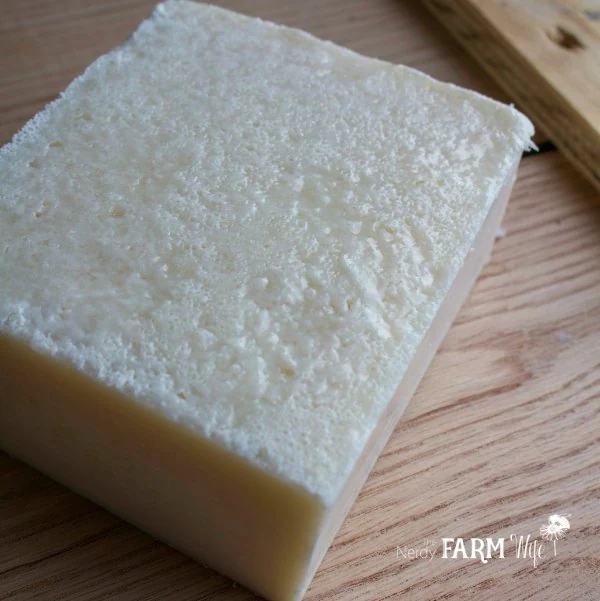
A tacky surface on an older bar deserves a description and a history before a name. A shiny film, small moisture beads and a separate oil pool are not interchangeable observations. Nor does a low humidity reading establish what a residue contains.
One useful source case concerns months-old soap stored in a room reported at 30% relative humidity after prolonged oven heating. The source did not establish a final cause. It did suggest a smaller comparison that separates the heating history from the recipe, which is a more informative approach than immediately adding an ingredient or rubbing away every trace.
Preserve the Actual Case Conditions
In April 2022, Adellyn described a face soap made months earlier and kept with a dehumidifier at about 30% humidity. The surface had a tacky, shiny, slightly bubbly-looking residue. The reader said it did not seem oily and did not resemble familiar condensation.
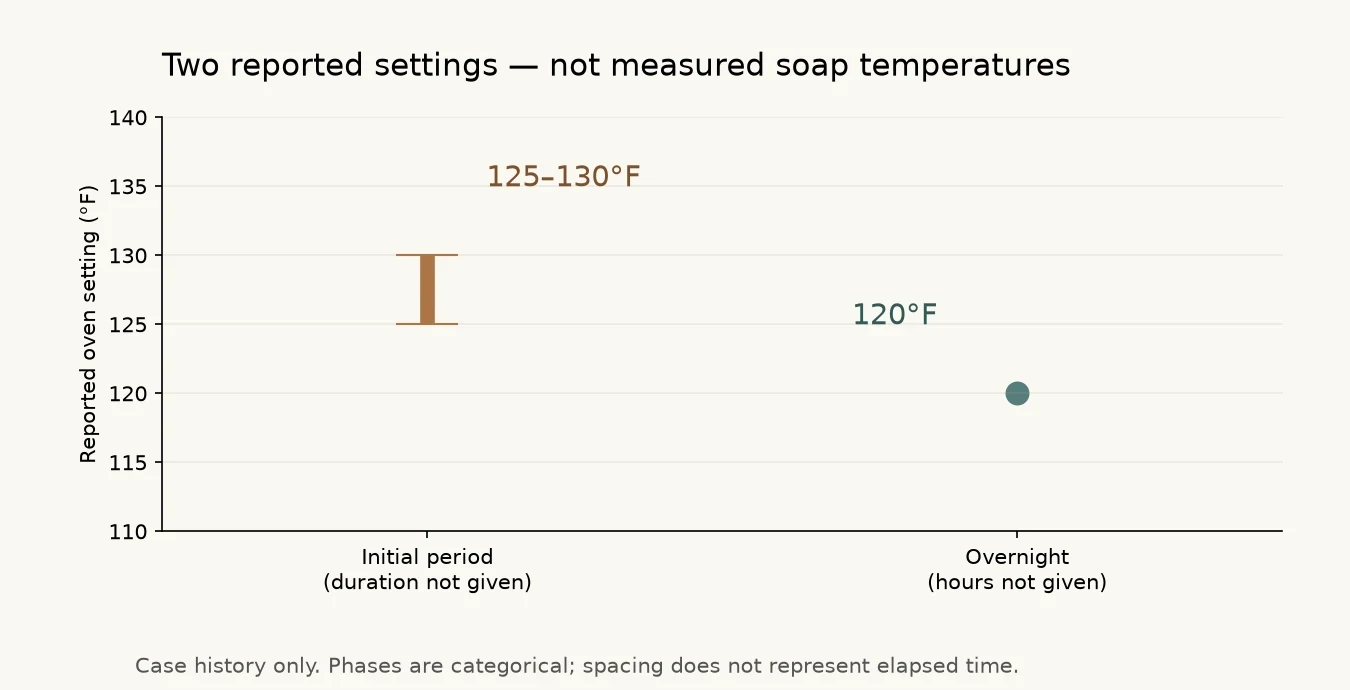
The reported process used an oven initially around 125–130°F, then around 120°F overnight. The posted recipe contained several oils and a butter, plus salt, French green clay and three scent additions.
Jan Berry suggested that the extended heating might be involved. The exchange does not document a chemical identification of the residue, a measured temperature inside the soap or a successful follow-up batch. Keep the low-humidity observation and the long heating history together rather than choosing only the detail that matches a familiar diagnosis.
The cover is Berry's separate severe surface-puddle example from her main guide, not Adellyn's bar. It illustrates why a surface description matters without pretending to identify the substance in the reader's case.
Distinguish a Film from Beads and Free Oil
Photograph the surface under consistent light before changing it. Note whether the material is a continuous sheen, isolated beads, distinct pools, dry powder or rough texture. Record where it appears and whether it returns after an area has been cleared by an appropriate handling method.
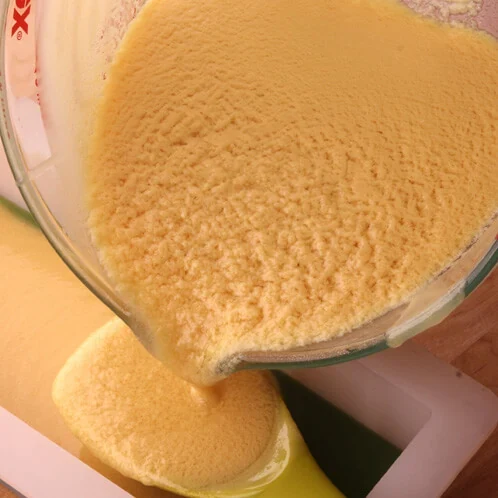
Soap Queen's actual separation photograph shows yellow free liquid bordering grainy batter near the lower part of the image in a different source batch. That is a useful contrast with a description of a thin tacky film. It does not establish that a shiny bar contains separated fragrance or that every bead is glycerin.
Avoid repeated bare-finger rubbing as a way to identify unexplained material, especially when the production record has other unresolved problems. Appearance, smell and feel alone do not supply the chemical identity of a residue.
Also note whether the bar's interior remains uniform or whether there are separate liquid pockets, unusual soft regions or another production fault. Those observations change the investigation; they should not be dismissed as an unattractive surface finish.
Record Oven Settings Separately from Soap Temperature
The chart presents only the two oven settings reported in the case. The first period's length was not specified, and “overnight” did not include a measured number of hours. Neither setting is a measurement of the soap's internal temperature.
For your own record, distinguish appliance setting, actual measured temperatures where available, when heat was switched off, mold and covering. A note saying “oven processed” leaves out several potentially important differences between batches.
The reported settings are historical case information, not a recommended heating schedule. Do not repeat prolonged heating merely to reproduce the example, or increase heat to try to remove an unidentified surface film.
Keep the storage record separate too. A current room humidity measurement does not reconstruct the conditions throughout heating, cooling, cure and packaging. At the same time, it is real information that should not be ignored just because moisture is a familiar explanation for some other surface problems.
Make a Smaller Comparison with One Defined Change
Berry proposed a much smaller batch of the same recipe without continued oven processing as one way to investigate. The useful principle is a matched comparison: preserve the documented formula and change the selected process variable deliberately.
Before another batch, independently check the complete formula, actual oil identities, alkali calculation and the relevant current guidance for each scent product. The original reply's general approval is not a safety assessment of your supplies or every essential-oil blend at a similar total percentage.
Use accurately scaled amounts and suitable molds. Preserve starting temperatures, additions and covering as consistently as practical. Record any unavoidable difference. Do not simultaneously change water, clay, superfat, fragrance and the heating method, then attribute the outcome to heat alone.
You do not need to repeat a suspected problematic overnight-heating process to make a useful comparison. A clearly documented batch without that added heat can be compared cautiously with retained records and bars from the earlier version.
Interpret the Result Without Turning a Clue Into Proof
If the new, documented bars lack the film, the changed process is worth investigating further. It does not prove that long heating was the only possible cause, especially if mold, starting temperatures or storage changed too.
If the film returns, that does not prove that the oil combination is defective. It means removing that heating step did not by itself eliminate the observation under the new conditions. Review ingredients, additions, mixing, handling and storage rather than jumping to a second universal explanation.
| Observation to record | Why it matters |
|---|---|
| First appearance of the film | Separates a fresh surface change from later storage behavior |
| Continuous sheen, beads or distinct pools | Keeps visibly different conditions separate |
| Oven setting and duration | Preserves the actual heat history |
| Measured soap temperature, if available | Avoids equating the dial with the material |
| Humidity, location and packaging | Makes storage comparisons more interpretable |
| Formula and process differences | Limits what a before-and-after comparison can show |
Keep Current-stock Decisions Separate from the Next Test
Do not add fragrance, dust on colorant or reheat affected stock simply to disguise the surface. A change in appearance would not establish what the original residue was or whether another production fault remains.
Keep unexplained affected bars separate while their history is assessed. Retain photographs and batch records rather than turning an uncertain case into a claim of harmless glycerin or a confirmed heating defect.
The useful outcome is a better-supported next check: a documented surface description, a complete heat and storage history, and a smaller comparison that changes one meaningful condition. The source case supports that investigation. It does not supply a universal diagnosis for sticky soap.