
Why Does Cured Soap Have Less Lather Than Expected?
Select an image to view it at full size.
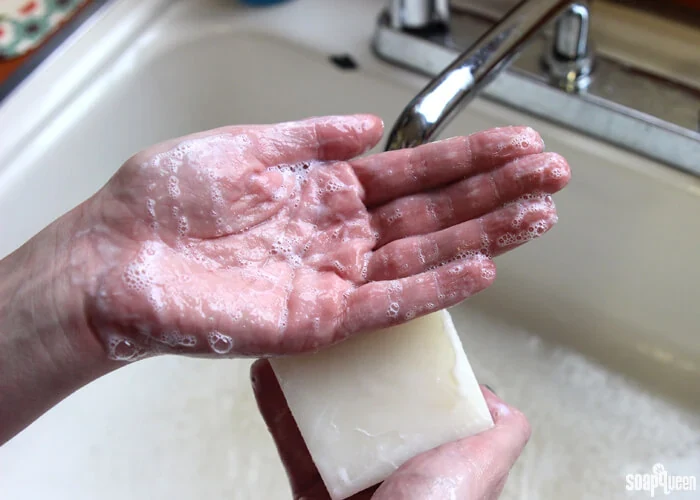
A firm bar can still make very little foam. Before changing the recipe, decide what is disappointing: few bubbles from the beginning, bubbles that disappear quickly, or a dense lather when you expected something airy. Those observations lead to different changes. The cover shows Soap Queen's cocoa-butter single-oil sample: visible small bubbles rather than a large airy foam.
Next, check the bar's age and complete formula. High-olive soap, a deliberately low-coconut blend and a recipe containing substantial beeswax do not present the same problem. Adding a lather booster to all three without checking those differences can leave the original cause unresolved.
Start with a Record of the Actual Bar
Find the recipe version, making date and amounts actually weighed. List the base oils, beeswax if used, superfat setting, water setting and meaningful additives. Check whether an intended substitution changed the blend. A label such as “olive soap” does not tell you whether olive oil was a quarter of the oils or nearly all of them.
Describe the lather under ordinary, repeatable use. Does it begin as a few fine bubbles? Does it turn dense as you wash? Does it form a sticky film? Or does an initially airy foam fade quickly? Keep the water source and washing method comparable when checking another bar.
Do not use lather volume to decide whether an uncertain batch is chemically sound. If there is a weighing discrepancy, separated liquid or another unresolved production problem, investigate that record first. A well-foaming bar is not proof of correct alkali calculation, and a low-foaming one is not automatically a failed formula.
A High-olive Bar May Need a Different Expectation and More Time
Jan Berry's cold process troubleshooting guide identifies Castile and other high-olive soaps as a common reason for disappointing lather. She describes them as needing longer to harden and develop their relatively modest lather. A bar becoming firm enough to handle does not mean every use characteristic has finished developing.
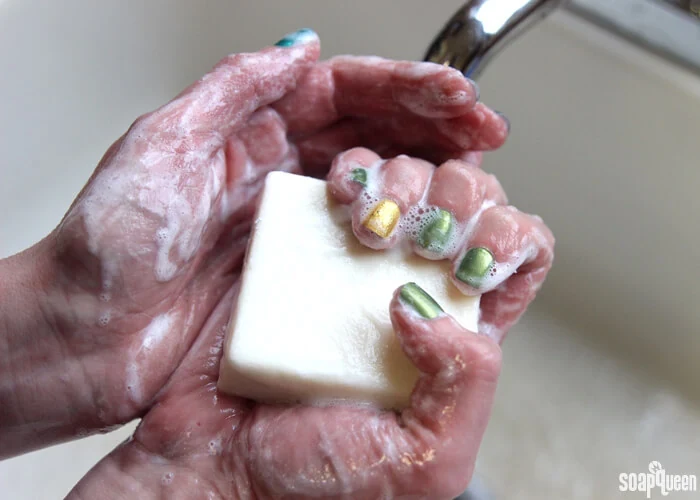
Soap Queen's single-oil comparison provides a concrete example. After a six-week cure, its pure olive-oil sample made small, dense lather that became slightly sticky with continued washing. Its pomace olive sample was also small and dense, but was described as creamier. These were the source's particular single-oil bars, not a universal comparison of every grade or supplier.
The photograph shows the pure olive sample with little airy foam around the hands. If that resembles your observation, check how olive-heavy your recipe actually is and how old the bar is before treating it as an additive deficiency.
Keep a labeled bar and revisit its lather at later, recorded ages. Do not promise that a specified number of extra weeks will turn a high-olive formula into coconut-style foam. More time can be a useful comparison, while a different lather preference may ultimately call for a different blend.
Low Coconut Can Be a Deliberate Formulation Choice
Coconut oil is associated with large, fluffy lather. In the same Soap Queen experiment, the coconut-oil sample produced obvious foam and was rated stable during washing. The contrast with the olive sample illustrates a formulation difference, not a requirement that every soap contain coconut.
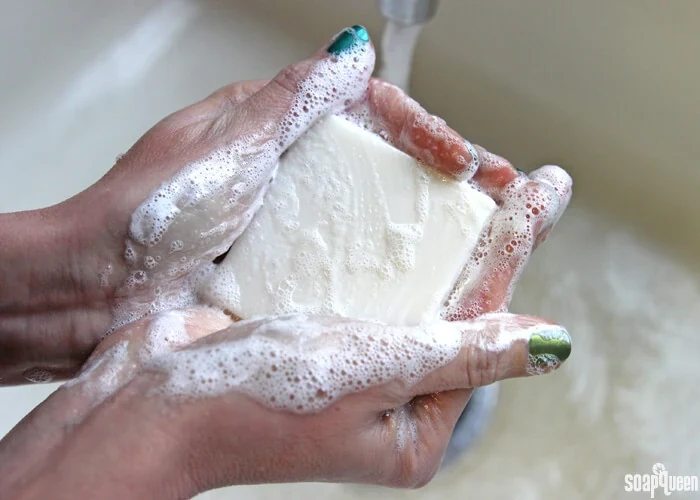
The experiment used small single-oil batches, 0% superfat, a six-week cure and lukewarm tap water. Its coconut sample was also described as leaving a very squeaky and slightly dry feel. Do not copy its formula simply to reproduce the photograph.
A low-coconut or coconut-free recipe may have been selected for a reason. Reconsidering the entire blend is more useful than automatically increasing coconut until the bubbly number looks reassuring. Amanda Aaron's recipe-modification guide explicitly discusses the tradeoff between adding coconut for lather and a more cleansing or drying-feeling result.
Jan Berry mentions babassu and castor as possible formulation directions for low-coconut soap. Those are ingredients to research within a complete formula, not drop-in substitutions or evidence that a bar is suitable for a particular allergy or skin condition. Any change needs its own alkali recalculation.
If Bubbles Appear and Then Fade, Inspect the Blend’s Balance
Fleeting lather is a different observation from almost no initial foam. Amanda Aaron discusses castor oil as supporting the lather made by other oils. That makes the existing amount and its role worth checking when the first bubbles disappear quickly.
“Add more castor” is still an incomplete instruction. What oil would it replace, and what would happen to the rest of the formula? Aaron also notes that high castor proportions can make a bar feel draggy. A support ingredient does not become better without limit.
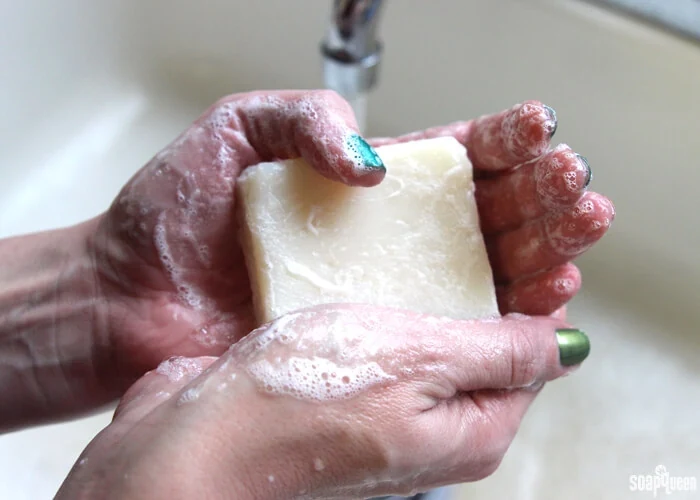
Soap Queen's 100% castor sample produced some bubbles but was rated only average to poor for stability. That particular result cautions against extrapolating a blend ingredient's role into a single-ingredient recipe. Use a documented blend and compare its finished behavior.
Look at initial bubbles, density and persistence separately. If you already like a dense lather, you may want to improve its persistence rather than maximize airy foam. Recording the exact complaint helps keep that preference visible while you reformulate.
Check Beeswax Before Adding Another Ingredient
Beeswax may be present for firmness or design reasons. Jan Berry identifies higher amounts as a potential source of reduced lather and a draggy feel. A firm bar with disappointing foam may therefore have a formulation tradeoff rather than insufficient curing alone.
Calculate the actual wax percentage from the complete oil-and-wax formula, and compare it with the recipe you intended to follow. Check whether a batch was scaled accurately. “A little wax” is not enough information to reproduce or diagnose the addition.
Do not respond by simply adding more coconut, sugar and castor all at once. If wax is the suspected difference between two otherwise comparable batches, reducing it in a deliberately recalculated future version gives a more interpretable comparison. Keep the original batch record rather than editing it to match what you wish had been weighed.
Treat Lather Boosters as a Separate Experiment
Berry discusses ingredients such as sugars, honey, milk and beer as possible lather-promoting additions. That list is not a set of interchangeable fixes. They can also change the liquid accounting, ingredients and handling of a recipe.
Choose a documented method for the specific additive and formula before using it. A vague “pinch” does not become a reproducible amount when you scale a batch. If an ingredient contributes water or fat, include the relevant contribution in the formulation rather than pouring it into an otherwise unchanged calculation.
First establish what the current oil blend can do. Then compare one chosen change where practical. If you increase coconut, alter superfat, add sugar and reduce wax together, an improvement will not tell you which change mattered.
| Observation | Check before changing the next batch |
|---|---|
| Modest, dense lather in high-olive soap | Exact olive proportion and recorded cure age |
| Little airy foam in a low-coconut blend | Whether the blend matches your intended lather preference |
| Bubbles form but quickly diminish | Overall oil balance, including castor's existing role |
| Firm, draggy bar containing beeswax | Actual wax amount and scaling record |
| Disappointing result after several simultaneous changes | Recover one complete formula and simplify the next comparison |
Once you have selected a change, enter the full revised oil amounts into the calculator, check superfat and water settings, and save the new version. Keep a cured reference bar from the previous version. The useful outcome is a repeatable improvement in the quality you actually wanted, whether that means airy bubbles, a dense wash or lather that lasts longer.