
How to Evaluate Fragrance Performance Information for Cold-Process Soap
Select an image to view it at full size.
Evaluate a fragrance by matching its exact product identity to cold-process performance information, then checking the intended use level and its calculation basis. Acceleration, discoloration and scent retention describe different concerns. A favorable rating on one does not settle the others, and a supplier's results do not guarantee the same behavior in your recipe.
Use the documentation to choose a manageable first comparison. A fragrance that looks suitable for a plain pour may still be a poor starting point for a slow, intricate swirl. The useful question is whether the available evidence supports your particular batch plan.
Identify the Exact Fragrance and Intended Application
Record the supplier, full product name, item number where available, purchase date and any lot or version information on the bottle. Similar scent names from different suppliers do not establish identical compositions or limits. Keep the current product page and relevant documents with the record so that a later reformulation does not silently replace the information you used.
First confirm that the supplier supports cold-process soap. Recommendations for candles, melt-and-pour soap or bath bombs answer different application questions. “Skin safe” without the intended application, dilution and supporting documents is too vague to determine a soap dose.
Nurture Handmade's fragrance collection explicitly discusses acceleration, discoloration and scent retention as selection factors. Treat these as prompts for separate checks, rather than turning an overall review score into a complete soapmaking verdict.
Read Acceleration and Discoloration Separately
Acceleration concerns how quickly the fragranced batter thickens relative to the working process. It matters when you need time to divide, color and pour the batch. A supplier description such as mild acceleration gives you useful warning, but it is not a measured number of minutes that will transfer unchanged to every oil blend, temperature or mixing method.
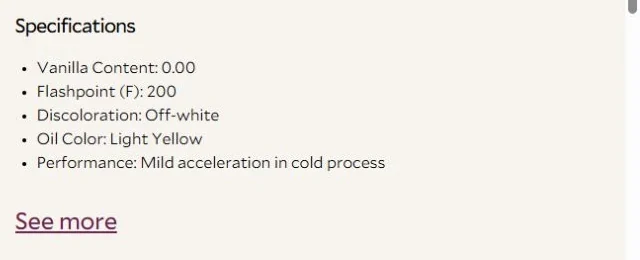
Discoloration concerns the appearance as the soap develops. Read the stated result and any time or recipe conditions. An oil's color in the bottle and the soap's eventual color are different observations. A very pale fragrance is not automatically evidence of a white finished bar.
For a current concrete example, Bramble Berry's Pink Strawberry Fragrance Oil, item IB005885, lists “Mild acceleration in cold process” and “Off-white” discoloration. The same specifications list light-yellow oil color and 0.00 vanilla content. The off-white entry still matters; zero listed vanilla content should not be used to erase an explicit discoloration result. The screenshot preserves the supplier's actual fields.
For a first attempt with that description, plan a straightforward pour with your materials ready before fragrance addition. If the design depends on an especially long fluid window or a very white base, the supplier description raises a question to resolve before committing a full decorative batch.
Keep Candle Results Out of the Soap Column
The Pink Strawberry page also lists medium candle scent strength, no discoloration in candle wax, and candle testing at a 6% fragrance rate with a minimum five-day cure and discoloration noted after 30 days. Those conditions belong to its candle information. They do not establish a 6% cold-process soap recommendation, a five-day soap cure or no discoloration in soap.
This is an easy mistake on a long specifications page: an attractive number appears near the relevant field, but answers a different question. Preserve the application beside each copied value. If a supplier has no cold-process retention observation, record it as unknown rather than borrowing a candle-strength score.
Customer reviews can suggest questions to test, especially when they describe an actual recipe and age. A comment that only says “strong” does not tell you the application, dose, cure age or storage conditions. Several enthusiastic reviews do not supply those missing conditions.
Separate a Usage Recommendation from a Maximum Limit
A supplier's light, medium or strong recommendation helps plan scent intensity for a specified application. An IFRA certificate addresses conformity with restrictions for the particular fragrance mixture and use category. A maximum permitted concentration is a ceiling under those conditions, rather than a target that every soap should approach.
Obtain the current certificate from the supplier for the exact fragrance. Check its identity, issue or amendment information, the category covering your intended bar-soap use, and the denominator of the limit. IFRA explains that upper concentrations apply to the finished consumer product, not the fragrance mixture itself, and that a certificate does not replace the necessary safety assessment.
Do not calculate a final amount from a category you have not identified. If the intended use or document version is unclear, ask the supplier to resolve it. Essential oils and blends also need applicable restrictions; natural origin does not remove the question.
Write the Denominator Beside Every Percentage
“Three percent fragrance” is incomplete unless it says three percent of what. It might describe oil weight, a recipe total defined by a supplier calculator, or a finished-product basis used in a restriction. Those values cannot be exchanged merely because the percentage signs match.
For an arithmetic example only, 3% of 500 g oils is 15 g. If a separate calculation uses a 700 g base, 3% of that base is 21 g. The six-gram difference comes entirely from the denominator. Neither example authorizes that dose for a real fragrance.
Pink Strawberry's instructions tell users to enter the total recipe weight into Bramble Berry's fragrance calculator for light, medium and strong recommendations. Follow the calculator's own definitions and application settings; do not silently substitute the oil total from another tool. Keep the resulting amount and its basis in your batch record.
The wet recipe total and the mass of a cured bar can also differ because water leaves during cure. Do not assume a wet-batter calculation automatically proves compliance on a finished-product basis. Use the supplier's applicable guidance and appropriate finished-product assessment when required. Soap Draftbook's oil/NaOH/water calculation does not perform this fragrance-limit assessment.
Turn the Information Into a Small, Useful Test
Choose a batch size that your checked recipe, scale resolution and equipment can handle accurately. Smaller is useful only while the ingredient quantities remain measurable. Preserve the exact base recipe, water setting and working method so that the fragrance is the main planned difference.
Record the fragrance mass, dose basis, addition point and relevant temperatures. Note the batter state immediately before addition, mixing afterward and observed time to the stages that matter for your pour. “Thickened before the second color was ready” is more actionable than “bad acceleration.” Do not make an unsafe process manageable by rushing unprepared equipment into place.
Where practical, compare similar portions from the same prepared base with an unscented portion, clearly identifying any unequal handling. This is a comparison method, not a claim that dividing batter perfectly controls every variable. Label the resulting bars so the reference and fragranced portions remain distinguishable.
Review Scent and Color at Recorded Ages
Make observations at specified ages and under comparable storage and viewing conditions. Keep photographs of the same relevant face under similar light. Compare the fragrance's character as well as strength: a recognizable top note fading is different from the whole fragrance becoming faint.
Do not decide retention solely from the bottle or fresh batter. Soap Queen's blending guidance explicitly recommends taking a promising blend into the intended product. The same distinction applies to a single fragrance: pleasant concentrate and acceptable cured soap are separate observations.
Retain what worked and what failed for that recipe. If the result conflicts with the supplier rating, record the conditions rather than declaring either source universally wrong. A useful next step is a controlled repeat or supplier question with exact details. Increase scale only when the performance, working time and documented limits support the batch you actually intend to make.