
How to Balance Bubbly and Creamy Lather in a Soap Formula
Select an image to view it at full size.
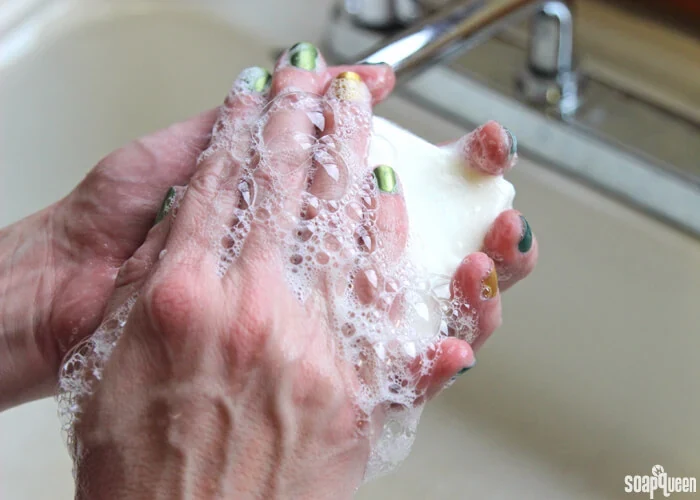
A big cloud of bubbles and a dense, lotion-like lather are different goals. You may enjoy both, but a calculator cannot decide which sensation you prefer. Start by describing the change you want: more initial foam, a denser wash, or bubbles that last longer while you wash.
Those distinctions matter because “more lather” is too broad to guide a formula change. A bar can make obvious large bubbles that collapse quickly, or very little airy foam with a creamy feel. Use the fatty-acid profile to choose a direction, then judge a properly made, cured comparison rather than treating a quality score as the finished result.
Separate Bubble Size, Density and Persistence
Bubbly lather usually means the airy, visibly foamy side of the wash. Creamy lather describes its denser, closer-textured character. Persistence is another observation: how long the lather remains while you continue washing.
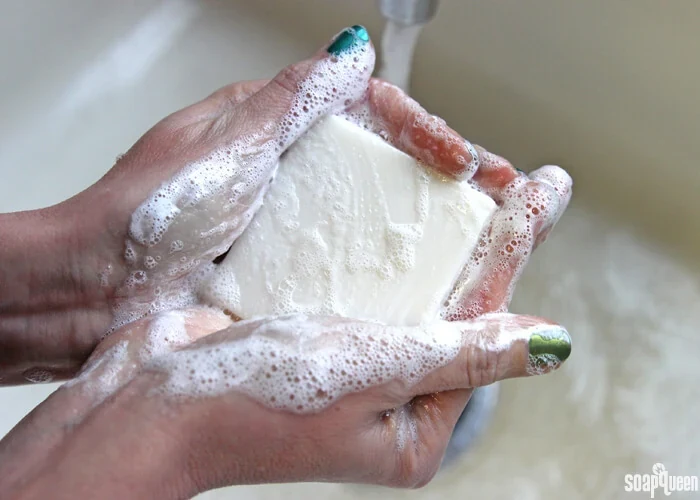
In Soap Queen's published single-oil tests, the coconut-oil soap produced large, fluffy lather that the testers described as stable. The photograph shows visible foam around the bar and fingers. That is a useful example of the airy result a maker might mean by “bubbly.” The cover photograph shows the same source's sweet-almond sample: its unexpectedly fluffy lather was one of the author's surprises, another reason to compare finished bars rather than rely only on broad oil labels.
The test used small single-oil batches with 0% superfat, a six-week cure and lukewarm tap water. Those conditions belong with the result. The photograph does not predict what your mixed-oil recipe will do, and the historical test formula is not a recommended recipe for copying.
When describing your own goal, use a sentence such as “I want more initial foam, but I do not want to lose the dense feel I like.” That gives you two qualities to compare instead of assuming the highest bubbly score is always best.
A Creamy Appearance Is Not the Same as Long-lasting Bubbles
Soap Queen's shea-butter soap made very little visible lather. The testers described it as creamy and lotion-like, yet rated its lather stability poor. In the actual photograph, the hands and bar have a thin wet coating rather than a large pile of foam.
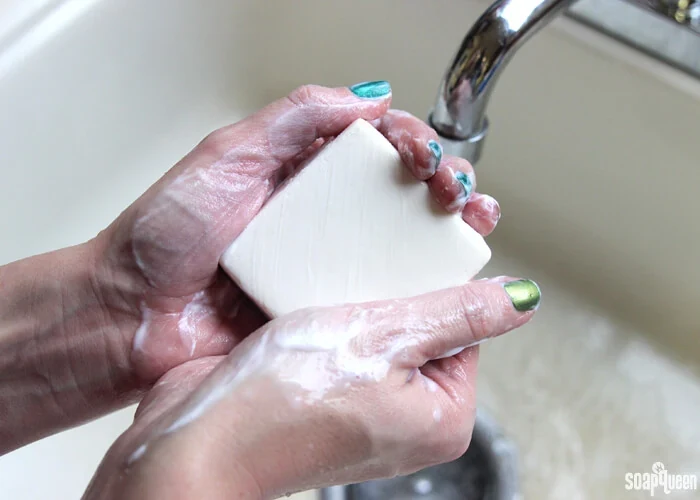
That distinction is especially helpful when you are choosing ingredients for a dense wash. A material associated with creaminess does not guarantee that a soap made entirely from it will produce abundant, persistent lather. Nor does a still photograph show how long its bubbles survive.
Record density and persistence separately. If a bar already feels pleasantly creamy but its foam disappears quickly, simply aiming for a higher creamy number may not describe the problem you need to solve. Look at the overall blend and compare the actual wash.
Read the Fatty-acid Groups as Formulation Clues
SoapCalc groups lauric, myristic and ricinoleic contributions under bubbly lather. Its creamy grouping includes palmitic, stearic and ricinoleic contributions. These labels help you see why changing an oil can move more than one quality at once.
Coconut oil is a familiar direction for airy lather, while palm, lard and several butters contribute fatty acids associated with denser lather. Castor oil is different again: its ricinoleic contribution appears in both lather groupings. Amanda Aaron's recipe-modification guide discusses castor as supporting lather and shea as adding a lotion-like character.
Do not interpret bubbly and creamy as two ends of a fixed scale that must add up to a constant. Their fatty-acid groups overlap. Replacing one oil changes the whole profile, and the result depends on what replaced what. Raising one calculator value does not mathematically require the other to fall.
The numbers also leave out important practical differences. They do not specify your water, how long the bar has cured, how you work up the lather or how you store it between uses. Use them to compare proposed formulas on the same basis, not to certify an exact bubble texture before making soap.
Keep the Castor-oil Example in Perspective
Castor is often described as a lather supporter, which can sound as though using ever more of it will keep improving the result. Soap Queen's single-oil comparison gives a useful caution: its 100% castor soap produced some bubbles, but the testers rated its stability average to poor. Its batter was also notably thick and sticky.
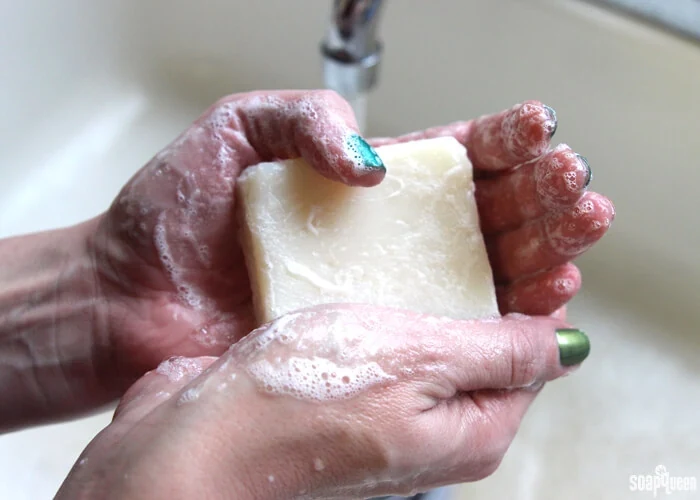
That does not contradict using castor as one component in a blend. It shows why a supporting ingredient's role should not be extrapolated into “more is always better.” Amanda Aaron likewise describes high castor proportions as potentially draggy.
Choose a documented formulation appropriate to your goal rather than building a new high-castor formula from a slogan. If you change an existing blend, identify the oil being reduced as carefully as the one being increased. A proposed five-point increase has a corresponding five-point decrease somewhere else.
Choose a Direction Without Promising a Skin Result
If you want more airy foam, inspect the current blend's bubbly contributors. Increasing coconut is one possible formulation direction discussed by both sources, but Amanda Aaron also notes the tradeoff in cleansing intensity and possible drying feel. A lather preference is not a reason to ignore how the finished bar feels during ordinary use.
If you want a denser, lotion-like wash, inspect the balance of oils and butters contributing palmitic and stearic acids. Avoid assuming any hard butter can be substituted freely for another oil: its required sodium hydroxide amount and the rest of the formula can change.
If the lather feels acceptable but fades too quickly, describe that specifically in your comparison notes. Castor may be relevant to a researched reformulation, but neither a calculator label nor the single-oil picture supplies a universal dose.
None of these choices establishes that a soap treats sensitive skin, moisturizes it to a measured degree or suits everyone. Keep the claim at the level you can observe: the texture, persistence and feel of that particular finished bar.
Recalculate the Complete Proposed Formula
Write the current and proposed oil percentages side by side and make sure each totals 100%. At a fixed 500 g oil batch, shifting five percentage points means moving 25 g from one oil allocation to another. That is an arithmetic example of replacement, not a tested recipe or a suggested amount of any oil.
Enter every actual oil and its new mass into the soap calculator. Retain a deliberate superfat setting and check the water or lye-concentration setting; do not carry over the old sodium hydroxide amount just because total oil weight stayed the same. Different oils can require different alkali amounts.
Save both versions with dates and clear names. A note saying “added castor” is insufficient if it does not say what you removed. Keeping the full formula makes the next comparison understandable and avoids accidental drift across several batches.
Compare Cured Bars with a Simple Lather Record
Use comparable bar ages, the same water source and a similar washing method. Observe initial foam, its texture after working the bar, and whether the lather remains. Do not convert casual impressions into invented percentages of improvement.
| Observation | More useful note |
|---|---|
| Initial foam | Few small bubbles, or an obvious airy foam |
| Texture during washing | Thin, dense, creamy, sticky or mixed |
| Persistence | Remains while washing, or quickly diminishes |
| Finished feel | Your observation of this bar, without a universal skin claim |
| Formula and age | Exact version and cure age used in the comparison |
Change one meaningful formulation variable at a time where practical. Keep a bar of the previous version so you can compare the actual result rather than a memory. If the new bar makes larger bubbles but loses a texture you valued, that is useful information: the goal is a balance you prefer, not a maximum number.