
When Base Oils and Fats Interfere with a Soap’s Intended Scent
Select an image to view it at full size.
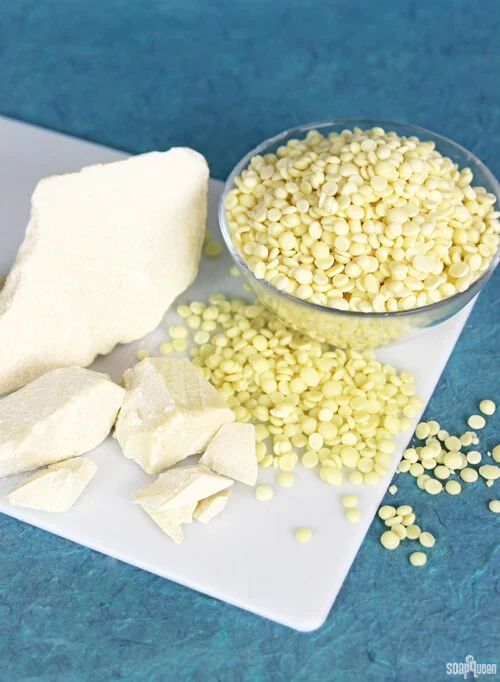
The base ingredients can contribute an aroma of their own, so a correctly added fragrance does not always produce the scent you imagined. Non-deodorized cocoa butter is a useful example: its chocolate-like smell may suit a mint or coffee theme yet compete with a faint floral blend. Other fats may bring an unwanted odor if their grade, preparation or condition is unsuitable. Check those ingredients before assuming that the fragrance simply needs a larger dose.
This is a different question from fragrance fading over months. Start by recording whether the unwanted background was noticeable in the raw ingredients, appeared after mixing, or developed much later. The timing helps separate ingredient selection from a later storage or deterioration problem.
Recognize the Aroma Already in the Base
Soap Queen's cocoa-butter guide describes a distinct chocolate-like aroma in the non-deodorized ingredient and explains why it can hide delicate fragrances. Jan Berry's troubleshooting guide makes the same practical distinction when discussing a mint scent versus a delicate rose scent. Neither observation means that every formula containing cocoa butter will smell predominantly of chocolate. The amount, ingredient grade, fragrance and actual finished result still matter.
The source photograph shows cocoa butter in chunks and small wafers. It identifies the material and forms discussed in the guide; appearance alone does not establish which portion has been deodorized or how strongly it smells. Read the actual product description rather than using shape or color as an aroma test.
Start the ingredient check while supplies are still separately identifiable, before caustic materials are open. Look at the label and the supplier's description: is the material identified as deodorized, unrefined or another specified grade? Is it the same product used in the formula's previous successful batch? Keep the lot or purchase record with the recipe notes if that information is available.
Do not deliberately inhale near lye solution or fresh batter to investigate a smell. Ingredient selection is a preparation-stage check, not a reason to lean over an active soapmaking vessel.
Choose the Grade for the Scent Goal
Soap Queen distinguishes deodorized from non-deodorized cocoa butter and describes the deodorized form as lighter in smell and color. That makes grade a relevant choice when the intended fragrance is subtle. It does not make every pale cocoa butter odorless, nor does a wafer shape by itself identify the processing.
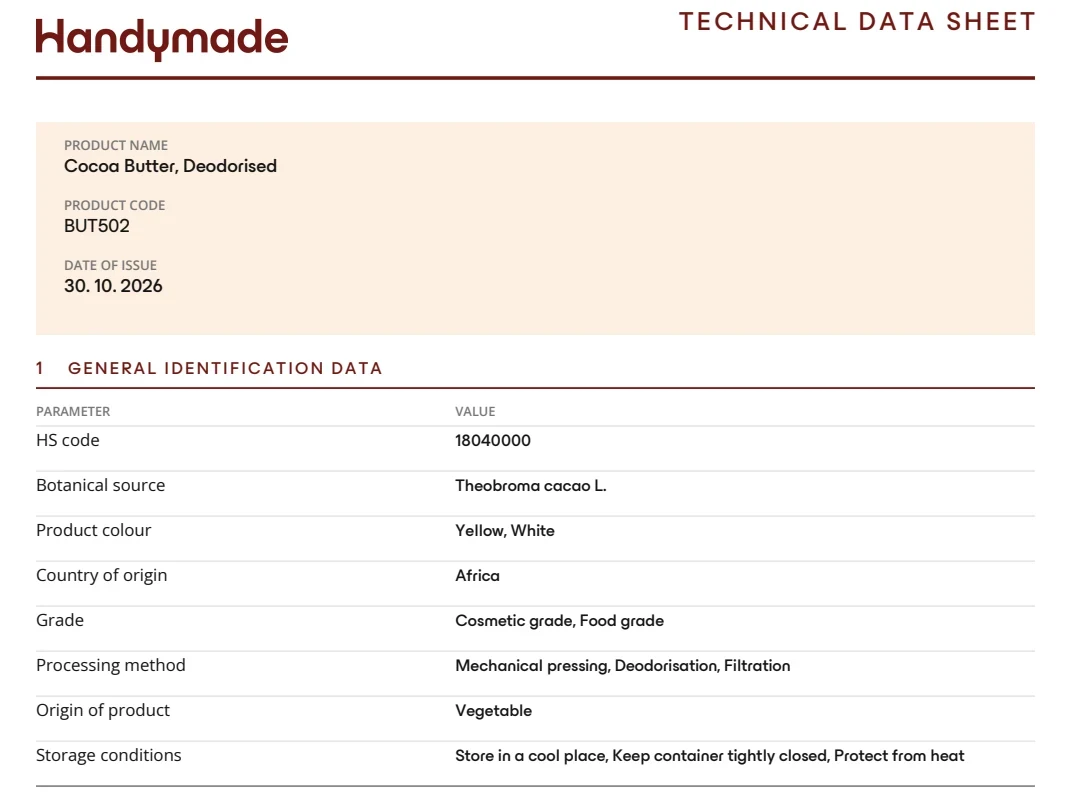
A real example is Handymade's technical data sheet for product BUT502, titled “Cocoa Butter, Deodorised.” The excerpt shows that product name and lists “Deodorisation” under processing method. Those are the words to check against your own supplier's product identity. “Cosmetic grade” and “Food grade” appear separately; neither phrase alone identifies deodorization. This is a label-reading example, not a comparison of scent strength.
For a chocolate-associated design, the natural cocoa aroma may be welcome. For a delicate scent that should have little competing background, choose an appropriate low-odor grade and assess the complete formula rather than trying to overpower the base. Record the exact ingredient identity so that repeating the recipe does not depend on remembering which packet you bought.
If you replace an oil or fat with another ingredient to change its smell, recalculate the actual oil formula before making soap. A scent preference does not remove the need to account for the new ingredient's alkali requirement. Likewise, do not add an unmeasured extra oil to an already mixed batch as a scent correction.
Separate a Characteristic Smell from a Supply Problem
A recognizable cocoa aroma is not the same observation as an unexpectedly unpleasant fat. Jan Berry notes that lard or tallow can carry an unwanted odor into soap and advises avoiding purchased fats with an overwhelmingly strong smell. That is a reason to investigate the supply, rather than treating any odor as something fragrance will automatically cover.
Check whether the ingredient differs from the usual product, whether its storage record is sound, and whether the container or material has changed. Keep a questionable supply separate while resolving its condition. Do not turn the fact that a material is “natural” into an explanation for every strong or unfamiliar odor.
This check cannot diagnose an unknown material by smell alone. If the product identity or condition is uncertain, resolve that issue with the supplier and suitable documentation before formulating with it. Trying a stronger fragrance would add another variable without explaining the first one.
Make the Next Comparison Interpretable
Keep the fragrance product and its documented use amount fixed when the question is whether the base ingredient is contributing an unwanted background. Use a known formula and record the particular grade or lot being evaluated. If you also change the fragrance, oil percentages and cure conditions, you will not know which change altered the scent.
Where practical, retain a clearly identified unscented comparison from the same evaluated base formula alongside the scented sample. Record its preparation and observation dates. This is a way to organize a comparison, not a claim that a single sample can prove how every future batch will smell.
Assess samples only after the formulation and normal batch checks have been resolved; fragrance is not a chemical-safety test. Keep observations specific: “chocolate background competed with the floral note” is more informative than simply “too weak.” It points toward the base grade or scent pairing rather than automatically increasing fragrance.
Avoid Fixing the Wrong Problem with More Fragrance
More fragrance can change both the formulation's use calculation and its mixing behavior. It does not remove the original base odor. Work within the actual product's guidance and use a deliberate formula decision rather than adding more until the smell seems strong enough.
If the background is desirable, build the scent theme around it. If it is an expected ingredient character that does not suit the project, choose a suitable grade or a properly recalculated formula for the next batch. If the supply itself is questionable, resolve that condition first.
Those are three different outcomes. Keeping them separate makes it much easier to repeat a successful scent without blaming every disappointing bar on the fragrance bottle.