
How to Track Soap Weight Loss During Cure
Select an image to view it at full size.
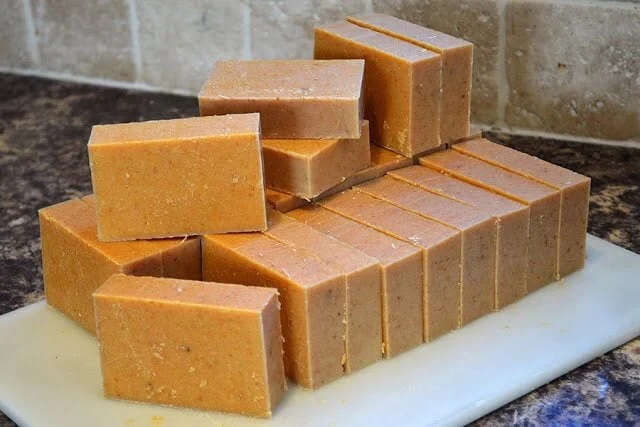
Track curing weight loss by weighing the same identified, unused soap bar at the start and at repeated intervals, then recording its mass and the conditions around it. Compare each new reading with that bar’s own starting weight. A series of readings is useful evidence of mass change; one unchanged reading is not a certificate that a soap is fully cured or correctly formulated.
This works best when the weighing bar remains separate from the bars you wash with. Otherwise, soap washed down the drain becomes mixed into what looks like evaporation. Classic Bells recommends following a freshly cut bar repeatedly over several weeks, rather than trying to judge the process from memory.
Choose a Bar You Can Keep Intact
Give the batch an identifier and choose a representative bar after cutting. Write down which bar it is: for example, “Batch 24, center bar, monitor only.” Keep the identifier on a card beside the bar rather than relying on its color or fragrance. Two pale bars from different batches are easy to confuse.
Record the cutting date and the date of the first measurement separately. If you start three days after cutting, call that your measurement baseline; do not label its mass “freshly cut.” You can still follow subsequent change, but you have not measured the earlier loss.
Choose an intact bar without loose trimming scraps. Do not trim, wash, shave, or repeatedly press it during the observation period. Keep separate bars for lather checks or other comparisons. If the monitoring bar does lose a piece, record that event and mark the later readings as interrupted rather than quietly treating the drop as drying.
Make Each Weighing Comparable
Use a stable scale on a level, firm surface, with the same weight unit and weighing arrangement each time. Check its instructions and choose a capacity and resolution appropriate for the bar. A scale that displays only whole grams cannot resolve a tenth-gram change, even if a spreadsheet later prints extra decimals.
If you put a tray or protective support on the scale, zero or tare it before adding the bar. Wait for the reading to settle. Remove and replace the bar once if a reading is unexpected; a repeat helps reveal an unstable placement or an accidental touch. Record the displayed value rather than estimating extra digits.
Put the bar back in its normal curing position after weighing. Consistent positioning matters: leaving it next to a heater for a day or moving it from a humid room to a dry cupboard changes the conditions you are trying to describe. Lovely Greens’ curing guide emphasizes spacing and airflow and also notes that room dryness affects the process.
Start a Small, Usable Log
Record mass every few days initially, or choose a repeatable weekly schedule that you can maintain. Classic Bells describes following the trend for six to eight weeks; that is an observation period for a useful curve, not a universal deadline for every recipe.
Use a simple table such as this blank record:
| Date | Days since cutting | Bar mass, g | Change since last reading, g | Conditions or events |
|---|---|---|---|---|
| Baseline | — | Bar ID, rack location, scale | ||
| Next reading | Room change, humid weather, handling | |||
| Following reading | Same bar and position? |
Keep the original values even if you later correct a transcription error. A note such as “entered 190.2; checked notebook: 109.2” explains the correction. Replacing an odd value with the number you expected destroys the useful distinction between observation and interpretation.
Calculate Loss from a Clear Baseline
For an illustrative bar that begins at 120.0 g and later weighs 111.6 g:
Mass lost = 120.0 − 111.6 = 8.4 g.
Percentage of initial bar mass lost = 8.4 ÷ 120.0 × 100 = 7.0%.
That is 7% of the initial bar mass. It is not proof that 7% of the original water remains, that all the loss was water, or that the bar now contains a particular moisture percentage. A normal scale measures the whole bar, including everything that has left it or been removed.
For interval comparisons, keep the interval length visible. Losing 0.4 g over two days is a different rate from losing 0.4 g over two weeks. You can calculate average change per day by dividing the interval’s mass change by the elapsed days, but do not let that average imply a perfectly steady daily process.
Read a Trend Rather Than One Final Number
A plot with time on the horizontal axis and bar mass on the vertical axis makes a slowing loss easier to see. The example plot uses illustrative values, starting at 120.0 g and reaching 111.6 g on day 21. Classic Bells describes the general pattern of faster early loss followed by a gentler slope; your own series need not match its shape or time scale.
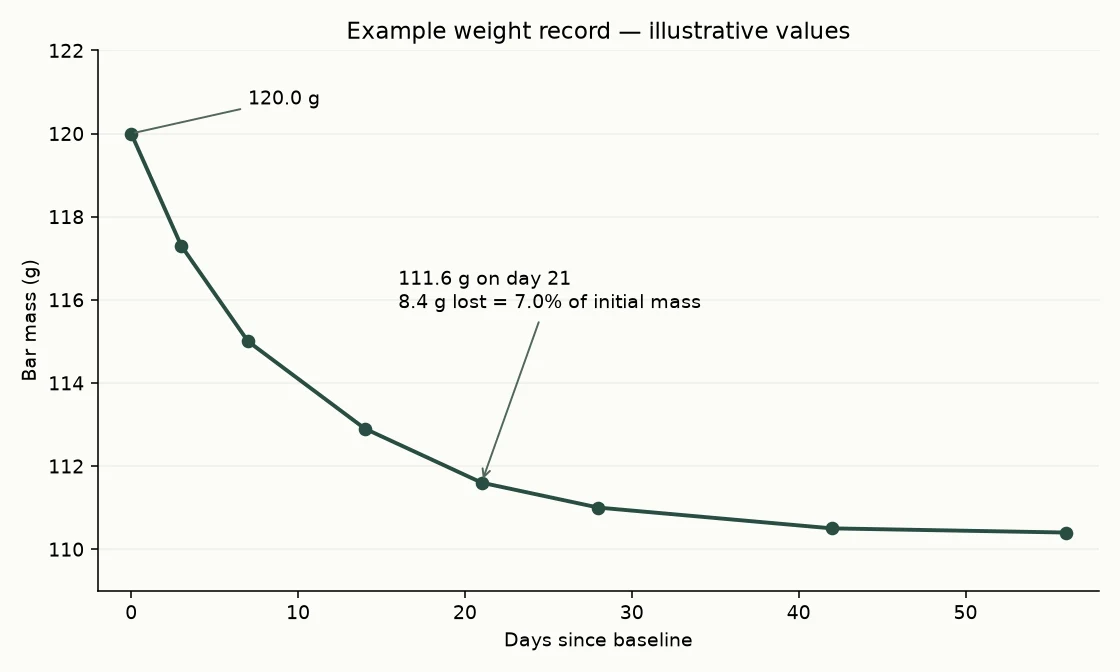
Several similar readings suggest that mass is changing slowly under the conditions and resolution you used. They do not mean “no water remains.” Nor does a plateau establish that the recipe contained the right lye amount. The calculator result, batch record, and any required formulation checks remain separate from this weighing exercise.
A small increase deserves a note, not an automatic deletion. Ask whether the scale arrangement changed, whether you weighed a different bar, whether there was a damp-room event, or whether the number was copied incorrectly. If you cannot explain it, retain it and continue the series. You can describe the uncertainty without forcing the line to slope downward.
Use the Record to Make the Next Decision
Keep the oil blend, water setting, bar dimensions, and storage conditions with the weight log. Comparing two batches without these details may compare different recipes or different drying environments rather than two cure lengths.
If your question is when a particular recipe usually slows its mass loss, repeat the procedure on another batch of that recipe. If your question is whether older soap performs differently, use additional reserved bars and a consistent comparison method; do not turn the monitoring bar into a wash-test sample midway through its weight series.
Save the recipe version in Soap Draftbook, and keep the actual weighing log alongside its batch identifier. The calculator’s water output describes what the formula calls for before making. The log describes what happened afterward. Keeping those records distinct makes both more useful.