
How to Use Cured-Batch Notes to Choose Your Next Formula Change
Select an image to view it at full size.
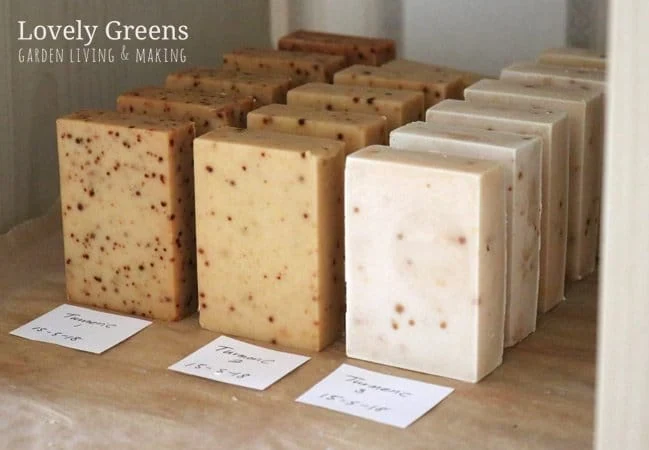
Use cured-batch notes to identify a repeatable problem, choose one plausible formulation change, and compare that change with a saved baseline. Before altering the oils or lye discount, check that the difference was not caused by cure age, bar size, storage, or the way the soap was used. A useful next recipe is a test of an explanation, rather than a collection of fixes added at once.
Amanda Aaron’s formulation guidance at Lovin Soap follows this practical sequence: let soap cure, record what you like and dislike, identify what needs to change, and recalculate the revised recipe. The important part is making those observations specific enough to guide a decision.
Begin with a Comparable, Identifiable Batch
Find the exact recipe version behind the bars you are judging. Record its oil identities and percentages, oil total, lye discount, water basis and value, and any fragrance, colorants, or other additions. Keep what you actually weighed alongside what the recipe called for. A substitution or weighing deviation is part of that batch’s identity, even if it never reached the saved calculator record.
Then record the batch date, cutting date, age at evaluation, and curing location. “Six weeks old, stored on the upper shelf in a dry room” is more useful than “fully cured.” Cure and performance do not follow one identical timetable for every formula or environment. Classic Bells describes changes in weight and performance over weeks and longer; Lovely Greens also emphasizes airflow and room conditions.
If one batch is substantially younger or has been kept in a damp cupboard, give that difference a chance to explain the result before changing the oils. You can continue observing the existing bars without committing to another batch immediately.
Write the Observation Before the Proposed Remedy
Separate what happened from what you think caused it. For example, “bubbles build quickly but collapse before I finish washing” describes an observation. “Needs more castor oil” is a proposed explanation and intervention. Keeping these in separate fields prevents the proposed fix from becoming an assumed fact.
Useful observations include how easily lather starts, whether it persists, how the bar wears during ordinary use, whether a wet surface stays soft, and whether the fragrance or appearance changes. Describe your washing conditions: running water or a basin, hands or washcloth, and whether the bar drains between uses. Do not compare a bar left in water with another that dries on a draining dish and attribute the whole difference to the recipe.
For personal skin feel, use plain observations such as “my hands felt tight afterward,” rather than diagnosing the cause or claiming a measured moisturizing effect. If a bar causes irritation, stop using that bar; repeated washing is not a useful way to force a comparison through an adverse reaction.
Sort Likely Causes Before Choosing a Formula Change
Use the notes to decide which question to investigate first:
| What the record shows | First question | A useful next action |
|---|---|---|
| A young bar feels soft and is still losing mass | Is the evaluation simply early for this batch? | Continue observing reserved bars before reformulating |
| The bar becomes mushy only in one soap dish | Is drainage or use frequency different? | Compare similar bars with the same drying arrangement |
| An otherwise comparable mature batch has fleeting lather | Is the oil blend a plausible contributor? | Plan one documented oil-share substitution and compare it |
| A new batch behaved differently after several changes | Which change could explain the result? | Return to a known baseline and separate the changes |
The purpose is not to establish a universal troubleshooting chart. It is to stop an environmental or recordkeeping problem from automatically becoming an ingredient change. If you cannot reconstruct the formula or actual quantities, the next useful step may be a well-recorded repeat of a checked recipe.
Choose One Formulation Question
Define success in words before changing numbers. “I want lather to persist longer under the same washing conditions” is a clearer target than “make better soap.” Also record what you want to preserve, such as workable pouring time, acceptable wear, or a familiar fragrance.
Lovin Soap discusses castor oil as a contributor to lather stability and coconut oil as a contributor to abundant lather, while noting tradeoffs as their proportions change. Treat this as a reason to select a comparison, not a promise that one ingredient will solve every batch problem. Changing several oils, the water setting, and the lye discount together leaves you with no clear answer about which change mattered.
For an illustrative calculation, suppose a blend is 60% olive, 30% coconut and 10% shea. A comparison that investigates a 5% castor share might use 55% olive, 30% coconut, 10% shea and 5% castor. The planned factor is replacing five percentage points of olive with castor; two rows must change to keep the oil total at 100%. These example proportions organize a comparison, rather than establishing that either formula is suitable for your ingredients and process.
Recalculate the Complete Recipe
Preserve the original before editing. In the calculator, check the exact supported oil identities and reference assumptions, then change the planned oil shares. Recalculate NaOH and water together with the lye-discount, purity and water-basis settings visible. Do not carry the old lye quantity into a new oil blend just because the oil total is unchanged.
If you also resize the trial, record both changes: a smaller oil total and a different oil distribution. Resizing a blend explains how to preserve percentages when changing the target. A capacity estimate for a mold is a separate check; it does not come from calling a recipe “small.”
Keep added fragrance and other materials in the batch record too. Soap Draftbook does not automatically account for those additions, milk, acids or other reactive adjustments. A comparison involving them needs the appropriate separate formulation work, rather than assuming that an unchanged oil calculation covers everything.
Set up the Next Record Before Making the Trial
Create a batch identifier and link it to the saved baseline and trial versions. Write the intended change in one sentence: “Replace five percentage points of olive with castor; keep the other planned inputs and evaluation conditions comparable.” Record any actual deviations when they occur.
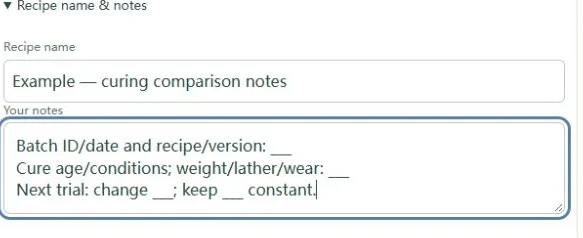
The illustrated notes field contains blank example headings, not observations from a made batch. It can remind you to record batch identity, cure age and conditions, weight/lather/wear observations, and the variable to change next. Keep longer logs and photographs in your own batch records, linked by the same identifier. The workspace has a general recipe-notes field; it does not measure the finished soap or create an automatic cure record.
Reserve enough bars to evaluate at the same chosen ages. Use consistent bar sizes and handling, and keep an unused bar separate if you want an evaporation record. Repeatedly washing the weighing bar changes its mass for another reason. Where possible, repeat a promising comparison with another independently made batch before treating a single result as reliable.
Decide Whether the Change Earned a Place
At the planned review, compare the original goal and the tradeoffs you recorded. Did lather persist longer under the same conditions? Did wear, fragrance, or working behavior become less acceptable? “More bubbles” is not automatically a better result if it sacrificed the property you were trying to keep.
Record the decision as well as the outcome: retain the baseline, adopt the trial for another repeat, or investigate a different explanation. If the result is unclear, that is a useful result. Keep the formula versions and notes instead of quietly renaming the latest batch “improved.”
Finally, export a library backup after saving the versions you need. Your recipe files, actual batch observations and next comparison should remain connected, while still making clear which quantities were planned and which outcomes were observed.