
Why Soap Quality Scores Are Not a Finished-Bar Test
Select an image to view it at full size.
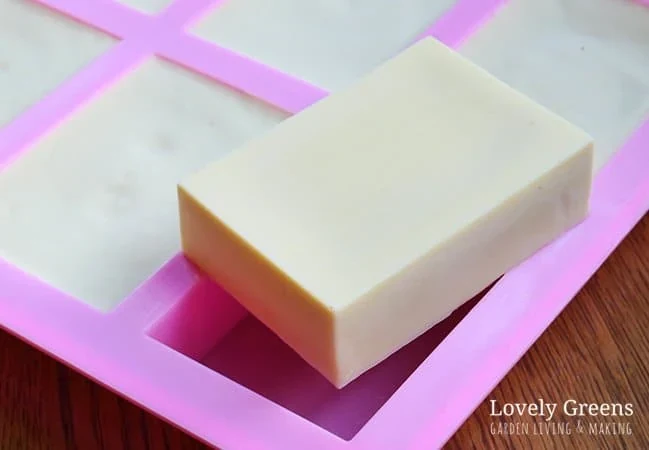
Soap quality scores are calculations from reference oil compositions. They are useful for describing a proposed blend, but they are not measurements made on your finished bars. A recipe outside a suggested range is not automatically a failed recipe; a recipe inside every range has not thereby passed a performance or safety test.
The names can obscure this distinction. “Hardness,” “cleansing” and “conditioning” sound like direct observations of a product. In common calculator systems, however, they are sums of selected fatty-acid percentages. Start by asking what was added together and what the calculation leaves out.
Read a Score as a Compositional Indicator
Classic Bells explains several familiar SoapCalc-style definitions. These are based on the reference fatty-acid profile of the oil blend, rather than a test of a bar made from it.
| Score name | Common fatty-acid sum | Important limit |
|---|---|---|
| Hardness | Lauric + myristic + palmitic + stearic | Physical hardness is not the same as wear rate in use |
| Cleansing | Lauric + myristic | Zero does not mean soap cannot clean |
| Bubbly | Lauric + myristic + ricinoleic | Not a measured quantity of foam |
| Creamy | Palmitic + stearic + ricinoleic | Other components also affect lather |
| Conditioning | Oleic + ricinoleic + linoleic + linolenic | Not a measurement of skin moisturization |
Check the definitions used by the calculator in front of you; do not assume every site uses identical terminology or source profiles. Two databases can also use different reference fatty-acid values for an oil, so a small score difference may begin in their inputs rather than in a changed formula.
The same caution applies to an attractive chart. Colored bars make a reference interval easier to scan, but the color is a display of the rule chosen by the software. It does not turn the interval into a product certification.
Keep Hardness, Solubility and Lather Separate
A zero bubbly or cleansing number also does not mean a bar produces no lather or has no cleaning action. The sums exclude fatty acids that can still contribute useful soap properties. Olive-oil soap is a familiar example: its lather can be creamy rather than a large fluffy foam, and the source photograph shows actual lather from Lovely Greens’ castile recipe.
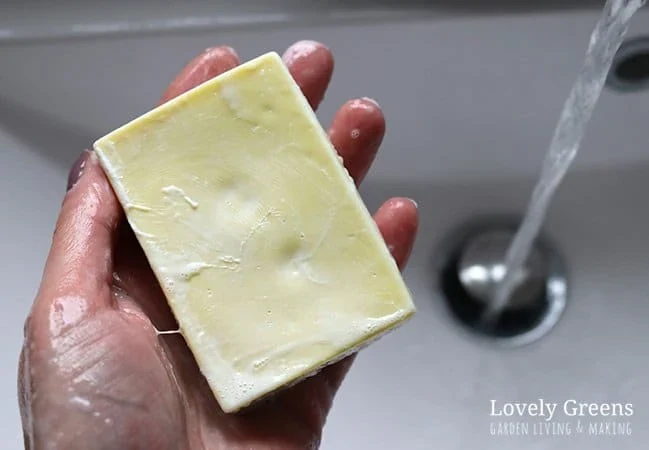
That picture illustrates a real example, not a standardized foam-volume test. It does not establish how every olive-oil bar will perform at every age, with every water supply or for every user. Use it to question an overly literal interpretation of “zero,” rather than to replace one universal promise with another.
A bar can be physically hard yet dissolve relatively quickly in use. Classic Bells illustrates this with coconut-oil reference numbers: a hardness value of 79 and a cleansing value of 67. Subtracting the latter from the former gives 12, corresponding to the remaining palmitic-plus-stearic contribution in that particular reference profile.
Some makers use that difference as another compositional indicator and call it “longevity.” It is still not a prediction that a bar lasts a specified number of showers or hours. Actual wear depends on more than that sum, including the state of the bar and how it is used and allowed to dry.
Know What the Scores Leave Out
In the definitions above, changing the lye-discount setting does not change the blend’s fatty-acid sums. That does not mean the change has no effect on the soap. Similarly, additives, water amount, manufacturing choices and cure are not fully represented by those five composition scores.
Water conditions matter when comparing lather. Hard-water minerals react with soap and can change the result at the sink. A bar evaluated under different water conditions is therefore not a controlled comparison merely because its oil percentages are known.
Other important information is missing too: the scores do not verify the ingredients actually weighed, the identity of the NaOH product or whether the stored recipe matches the batch made. A formulation chart cannot detect an unrecorded weighing error.
This is why a result such as “conditioning 60” should not be rewritten as “60% moisturizing” or as a guarantee for sensitive skin. The name labels a selected sum; it is not a clinical measurement of what the bar does to a person’s skin.
Treat Iodine and INS as Additional Screens
Iodine value relates to unsaturation in a fat or blend. INS combines saponification value with iodine value. Classic Bells traces their role in evaluating fat blends for commercial soap manufacture and explains why a single preferred INS has limited meaning for different handmade-soap goals.
An INS near 160 is sometimes presented as ideal, but an isolated target cannot describe all the qualities a maker wants. Different blends can share an INS while producing different lather and wear behavior. Pure olive-oil soap also provides a familiar counterexample to treating an INS below a suggested range as automatic failure.
Likewise, a high iodine value can be a reason to investigate softness or susceptibility to rancidity, not proof that a particular bar must develop a defect. Treat such numbers as questions about the composition and the intended formula. Do not reject or approve a batch solely because one composite number crosses a suggested boundary.
Use a Sequence That Keeps the Important Checks Visible
First verify the recipe inputs: exact oil identities, coherent weight units, total oil amount, appropriate reference values, lye discount, documented purity assumption and the intended water setting. Resolve an unknown ingredient or an unexplained lye discrepancy before interpreting cosmetic differences between score charts.
Then use the available profile information to describe the proposed change. For example, identify which ingredients changed the relevant fatty-acid groups rather than saying only that “hardness went up.” Keep the original formula and settings as a comparison baseline.
Finally, evaluate appropriate actual batches under recorded conditions. Keep bar age, storage and the water used for a comparison in the notes. Distinguish observations of unmolding, fresh-cut appearance, lather character and wear over use. They are different observations at different times, not interchangeable meanings of “good soap.”
An uncertain formula or suspected weighing error calls for verification, not an informal skin or lather experiment as a safety test. A score chart does not settle that uncertainty.
Understand What Soap Draftbook Calculates
Soap Draftbook currently calculates lye and water from its documented reference inputs; it does not supply these finished-bar quality scores. Its results should not be read as a prediction of hardness, conditioning, handling safety or overall suitability.
If you compare its quantities with another calculator, align the assumptions used for those quantities. If you separately consult a quality profile, keep that screening step distinct from the alkali calculation and from observations of a real batch.
The useful question is not whether every number sits inside a colored band. It is whether you understand the proposed blend, have checked its actual inputs and conditions, and can explain what evidence supports the particular result you care about.