
Oil Weight, Wet Batter and Cured Soap Weight: What Each Total Means
Select an image to view it at full size.
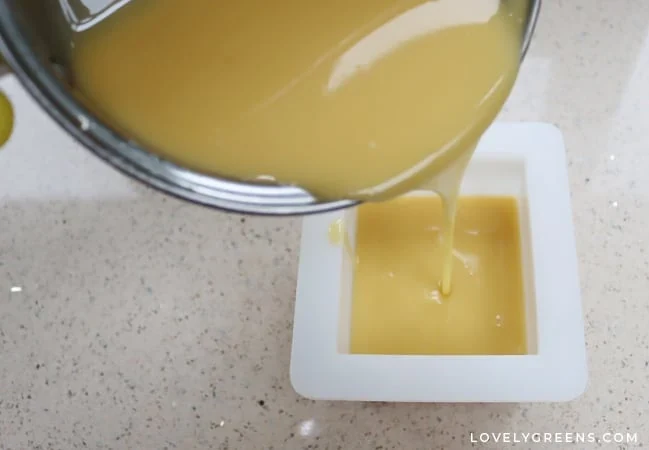
A “500 g batch” may mean 500 g of oils, 500 g of fresh soap batter, or 500 g of bars weighed later. Those are different quantities. In Soap Draftbook, the oil target is oils only. The displayed total before additives combines oils, NaOH product and added water; it is not the weight of cured soap.
Before using a recipe, mold description or yield claim, attach a meaning to its number. “Five pounds of oils” is usable as an oil target. “Five-pound mold” needs clarification. “Five pounds of finished bars” describes an outcome at a particular age, rather than an input you can copy into the calculator.
Start with the Oil Total
Add the weights of all base oils and fats. Include ingredients that look solid, such as shea butter or coconut oil: their physical state does not remove them from the oil blend. Do not include water, sodium hydroxide, fragrance or the container in this sum.
For example, 300 g olive oil, 150 g coconut oil and 50 g shea butter give 500 g total oils. Their oil percentages are 60%, 30% and 10%. The denominator remains 500 g even after other ingredients are added.
This matters when a recipe says “use 5% of oils.” In that example, 5% of oils means 25 g. It does not mean 5% of whatever the pan happens to weigh. Nor should a percentage-based oil calculator receive percentages calculated from the whole wet batch. Its oil shares must add to 100% within the oil blend.
An oil total is a useful common basis for comparing formulas and changing their size. It does not tell you how much space the eventual batter occupies. The resizing guide explains how to preserve the blend at another oil target.
Add Lye and Water to Describe the Fresh Batch
Fresh batter includes more than the oils. For a simple accounting example, suppose a calculation has 500 g oils, 70 g NaOH product and 140 g added water. Before additives, those planned inputs sum to 710 g. The 70 g figure here is an arithmetic example, rather than the lye requirement for every 500 g blend.
| Quantity | What is included | Example |
|---|---|---|
| Oil total | All base oils and fats | 500 g |
| Planned total before additives | Oils + NaOH product + added water | 710 g |
| Planned total with additions | The above plus separately accounted additions | Depends on the additions |
| Actual amount transferred | Material that reaches the mold | Weigh and record it |
NaOH and oils react to form soap; their weights do not simply disappear when saponification happens. At the same time, material can remain on the pan and utensils, and water can be lost during handling. The sum of planned inputs is therefore a planning total, not a guarantee of the weight poured into the mold.
Keep additions separate in your record. Soap Draftbook does not adjust its chemistry for milk, acids, salt or other additives, and its total before additives does not silently include them. Recording an addition is not the same as having accounted for its chemical effect.
Separate the Container from Its Contents
The mass on a scale can include a pot, liner or mold. To record contents alone, use the scale’s tare function correctly or subtract a separately recorded empty-container weight. Compare weights with the same included equipment each time.
Suppose a dry lined mold weighs 420 g and the mold with freshly poured batter weighs 1,110 g. The net transferred amount is 690 g. Compared with the illustrative 710 g planned input total, that leaves a 20 g difference to investigate in the batch record. It is not evidence that the oil blend somehow became a 690 g oil recipe.
Check what was actually weighed before interpreting such a difference: was the liner present for both readings, was some batter deliberately left over, and were all intended inputs used? If an ingredient amount is uncertain, a total-weight comparison cannot reconstruct its identity or correct the recipe.
Treat Cured Weight as a Dated Measurement
Freshly unmolded bars still contain water. During cure, evaporation normally reduces their weight, while other changes in the soap continue. Cured soap is not simply the original oil weight, and it is not necessarily the wet-batter total minus all the water originally added. Some water remains in the bars.
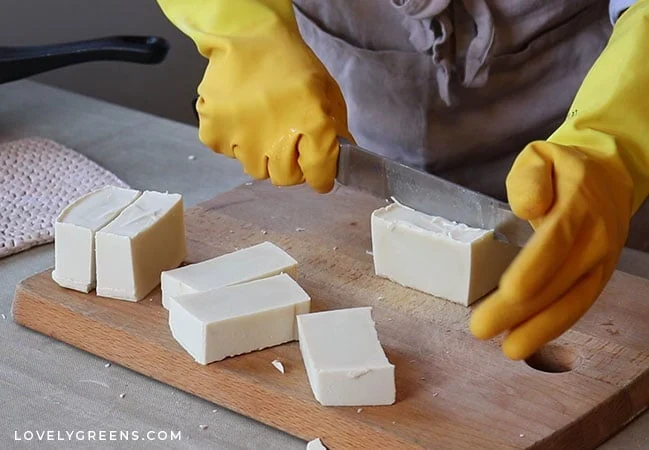
Cutting a loaf divides its material; it does not establish a final cured mass. A freshly cut 110 g bar and the same bar weighed weeks later are measurements of one bar at different stages. To compare them, identify the bar and record the date or age with each reading.
If that bar later reads 101 g, the observed loss since cutting is 9 g, or about 8.18% of its 110 g starting weight. Do not apply that percentage to every future formula. Water amount, bar size, environment and storage conditions can differ. Weight change is also not a stand-alone safety or complete-cure test.
Ask What a Mold or Yield Claim Means
A mold capacity might be stated as volume, fresh-batter mass or an oil-weight estimate. The same number cannot serve all three roles. Ask whether the supplier’s figure includes headspace and what recipe assumptions sit behind an oil-weight recommendation.
For a target such as “twelve 100 g bars,” clarify whether 100 g is a fresh-cut target or a later measured weight. Record the age, trimming and number of usable bars. A calculator can scale the planned inputs, but it cannot promise the cured yield or account for losses it has not measured.
Keep four separate lines in a batch record: planned oils; planned complete inputs; actual net amount poured; and dated bar weights. That separation makes a weight discrepancy understandable without changing the meaning of the original recipe.