
Why Does Cold Process Soap Crumble When I Cut It?
Select an image to view it at full size.
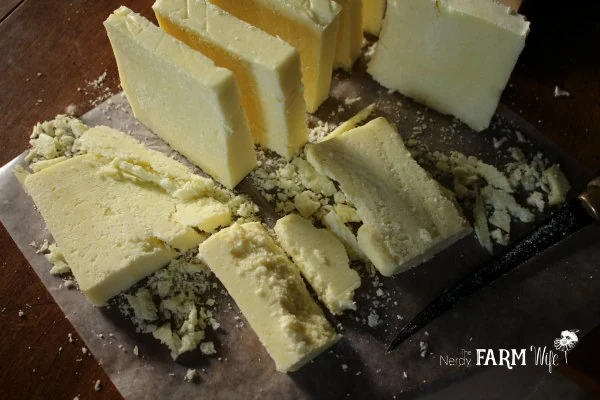
Crumbly soap is not a single diagnosis. A salt loaf cut too late, an ungelled batch cut while still delicate, excessive sodium lactate and an incorrect alkali amount can all call for different responses. “Wait longer” is useful for some young soaps but can make a salt loaf harder to cut.
Stop cutting the whole batch once the first slice starts breaking apart. Save its recipe and timeline, then identify which conditions actually apply. The appearance of the crumbs alone cannot tell you whether the formulation is correct.
Check the Formula Before Blaming the Cutting Tool
Recover the complete oil amounts, sodium hydroxide amount, superfat and water settings, plus additives. Compare the amounts actually weighed with the intended recipe. Check substitutions and scaling: keeping total oil weight unchanged does not guarantee that the old alkali amount still fits a different oil blend.
Jan Berry's troubleshooting guide identifies excessive lye as one possible cause of hard, crumbly soap. It also points to inaccurate scales and low batteries as potential sources of weighing errors. Re-enter the exact formula in the calculator and examine the weighing record rather than assuming a recipe found online must be correct.
A calculator can check the formula you enter. It cannot confirm what an uncertain scale actually delivered. If the scale was unstable or an ingredient amount is unknown, record that limitation instead of choosing the nearest plausible number.
Do not use crumbs on your skin as a diagnostic test, and do not add oil or water simply because they seem likely to soften the texture. A known excess-alkali problem needs a reliable, quantified assessment; an unknown one does not become resolved through a change in appearance.
Audit Sodium Lactate Separately
Sodium lactate is often used to help a bar become firm enough to unmold. Berry notes that excessive amounts can instead contribute to hard, crumbly texture. More of a hardening additive is therefore not a general solution for difficult cutting.
Check the actual product, concentration if supplied as a solution, amount and batch basis used. A teaspoon copied from another recipe may not be meaningful after a batch-size change or with a different preparation. Use the current product's guidance for the intended method rather than treating a historical spoon-based amount as universal.
If sodium lactate was the only meaningful difference between two otherwise comparable batches, retain both records. That makes it possible to select a measured, documented approach next time. It does not prove that sodium lactate explains the present batch without first checking the alkali and other additions.
A Chilled, Ungelled Batch May Be Too Delicate to Cut Yet
Berry describes soaps kept out of gel in a refrigerator or freezer as sometimes initially soft or crumbly at the edges. For that particular history, she advises allowing the soap to return to room temperature and rest before trying again.
The useful observation is the batch's condition, not a universal countdown. If a normal, non-salt loaf has a sound formulation record but its first slice breaks because the soap is still delicate, leave the remainder undisturbed and reassess later. Cutting repeated test slices will not strengthen the loaf.
A room-temperature rest is not a complete cure, nor is it proof of chemical suitability. Keep that distinction clear if the batch was also made with an uncertain alkali amount. Waiting addresses a handling question only after the formulation questions have been considered.
Salt Bars Can Have the Opposite Timing Problem
High-salt soaps can firm very quickly. Berry's actual dandelion salt-bar photograph shows severe crumbling that she attributes to waiting too long to cut. She recommends individual cavity molds as a way to avoid slicing a loaf altogether.
Amanda Aaron's salt-bar cutting tutorial gives a contrasting source example: a loaf cut shortly after it set up. Her particular batch was ready after about 25 minutes, and she describes other batches reaching a suitable window at different times. Those observations show why an ordinary next-day cutting routine can fail; they do not establish a timer for every salt formula.
Record the salt amount and its basis, the oil blend, mold and actual timeline. Aaron notes that increasing the salt proportion makes loaf cutting trickier. Do not assume two recipes called “salt bars” have interchangeable handling simply because both contain salt.
For a future batch, choose a documented salt-soap method and prepare the molds and cutting equipment before pouring. Stay available to observe the loaf. A firm exterior and the passage of a familiar number of hours are not substitutes for following the relevant method.
Choose Cutting Tools for the Loaf and Its Topping
Aaron's process photograph shows her using a wire cutter on the warm salt loaf. She reports some crumbling and says a smooth-bladed knife would have given a better result. Her result is a reason to select the cutter deliberately, rather than assuming an ordinary wire-cutting routine transfers unchanged.
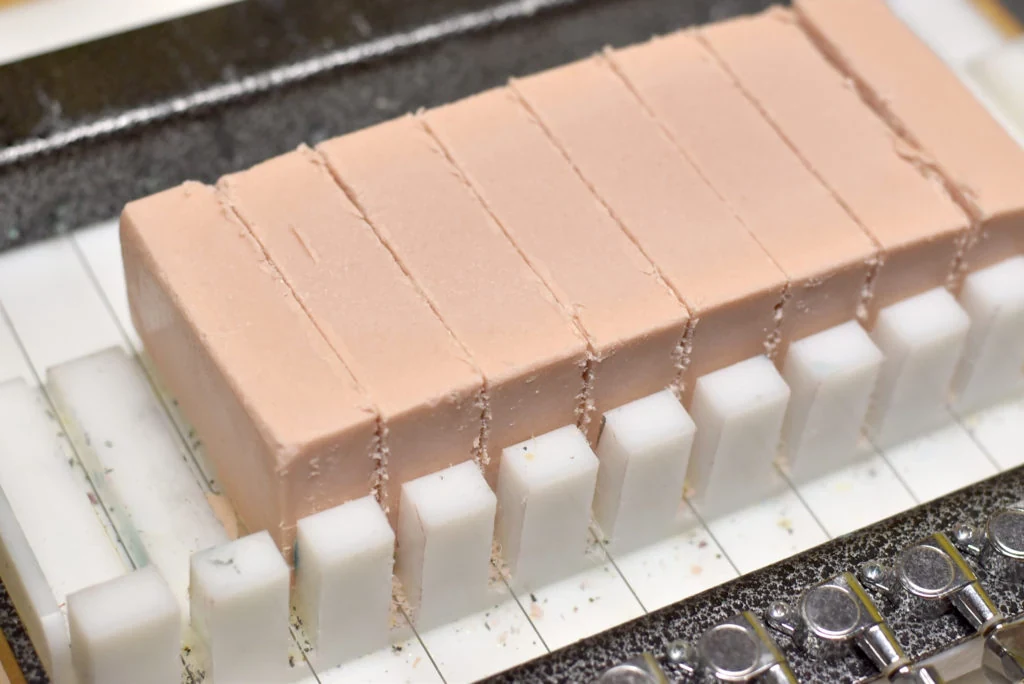
She also turned the loaf with its decorated top downward so the coarse topping would not be dragged through the bar. That is a specific design detail worth noticing when comparing cutting damage: a rough topping can introduce marks separate from the underlying soap's texture.
Fresh soap still needs appropriate protective handling during early cutting. A loaf becoming firm enough to slice does not mean it has completed curing. Follow the method's protection and handling requirements instead of judging readiness for ordinary use from firmness.
Keep a Few Crumbs in Perspective Without Dismissing a Fault
Aaron's finished salt bars retain some roughness even when cut during her chosen window. The actual result photograph is useful beside Berry's severely crumbled batch: a few irregular edges and a loaf breaking apart are different observations.
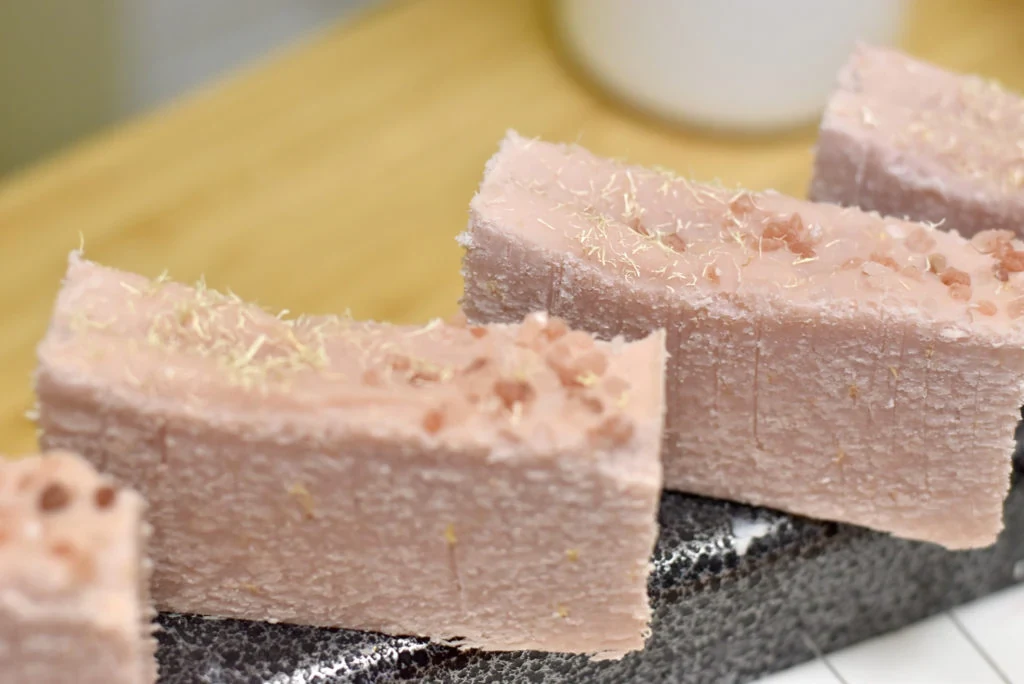
That comparison does not diagnose alkali balance by sight. It helps you describe the extent and location of mechanical damage while still using the batch record to investigate its cause.
| Batch history | Question to resolve |
|---|---|
| Unknown or inconsistent weighing | Can the actual formula and alkali amount be established? |
| Sodium lactate added or increased | Was the product, amount and batch basis appropriate? |
| Chilled, ungelled ordinary soap | Was it still too delicate when cutting began? |
| High-salt loaf left until very hard | Was its short cutting window missed? |
| Coarse or decorative topping | Was material dragged through the cut? |
If the record is sound and the issue is cutting damage, keep the broken bars separate while they undergo the appropriate cure and assessment. Do not turn an unresolved formulation problem into a “rustic” product merely by changing its label.
For the next batch, choose the response that matches its history: a later attempt for a delicate ordinary loaf, a better-prepared early cutting plan or individual molds for salt soap, or a corrected additive and weighing process. The same crumbly appearance does not justify the same fix.