
How to Reduce Scent Fading in Cold Process Soap
Select an image to view it at full size.
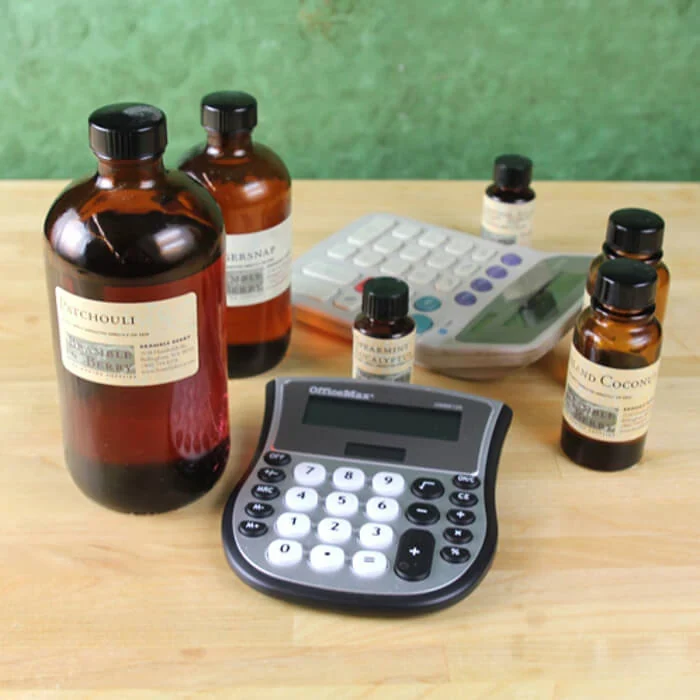
A soap that smells bright in the mold can smell quieter after curing. That change does not necessarily mean you forgot the fragrance, and adding more next time is not automatically the answer. The scent may have started as a poor match for cold process soap, the amount may have been calculated on the wrong basis, or a delicate note may simply have become less prominent.
Begin with the exact scent product and a batch record. Then separate three questions: was the dose correct, did the scent suit this process, and did storage make a fair comparison possible? Those checks give you a more useful next batch than simultaneously adding clay, changing the blend and increasing fragrance.
Check the Scent’s Identity Before Changing the Amount
“Orange essential oil” is not a complete product description. A supplier may offer different preparations, and a fragrance with an orange name is not interchangeable with an essential oil. Record the supplier, full product name, version or grade where given, and purchase or lot information. A bottle suitable for another use is not automatically appropriate for soap.
Look for current cold process performance notes for that exact product. Soap Queen's 2015 scent-fading guide describes some citrus essential oils and coconut fragrances as light in cold process even at the recommended amount. It also discusses alternatives that performed differently in its product range. Those are historical examples of product differences, not a current shopping list or evidence that every folded citrus oil will behave alike.
The smell straight from the bottle cannot settle this question. The finished bar has undergone a chemical process and has a different environment from the concentrated scent. Supplier observations from actual cold process tests are more relevant than a candle review or the strength of the undiluted bottle.
Reconstruct the Dose and Its Calculation Basis
Keep the amount actually weighed, not just “medium scent” or “three percent,” in your notes. A percentage is incomplete unless its denominator is clear. Three percent of the oils and three percent of the entire batch are different masses.
For an arithmetic example only, a hypothetical rate of 2% of 500 g of base oils gives 10 g of scent. The same numeric percentage applied to a hypothetical 750 g total batch gives 15 g. Neither figure is a recommendation for a real product; the example shows why copying a percentage without its basis can change the addition substantially.
Use the exact product's current supplier instructions and applicable use limits for the intended rinse-off product. If a supplier calculator is used, record what product and batch basis you entered. A maximum permitted amount is a ceiling, not a promise of a strong or pleasant result. A lighter-smelling product does not become appropriate at an amount above its limit.
Do not carry the old ounce-per-pound rates in a historical tutorial into a new formula. Soap Queen's article includes historical calculator examples, but its useful general point is that limits and strength vary by scent. Replacing a scent also means checking the new product rather than keeping the previous bottle's amount by habit.
Treat Anchoring as a Blend Decision
A deeper scent can make a blend smell fuller after cure. Soap Queen describes pairing light notes with earthy or more complex components such as patchouli. That can be a reasonable design direction when the finished scent you want includes those notes.
It does not establish that patchouli physically preserves every citrus component. A blend that still smells noticeable may have changed balance: its deeper component can remain prominent while the bright note is quieter. Decide whether you like that finished blend rather than treating persistence of any aroma as proof that the original top note survived unchanged.
Changing a blend also changes the products and quantities that need checking. Do not simply add an “anchor” on top of an already fully dosed fragrance. Document the proposed blend and obtain appropriate guidance for its components and intended use before making the next batch. A small, recorded comparison is more interpretable than an unmeasured extra splash.
Keep Clay and Flash Point Claims in Proportion
Kaolin is often suggested as a scent-retention fix. The Soap Queen guide explicitly says it had not done extensive scent testing with kaolin. Its observations about slip and color are not proof of retention. Clay also changes the formula and handling, so adding it at the same time as changing fragrance would make it harder to know which change mattered.
A fragrance's flash point is not a single temperature at which all its scent disappears. It concerns ignition under specified test conditions; it is not a scent-retention rating. The same guide says its authors had not noticed substantial fading at higher temperatures, even while discussing gel and temperature as possible considerations.
Record the actual process and whether gel occurred if you are comparing batches. Avoid claiming that crossing a published flash point explains an unscented bar, or forcing a colder process solely from that number. A supplier's relevant soap-test observations are a better starting point than converting a shipping or ignition property into a universal soapmaking rule.
Give Curing Bars an Ordinary, Documented Storage Location
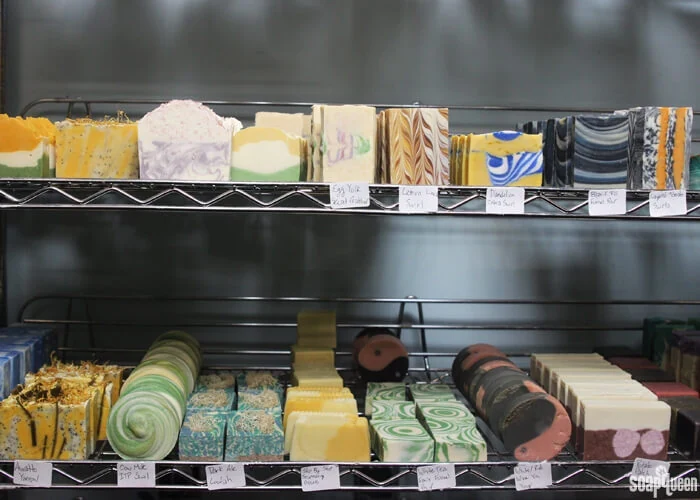
Choose a cool, dry curing location away from direct sunlight, with space around the bars. Soap Queen's actual rack photograph shows separated batches and labels; it illustrates an organized curing arrangement, not a measured experiment proving a specific retention benefit.
Keep freshly curing bars in conditions that allow the normal drying process. Sealing them early just to trap scent trades a smell concern for a different storage condition and makes comparison with normally cured bars less meaningful. Follow a suitable curing and packaging approach for the soap rather than using packaging to hide an unresolved formula question.
Record unusual heat, direct sun or a change of room. If the bars move from an open rack to packaging, note the date. You need not turn a hobby curing area into a laboratory, but knowing where each batch spent its time makes observations more useful.
Compare the Same Batch at the Same Ages
Set aside a labeled reference bar rather than relying on the memory of a strongly scented mixing session. Note the scent at consistent ages, using simple descriptions such as “orange noticeable, earthy note stronger” instead of an invented numerical retention percentage. Compare finished bars under similar conditions, and avoid treating a freshly cut bar and an older packaged bar as a controlled test.
A practical record includes the following:
| Record | Why it helps |
|---|---|
| Exact scent and amount weighed | Separates product choice from dosing mistakes |
| Amount basis and current supplier guidance | Makes the addition reproducible |
| Base oils and meaningful additives | Helps identify a changed background aroma or formula |
| Process and gel observations | Records a variable without assuming it caused fading |
| Cure location and packaging date | Makes storage differences visible |
| Dated scent descriptions | Distinguishes early intensity from the finished result |
Choose one meaningful change next time: a better-documented scent for cold process, a corrected calculation, or a different blend you actually want to smell. Keep other practical conditions as comparable as possible. If the scent is already at its appropriate limit and remains disappointing, selecting another product is more defensible than adding progressively more.
A strong smell is not a chemical-safety test, and a faint smell is not proof that an otherwise uncertain batch is ready to use. Scent troubleshooting answers a quality question. It should not substitute for checking the underlying formula, weighing and handling record.