
Why Alternative-Liquid Lye Solutions Change Color
Select an image to view it at full size.
An herbal tea, milk, beer or juice can change color when used in a lye solution. Jan Berry's troubleshooting guide describes unexpected colors with these alternative liquids and warns that the solution's color does not always match the final soap. A very dark brown solution may contribute a tan or brown result, but it does not provide an exact color forecast.
That explanation applies to a known alternative liquid used in a recorded method. It does not mean every discolored or contaminated-looking solution is normal. Keep suitable gloves, eye protection and the chemical-handling precautions for sodium hydroxide in place while you assess what actually went into the container.
Separate the Liquid’s Color from the Finished Bar
The starting liquid, freshly mixed lye solution, soap batter and cured bar are different stages. Comparing them can be useful, but expecting each to retain the same appearance is misleading. Berry specifically names herbal tea, milk, beer, apple cider, aloe and carrot juice among liquids that can produce unexpected solution colors.
An alternative liquid brings dissolved plant material, pigments and other ingredients into the jug; it is not just plain water with a familiar shade. Those ingredients enter a strongly alkaline mixture that also releases heat as sodium hydroxide dissolves. Lovely Greens' botanical guide explains that soap's high-pH environment can change fragile botanical color, and that juice or puree can also scorch and discolor from the heat of lye-solution preparation. These are relevant routes for color change, rather than one named reaction established for every tea, juice or beer.
The result therefore depends on the particular liquid, how it was prepared and the mixing conditions. A change can involve the botanical ingredients' response to the alkaline environment, heat effects, or more than one contribution. The observed shade alone does not tell you which mechanism dominated your batch. That is why the liquid's original drinking color is a poor promise of either its lye-solution color or the finished bar.
For tea, even the preparation matters. Berry cautions that a strong, long-steeped herbal tea—particularly examples such as mint or lavender—may contribute unwanted brown tones. A darker infusion is not a promise of a richer version of the plant's familiar color in soap.
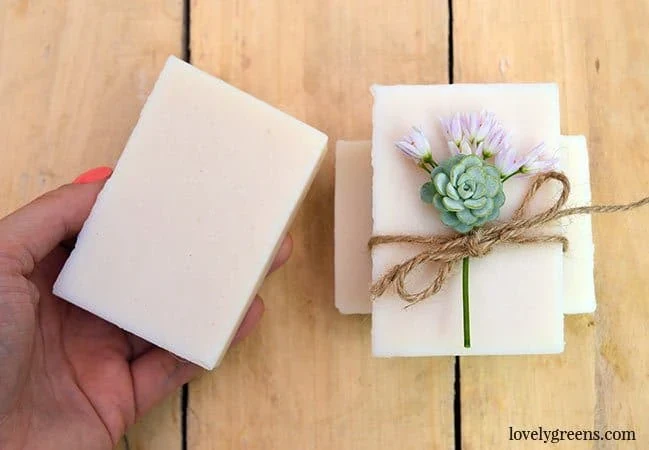
The pale goat-milk bars in the opening photograph come from Lovely Greens' published method. They show one finished result from a milk-soap process, not a color chart for all alternative liquids. There is no paired dark-solution photograph here proving that a particular brown solution became those bars.
Milk Has an Additional Heat Problem
Milk needs attention to the heat generated when lye solution is made. Lovely Greens' author describes early attempts that produced yellow-brown, unpleasant-smelling and crumbly bars, and attributes those failures to excessive heat in the milk-soap process. The later method uses frozen milk and controlled cooling to limit that problem.
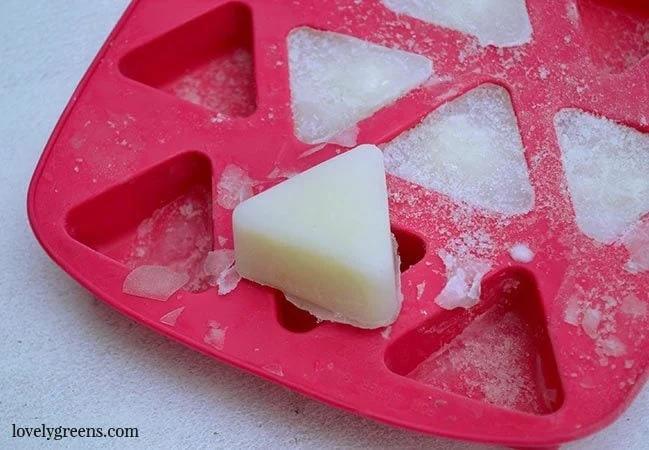
The frozen-milk photograph illustrates the ingredient's physical state in that source's method. It does not mean adding arbitrary ice to an existing solution will correct a formulation or reverse an overheated batch. The amount of water and milk still belongs to the actual calculated recipe.
If your recorded milk method calls for cooling, prepare that arrangement before the lye is handled. Follow a suitable complete method for the particular recipe rather than combining a temperature from one page with an ingredient ratio from another. A frozen ingredient is one part of a process, not a standalone color guarantee.
Also distinguish a color observation from a diagnosis. Yellow or brown alone does not establish the precise extent of scorching, identify an unknown substance or certify the batch as usable. Note the temperatures and sequence alongside the appearance, including whether an unusual odor or other change was present.
Check the Other Color Contributors
Record what the liquid actually was, its preparation and its amount. “Tea” leaves out the herb, steeping strength and whether the brew was concentrated. “Milk” leaves out whether it was liquid or reconstituted powder and when it entered the method. Those details help explain why two apparently similar batches differed.
Then keep other additions visible in the record. The oil blend, a fragrance that changes color, and an added colorant are separate variables; attributing the final shade solely to the lye solution may miss one of them. The alternative-liquid question should not erase everything added later in the pot.
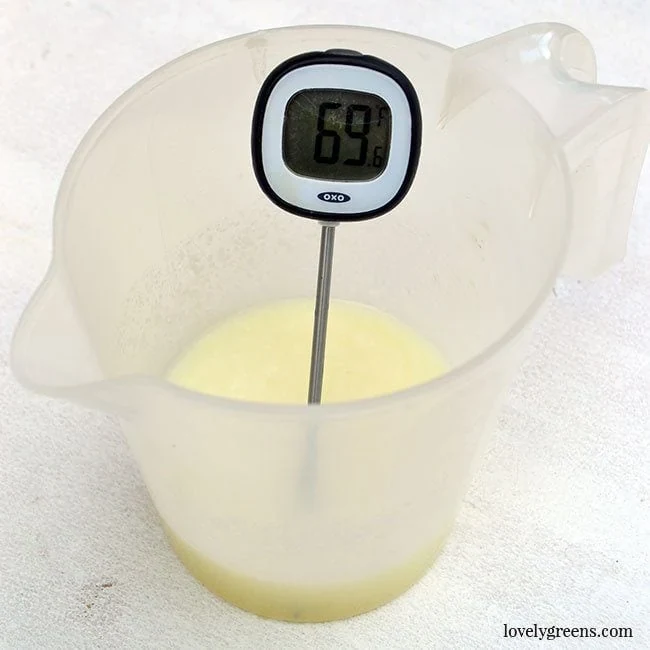
The process photograph in this section shows a pale yellow liquid with a thermometer in Lovely Greens' goat-milk method; the opening photograph shows pale finished bars from that published method. These are different stages in the source's presentation, not a controlled comparison of matched samples. They make the distinction visible without turning the liquid's shade into an exact prediction for your own bar.
If you compare photographs across batches, note differences in lighting too. A warm indoor image and a daylight image can make the same bar look different. A record made under reasonably consistent viewing conditions is more useful than selecting the most flattering photograph.
Plan a Later Batch Around the Color You Want
If a pale bar is the priority, start with a documented method known to produce that kind of result with the chosen ingredients. Do not assume a strongly colored drink will become a predictable pigment. With an herbal infusion, a stronger brew can also mean a larger unwanted color contribution rather than a clearer botanical shade.
Use a small, properly calculated comparison when changing a nonessential color variable. Keep the base formula and other additions consistent, label the samples and record the liquid preparation. Compare the batter and later bars as separate observations instead of naming the whole batch after the color seen in the lye jug.
If the solution contains unidentified particles, has an unexplained change despite known plain ingredients, or was made with uncertain quantities, investigate that discrepancy first. Waiting for it to turn a preferred color cannot establish what it contains. A sound batch record lets you learn from a cosmetic surprise without turning appearance into a substitute for formulation checks.