
Why Your Cold-Process Soap Thickens Before You Can Swirl It
Select an image to view it at full size.
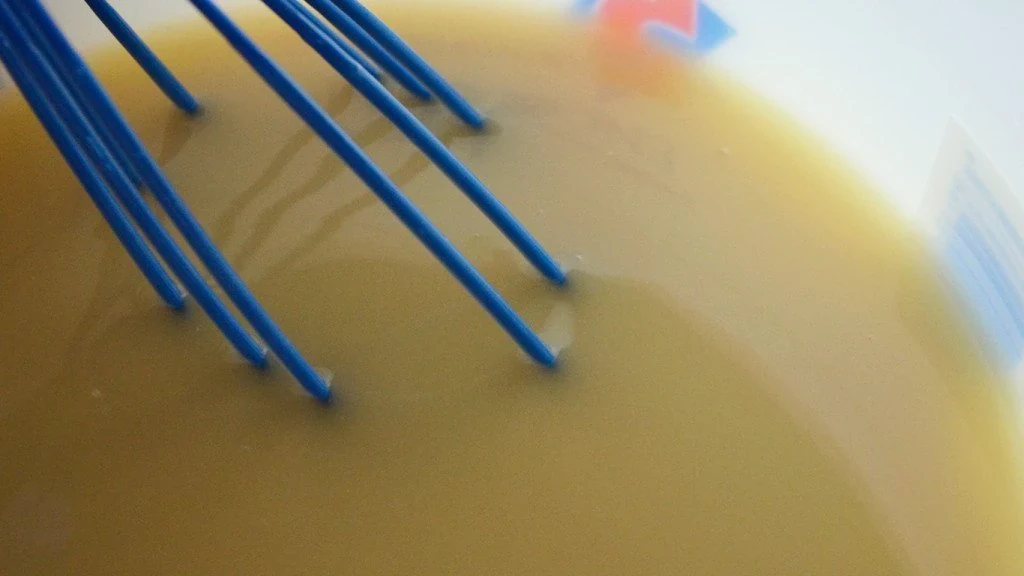
A batch can become too thick for swirls because of prolonged stick blending, a fast-moving oil blend, the chosen water amount, excessive heat or an accelerating fragrance. Cold hard fats can also begin setting and create a misleading thick appearance. Several of these conditions can occur together, so “it traced fast” is an observation rather than a complete diagnosis.
Start by recording when the change happened: before fragrance, just after it, after adding a colorant, or during repeated blending. That sequence helps you choose the next adjustment. It also helps separate a lost design opportunity from a batch that never became uniformly mixed.
Stop Confusing Emulsion with a Thick Trace
For a delicate swirl, the useful starting mixture is generally much thinner than pudding. Modern Soapmaking distinguishes emulsion—oil and lye solution evenly incorporated, with no visible oil streaks—from the later visible thickening called trace. At light trace, a small trail briefly remains on the surface before sinking back.
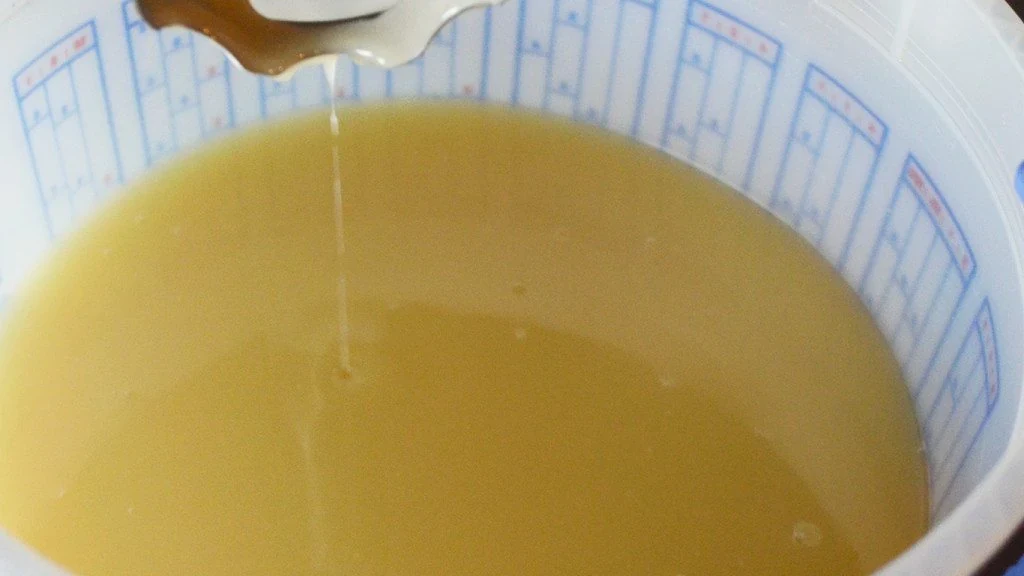
Its actual photographs show two useful reference states: the thin emulsion in this section and the light trace above. Neither resembles the stiff mixture needed to hold sculpted peaks. Do not blend to a heavy trace merely to feel certain that mixing has happened and then expect the batter to regain the thin flow needed for fine lines.
Thinness alone does not show that the mixture is ready. Check for visible oil ribbons or a layer separating when you pause, while maintaining the recipe's appropriate mixing method. If the phases remain visibly distinct, preserving “swirl time” by stopping too soon has traded away a necessary mixing step. No surface photograph can certify the chemical correctness of a different batch.
Reduce Unnecessary Blending Before Changing the Formula
Jan Berry and Modern Soapmaking both recommend short stick-blender bursts combined with hand stirring rather than continuous powered mixing. The aim is to reach the required uniform state while avoiding needless thickening. A fixed number of seconds is not a reliable substitute for observing your own batch.
Prepare the mold, color cups and suitable tools before combining the phases. If you stop to find a spatula or disperse an unprepared colorant, the batter continues changing while you are occupied elsewhere. Keep necessary splash protection and suitable chemical-resistant gloves on throughout the work.
Notice whether each cup receives another long burst after division. A batch may reach a useful thin state in the main pot and then lose its working time through repeated blending of individual colors. Where the particular additive can be incorporated evenly by hand, avoid extra powered mixing out of habit. Proper incorporation still matters; undispersed material is not a successful shortcut.
Separate Cooling Fats from Heat-Driven Acceleration
“Soap cooler” is incomplete advice. Higher temperatures can make the process move faster, but reducing the temperature far enough can let solid fats begin setting. That produces thickening sometimes called false trace, which must not be mistaken for a properly mixed, progressing batter.
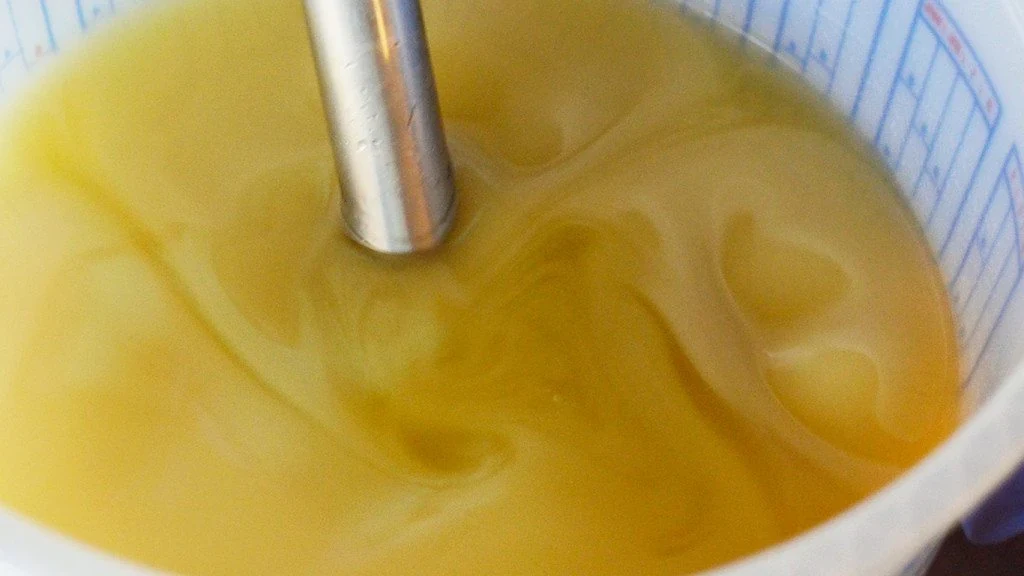
Check the actual fat blend and whether its solid components were fully melted and remained suitably fluid at combination. A recipe rich in hard fats and butters does not behave like an all-liquid-oil mixture. Room temperature also varies between workspaces and seasons; it is not one reproducible number.
The photograph here shows a different warning: visible oil ribbons in Modern Soapmaking's mixture before emulsification. It illustrates why an apparently substantial mixture still needs assessment of uniformity. It is not a photograph diagnosing cold-fat false trace, nor a rule that all false trace must show the same ribbons.
For the next batch, record oil and lye-solution temperatures separately and note the condition of the fats. Do not chase a universal cold target or insist the two phases must always match within a particular number of degrees. Choose conditions appropriate to the actual formula and method. If the current batch has unexplained lumps or distinct phases, resolve that mixing problem before attempting a decorative pour.
Read the Water Setting with Its Denominator
Water reduction is another possible contributor, but advice becomes confusing when percentages describe different things. “Water as a percentage of oil weight” and “lye concentration” use different denominators. A larger water-as-oils percentage means more water at the same oil weight. A larger lye concentration means less water relative to the alkali. They cannot be compared as if both were the same slider.
Jan Berry's guide suggests using more of the recipe's water allowance when intricate designs need time, rather than applying a steep reduction automatically. Modern Soapmaking also associates larger water reductions with faster trace. These are useful planning considerations, but they do not establish that adding water always produces a particular number of extra minutes.
Soaps by Glenda supplies a valuable contrary experience. The author reports keeping a regular, fast-moving base fluid at a 40% lye concentration, while using very little stick blending, letting light trace develop naturally, using room-temperature lye solution and sufficiently melted fats, and selecting a fragrance known to behave well in that recipe. This was a combination of conditions, not a test showing that a larger water reduction universally slows trace.
You cannot reconstruct that result from the concentration alone: the full base formula is not supplied in the adopted account. Likewise, copying the author's reported pulse count into a different batch would remove the context that made the observation useful. Preserve the distinction between an experienced maker's successful method and a generally validated adjustment.
If you choose to change the water for a later batch, record the basis, recalculate the intended recipe and make the change before mixing. Do not pour unmeasured water into a rapidly thickening pot to recover a decorative plan.
Check Fragrance, Colorants and Small Additions Separately
If thickening occurred immediately after fragrance, check the exact product's current cold-process information and your recorded quantity. Scent families and reviews can point toward a question, but a floral name does not prove acceleration, nor does a citrus name promise slow behavior. Modern Soapmaking explicitly treats these families as guidelines with exceptions.
Glenda also reports faster thickening with particular pigments, clays and other additions in the author's own recipe, and with some alternative liquids. That account supports noting when each material entered the batch. It does not mean every mica, every clay or every milk behaves identically. Keep the exact material and its preparation in the notes rather than writing only “added blue.”
Small salt additions deserve a separate distinction. In the 2019 Soapmaking Forum thread, SaltedFig says a very small amount of dissolved salt used to improve early hardness still permits swirling. The reply provides neither a precise dose nor a controlled timing comparison. It is evidence against assuming any salt addition automatically prevents swirls, not a recipe or a guarantee for your formula.
A small dissolved addition is also different from a salt-heavy bar with substantial salt in the formula. Do not borrow a salt-bar cutting schedule or a large salt quantity to answer a question about a small hardness adjustment. For a complex design, first learn how the actual base behaves, then assess the planned addition with its amount recorded.
Choose a Design the Remaining Batter Can Support
Once batter is thick, more mixing cannot undo the lost thin stage. If it remains smooth, uniform and movable, a straightforward transfer or a simpler design may still be practical. Modern Soapmaking's thick-batter photograph here shows peaks holding their shape—a useful property for a textured top, but the opposite of the flow needed for fine wispy swirls.
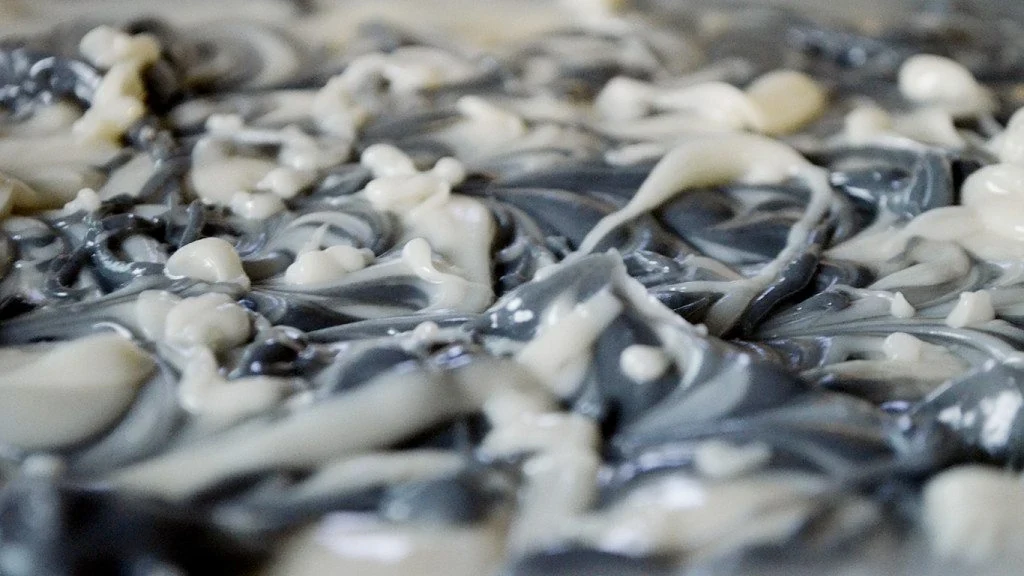
Do not treat that example as permission to scoop any unknown mass into a mold. Free oil, unmixed granules or a stiff mass that cannot be worked evenly are separate problems. Maintain control of the container and avoid rushing a heavy, caustic mixture to preserve an appearance.
For the next attempt, choose which matters most: keeping the established base, keeping the fragrance or achieving an intricate pattern. A different proven slow-moving base may be a more direct solution than repeatedly modifying several parts of the old one. If retaining the base matters, simplify the other variables and learn its actual working window.
Make the Next Comparison Interpretable
Save the formula, actual weights, water basis, temperatures, mixing sequence and addition times. A note such as “thin before fragrance; thick after two further powered bursts” points toward a useful comparison. “Too fast again” does not show whether you should investigate fragrance, mixing or cooling fats.
Change one relevant variable in the next small, correctly calculated batch while keeping the other recorded conditions consistent. Compare the visible progression and whether you had time to complete the intended pattern; do not judge only the finished bar's attractiveness. Over several repeatable batches, these observations build a usable working method for your recipe instead of a collection of conflicting universal rules.