
Can Rebatching Protect Delicate Scents, Colors and Additives?
Select an image to view it at full size.
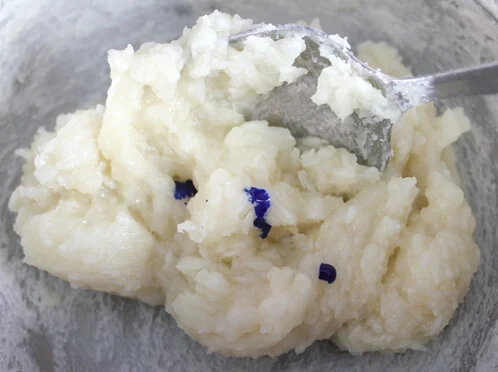
Rebatching can change when an additive enters the soap, allowing it to avoid the initial oil-and-lye mixing stage. That can be useful for a material that reacts badly during the first process. It does not remove all exposure to heat, make the soap neutral or guarantee that a scent or color survives later storage. Choose the method around the particular ingredient and the problem you are trying to avoid.
The relevant starting point is a known, suitable soap base. Adding something after the original reaction is a planned formulation choice; it is not a way to make an unknown batch reliable.
Identify Which Exposure Causes the Problem
“Delicate” is too broad to determine whether rebatching will help. A fragrance might thicken fresh batter too quickly for a design. A color might change in the chemical environment. An inclusion might melt during a hot stage. A scent might fade only after weeks of storage. Those are different failure modes.
David Fisher's rebatching guide lists later addition of certain fragrances, colors and inclusions as a reason to use the method. Its benefit is that those materials are introduced after most of the original saponification, rather than being present throughout that initial stage. Treat the list as a reason to investigate a particular material, not proof that every member of a broad ingredient category will behave the same way.
Write down the observed or documented problem first. “This exact fragrance accelerated our checked cold-process recipe” is more informative than “fragrance is difficult.” If the only evidence is that an ingredient smells pleasant or looks bright before it reaches soap, you have not yet identified which exposure needs avoiding.
Later Addition Changes the Process, Not the Soap’s Identity
Rebatching begins with soap that already exists, reduces it to smaller pieces and softens it for reworking. An additive introduced late in that process does not encounter the same newly combined oil-and-lye batter as one added during the first make. That is the meaningful change in timing.
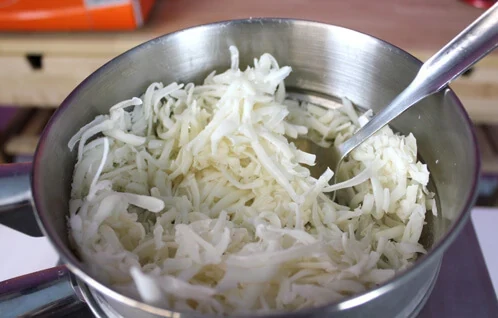
The softened material is still soap. Elly's introduction explains that traditional soap is a sodium or potassium fatty-acid salt and distinguishes it from other cleanser formulations. Do not assume that completing the initial reaction makes the base chemically equivalent to water or a neutral lotion.
An ingredient that is incompatible with the finished soap environment may still change after rebatching. Likewise, an additive that needs protection from high temperature may not benefit if it is put through another prolonged heating stage. The useful question is which part of its exposure the chosen method actually removes.
Heat Still Matters to the Particular Material
Plan the addition point using the ingredient guidance and the actual reworking method. Fisher describes incorporating later additions once the soap has softened sufficiently for even mixing, rather than using a completely remelted, thin liquid. The thick texture can make distribution harder than it looks in a bottle or bowl.
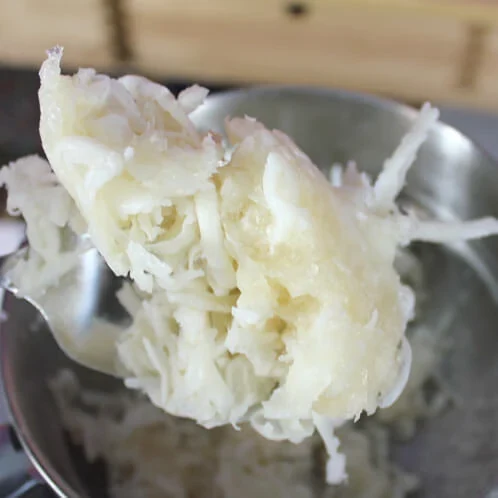
The chosen sequence matters: Soap Queen's kit example adds fragrance while the base is heated, whereas Fisher describes later additions once the base has softened. Read the actual order in the method you choose rather than assuming every rebatch keeps fragrance out of the heating stage.
Do not increase heat indefinitely to make a fragile ingredient easier to stir in. If the material cannot tolerate the conditions needed to incorporate it, that combination may not suit the project. A supplier's limit for a particular bead, colorant or fragrance should not be replaced by an assumption that “rebatch is gentle.”
Milk soap also illustrates that a second heating can introduce a new appearance issue. In a reply about recoloring an existing milk soap, Jan Berry describes heat darkening as a drawback of rebatching. That observation is relevant to a plan for a pale result, but it is not a prediction that every milk bar will reach the same color.
Keep Fragrance Performance Separate from the Allowed Amount
A weaker scent after the first make does not tell you how much fragrance remains or how much more can be added. Keep the original fragrance identity and quantity with the record. If they are unknown, do not treat the lack of a strong smell as an empty fragrance allowance.
Check applicable guidance for the exact ingredient, total addition and intended soap use. A retail essential-oil dilution or a candle recommendation is not a substitute for that information. Rebatching changes the processing sequence; it does not, by itself, establish an acceptable concentration.
For a planned comparison, a documented unscented base can make the new addition easier to trace. Even then, success at the initial mixing stage does not prove retention over the period that matters to you. Revisit the scent at recorded ages under comparable conditions, keeping the base and additive identities attached to each sample.
Use a Comparison That Answers the Actual Question
If you are evaluating a cosmetic addition in a suitable base, keep a reference portion and identify each trial. Record the base, its age, portion mass, additive identity and mass, addition point and relevant process conditions. Make the amounts measurable with the equipment you have.
Look at the feature you wanted to preserve. For a color, compare the same relevant surface under similar light at stated ages. For a visible inclusion, inspect its shape and distribution. For a fragrance, record changes in character as well as strength. These are observations for that setup, not a survey of every soap formula.
If the desired benefit does not appear, do not automatically add more ingredient or repeat the heating. Review whether the original problem was actually the initial lye exposure, a heat effect or a later storage change. The answer may be to choose another ingredient or another design rather than continue reworking.
Rebatching is useful when later addition removes a specific, relevant exposure while the remaining conditions still suit the material. It is a timing tool with tradeoffs, rather than a general promise to preserve everything delicate.