
Planning a Partial Liquid Replacement Without Shorting the Lye Water
Select an image to view it at full size.
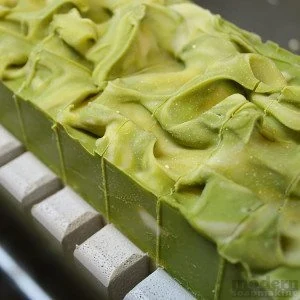
Keep two separate records when replacing part of a soap recipe's water: the water actually available when the sodium hydroxide is dissolved, and the complete liquid or additive allocation for the formula. A later addition cannot help dissolve alkali in an earlier, smaller water portion. Also, the mass of milk or fruit puree is not automatically the mass of water it contributes.
Start with a method developed for the particular addition and a checked base formula. This accounting helps you understand that method; it does not qualify a new milk, puree or acidic-liquid recipe by itself. If the substitution changes fats, reactive ingredients or handling conditions, those changes need resolving along with the water allocation.
Write Down What Each Number Means
The word “liquid” can conceal several different quantities. Plain distilled water, a water-rich ingredient, the complete prepared lye solution and the mass of everything poured into the soap pot are not interchangeable.
For the calculation, identify these separately:
| Entry | What it records |
|---|---|
| Checked NaOH requirement | Alkali for the actual formula, product and stated purity; not the weight of a prepared solution |
| Planned water | The intended water amount and its basis in the chosen method |
| Plain dissolving water | Water present with the alkali at its actual dissolution step |
| Alternative ingredient | Its whole measured mass, actual composition and intended addition point |
| Other reserved water | Any plain water set aside for colorants or later additions |
Make the record before weighing materials. Otherwise, the same reserved portion can accidentally be counted twice: once as though it were still in the lye jug and again when it is added to the oils.
Also distinguish a recipe's instruction to replace a certain mass of “liquid” from a claim about chemically measured water content. A practical recipe convention may count an ingredient's whole mass in its liquid allowance. That does not mean every gram of that ingredient is water.
Check the Initial Dissolving Portion on Its Own
For a hypothetical pure-NaOH-and-water portion, concentration is 100 times alkali mass divided by alkali plus water mass. With 70 g NaOH and 140 g plain water, that calculation gives 33⅓%. If 40 g of the water is instead reserved for a later step, the initial 70 g NaOH would have only 100 g water, corresponding to 41.2% nominal concentration.
Those are arithmetic examples, not instructions to mix either portion. Their purpose is to show that the starting jug can be substantially more concentrated than the headline full-formula setting. Check that starting allocation against the actual established method rather than assuming the planned later addition makes it acceptable now.
The water-discount and solubility explanation develops this distinction further. Equal masses of alkali and water are a familiar concentrated soapmaking convention, not a universal temperature-independent physical limit to use as an experimental target.
If the starting water is not suitable for the method, change the plan before dispensing alkali. Do not proceed on the theory that an undissolved portion will eventually find the milk or puree somewhere in the oils.
Do Not Count the Whole Additive as Water Without Knowing Its Composition
Modern Soapmaking's avocado example is useful because it makes the distinction visible. The actual recipe lists 5.3 ounces NaOH, 6.75 ounces distilled water and 4 ounces pureed avocado, describing its liquid allowance as a 33% lye solution including the avocado. The author's puree is weighed and added to the oils separately from the prepared lye solution.
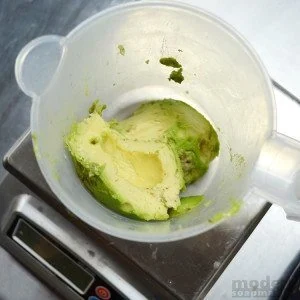
That is the recipe's stated convention and process, not a measurement of the avocado's water fraction. The weight on the scale includes the entire puree. Without knowing its composition, you cannot calculate how much of those 4 ounces is water, fat or other material merely from the total weight.
The source's separate water-discount explainer uses a rounded discussion of this example. Use one complete recipe version when checking quantities; do not combine numbers from the two pages as though they were an independently verified new formula. Neither page establishes that all fresh avocados contribute the same water or oil fractions.
For milk, Elly's Everyday similarly notes that natural sugars affect heating and that fat in whole animal milk contributes to the formula. Those are additional conditions, not reasons to assume every milk or water-rich ingredient can be swapped gram for gram into any method.
Use a Water-Allocation Worksheet
When the actual composition is known and the method calls for a specified water amount, the basic water-accounting relationship is:
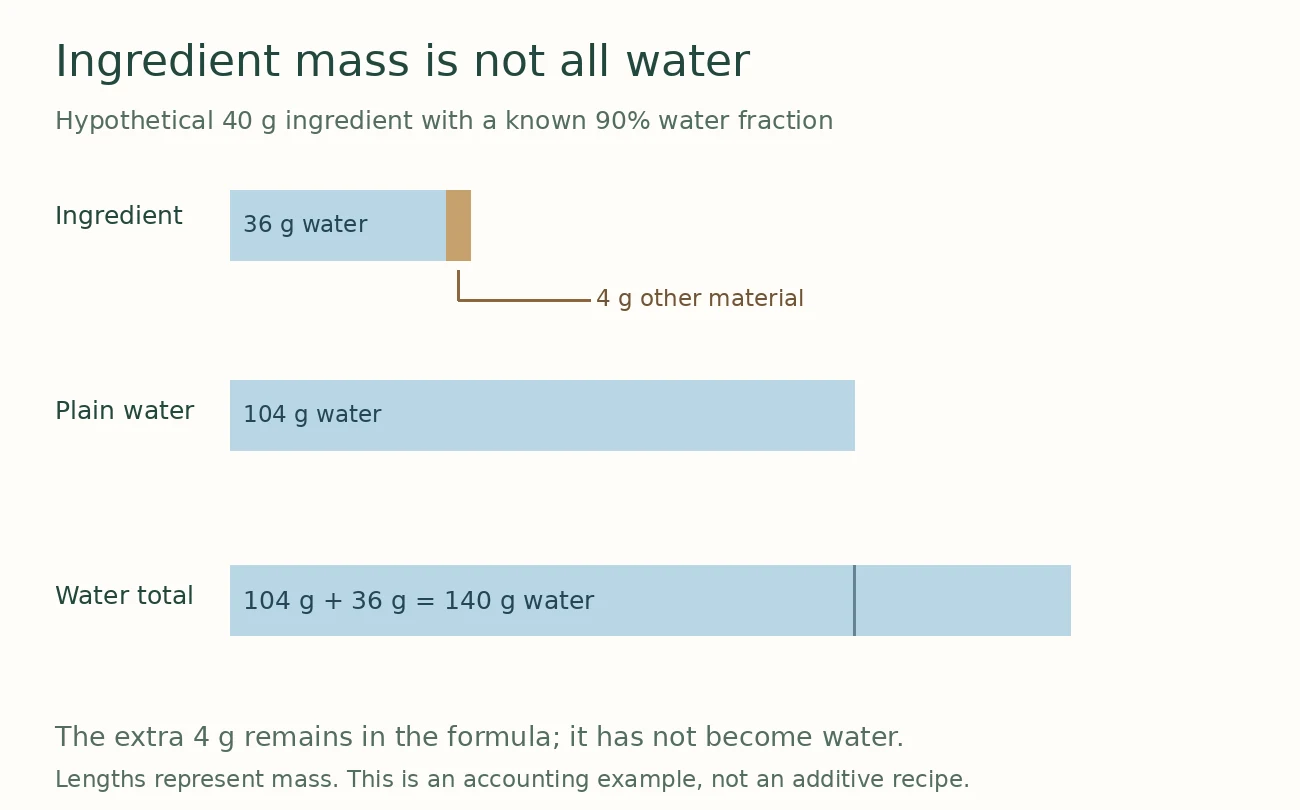
Plain water = intended water − water contributed by the alternative ingredient − other separately counted water.
For example, imagine a purely mathematical allocation with 140 g intended water and 40 g of an ingredient known, for this example, to contain 90% water. That ingredient contributes 36 g water, so the remaining plain-water allowance is 104 g if there are no other water additions. The ingredient's other 4 g still exists and needs its appropriate place in the formulation.
If all 104 g plain water were assigned to a hypothetical initial portion containing 70 g pure NaOH, that initial portion would be 40.2% by the simple NaOH-and-water calculation. This checks a number; it does not establish that the portion or the complete additive formula is suitable to prepare.
Keep the denominators explicit. After combining all the materials in that imaginary allocation, NaOH divided by NaOH plus water would be 33⅓%, but the mixture also contains the ingredient's 4 g of nonwater material. Its total-mass composition is therefore not described by calling the whole mixture a pure 33⅓% NaOH solution. A water-accounting reference is not a chemical assay.
If the water fraction is unknown, leave it unknown. Do not fill the worksheet with a convenient assumption just to reproduce the calculator's displayed concentration. Use a recipe-specific method that accounts for the actual ingredient, or choose an addition with the needed composition information.
Keep the Addition Point Attached to the Ingredient
Adding milk or puree to the oils is a different process from adding dry sodium hydroxide directly to that material. The former leaves a separately prepared lye-water portion to check; the latter makes the alternative material part of the dissolution step, with its own heating and handling requirements. Do not copy the water calculation from one route and the mixing instructions from the other.
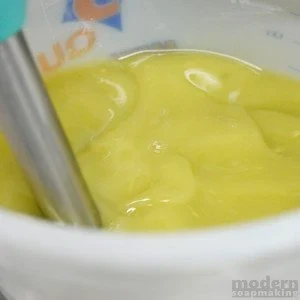
Modern Soapmaking's avocado process illustrates the first distinction: puree is blended into the oils before the lye solution is introduced. The source photograph shows that preparation stage, rather than proving that any puree or quantity can be handled the same way.
Elly's milk discussion describes freezing milk before direct alkali addition and warns about sugar-related heat and milk fat. That is a specific approach to evaluate with its complete method. It should not become a claim that freezing alone resolves all milk-soap formulation or protection requirements.
Similarly, a milk powder mixed with reserved water must not silently increase the water allowance. The reserved water remains part of the same record even when the powder changes its appearance. Keep its mass and addition point attached to the batch sheet.
Finish with a Complete Pre-Mixing Reconciliation
Before opening the alkali, trace each water-containing portion from the written recipe to its actual container and intended step. Confirm the starting dissolving water, the later ingredient mass, any dispersion water, and whether fats or reactive components require a separate formula adjustment. A total that adds up does not replace a suitable preparation method.
Keep the original recipe version and actual weighed quantities together. If a portion is spilled, omitted or added twice, record that event rather than continuing to treat the plan as the actual batch. Soap Draftbook can help retain the base calculation and notes, but its ordinary oil, NaOH and water inputs do not automatically characterize an unlisted milk, acid or puree.
The useful result is a water allocation you can explain at every step. Enough later liquid is not the same as enough dissolving water now, and enough total ingredient mass is not the same as a known amount of water.