
Why Is the Top of My Cold-Process Soap Weeping or Oozing?
Select an image to view it at full size.
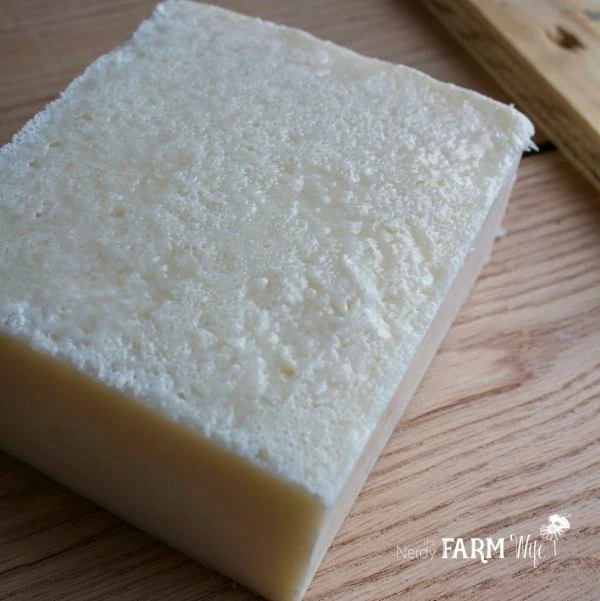
Moisture on a soap's surface can have more than one explanation. Humid conditions can draw moisture to a glycerin-containing bar, while fragrance-related separation can leave oily beads or pools. On a fresh batch, do not identify an unknown droplet by touching, tasting or simply smelling it. Start with the timing, the surface pattern and the actual batch record; visible wetness alone does not tell you the liquid's composition.
Keep the batch isolated from use while an unexplained liquid is being investigated. Maintain chemical splash protection and suitable gloves if handling the fresh mold or nearby contaminated items. A label such as “sweating” should not become a reason to overlook separation, a formulation error or an unrecorded loss of material.
Record When and Where the Wetness Appeared
Note the soap's age, whether it is still in the mold, and whether it was recently moved between different conditions. Describe the feature plainly: many small beads across the surface, a few pools in low spots, or a distinct oily layer. Keep photographs and dates with the batch identifier.
Also check the earlier record. Was the batter uniform when poured? Did the fragrance cause rice-like lumps, rapid thickening or visible oil slicks? Was any liquid spilled or poured away? Those events change the investigation even when the surface later develops ordinary-looking droplets.
Jan Berry describes humidity-related surface beads and fragrance-related pooling as separate possibilities. The distinction is useful because changing room conditions addresses one kind of problem, while it cannot restore an unknown amount of separated material to an already unbalanced batch.
Do not wipe away all the evidence before recording it. Removing a liquid may make the top look tidy but does not explain what separated or how much material has been lost. Keep that uncertainty visible rather than treating a dry-looking surface afterward as a completed correction.
Consider Humidity Without Assuming It Is the Answer
Glycerin is a normal product of soapmaking and attracts moisture. Berry reports that humid weather can produce surface beads or pools on soap; the source's photograph identifies an unusually pronounced example of this surface exudation. The photograph shows its appearance, not a chemical test that identifies every similar-looking droplet.
For a well-documented batch without a separate mixing or quantity concern, review the curing and storage environment. Keep air able to circulate around the bars and avoid a location that is persistently damp. Berry suggests improving air movement or reducing humidity when that is the relevant condition. Record any change so a later dry surface is associated with an actual environmental observation, rather than a guessed cause.
Do not use an oven or direct heat as a shortcut to make unknown liquid disappear. Evaporating part of a liquid does not establish its original identity, and appearance after drying cannot verify the formula. A protected, suitable curing arrangement is different from an improvised heat treatment.
If you have room-humidity readings, keep them with the dates. If you do not, write down what you actually know—such as a damp storage area or a change to a drier room—instead of inventing a percentage or treating one weather report as the conditions immediately around the bars.
Look Back for Fragrance-Related Separation
Some fragrances can separate from cold-process batter. Berry describes beads or pools of fragrant oil at the surface, while Soap Queen's actual fragrance tests show free oil surrounding an uneven mixture. In those examples, separation could occur alongside ricing and severe thickening.
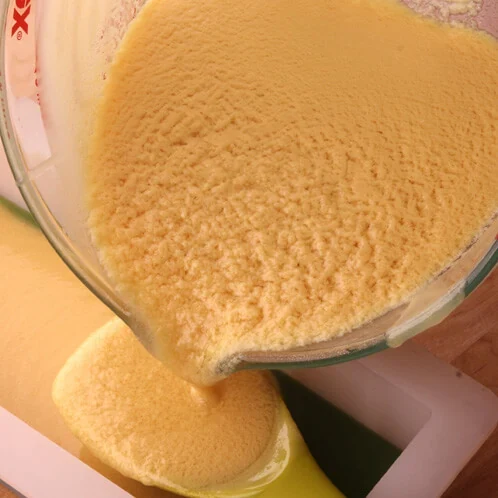
The photograph in this section is Soap Queen's separate example of free liquid around grainy fresh batter during transfer. It is not the same sample as Berry's surface-exudation photograph, and it is not a picture of a cured bar sweating. Its purpose is to show the earlier mixing feature that should remain in your investigation when a fresh molded batch later looks wet.
If that type of separation occurred, don't treat humidity control as a complete remedy. Recheck the exact fragrance, its recorded quantity and the actual sequence of mixing. Keep the original formula and any ingredient substitutions available. A supplier's description can help investigate the product's behavior, but it does not establish the composition of the liquid in your particular mold.
Do not pour a visible layer away, add fresh alkali, or add more oil to make the surface look normal. Those changes create additional quantity questions. A reprocessing decision needs a known composition and an appropriate method; it is separate from recognizing that a pool is present.
Keep Different Surface Problems Separate
| Observation | What needs checking |
|---|---|
| Numerous surface beads in a damp environment, with no earlier mixing concern recorded | Curing/storage conditions and whether the feature changes with suitable air circulation and lower humidity |
| Pools following fragrance-related lumps or free oil during mixing | Actual ingredient quantities, fragrance identity, mixture uniformity and material losses |
| Dark sticky pockets associated with an addition such as honey | That addition's dispersion and the relevant formulation, rather than automatically classifying every sticky spot as humidity |
| Liquid escaping from a cavity or seriously separated bar | Controlled handling and unknown lost quantities; a superficial drying step is not an assessment of the batch |
These are different investigations, not a home identification test for unknown liquids. Appearance can guide what information to collect, but it cannot replace the missing recipe or mixing record.
Use the Result to Choose a Specific Next Change
If the evidence points to storage conditions in an otherwise understood batch, record the environmental adjustment and whether the surface feature returns. If it points to fragrance behavior, plan a small controlled comparison with the actual product and a simple design, keeping the base formula and measured quantities clear.
Keep the outcome factual. For example, the note “Beads appeared after several humid days and were no longer visible after moving the identified bars to a drier curing location” describes a different observation from “free oil was present during mixing and later pooled in the mold.” The second remains a mixing/composition concern even if the top eventually looks dry.
The useful answer to a wet soap top is therefore a specific investigation tied to its history. A dry surface, an attractive photograph or a familiar nickname does not by itself resolve the batch's condition.