
Choosing Lye Concentration for Working Time, Unmolding and Cure
Select an image to view it at full size.
Choose a lye concentration around the formula and the work you need to complete, starting from a water setting that has already worked with that recipe and method. More water may leave more time for a detailed pour but also more moisture to lose; less water can produce a firmer young bar while reducing the time available to manipulate the batter. Neither direction guarantees a better result, and water does not replace the need for a stable emulsion, an appropriate fragrance or a full cure.
The useful choice is therefore not a universal percentage. It is a controlled adjustment with an explicit goal: more manageable mixing, a suitable unmolding or cutting window, or less initial moisture. If you are new to the method, keep the established recipe's setting first. A complicated design is a poor place to test an unfamiliar fragrance, a new oil blend and a large water reduction at the same time.
Keep the Water Setting and Alkali Amount Separate
Once the oils, alkali identity, purity and lye discount have been checked, changing the water setting is a different calculation from changing the NaOH requirement. Lowering water does not mean increasing alkali, and it is not the same operation as lowering superfat.
For a hypothetical calculation requiring 100 g NaOH, a 25% nominal solution corresponds to 300 g water; 33⅓% corresponds to 200 g; and 40% corresponds to 150 g. These examples describe the water-to-alkali relationship, not a soap formula. They show why two apparently nearby percentage settings can remove a meaningful amount of water.
Make sure you are comparing the same field. A recipe using “33% water as a percentage of oils” is not automatically a 33% lye-concentration recipe. Soap Draftbook's water-setting explanation shows the denominator difference and the corresponding calculations. Check this before deciding a recipe is unusually wet or dry.
Also record which liquid is actually used to dissolve the NaOH and which is added separately. A headline concentration based on total planned liquid does not establish the strength of a smaller initial dissolving portion. Alternative liquids and additives can introduce additional formulation questions beyond this simple water-only comparison.
Decide How Much Working Time the Design Needs
A single-color pour needs less division and manipulation than a design involving several colored cups, repeated layers and a detailed swirl. Write down the actual sequence before making the batch. If the batter must remain fluid through several operations, working time is a more useful goal than getting the loaf out of its mold as early as possible.
Modern Soapmaking describes using less concentrated solutions for more working time and more concentrated solutions for faster initial firming in its own practice. That is a tendency to investigate with the actual recipe, not a stopwatch prediction. Oil composition, temperature, fragrance and mixing all affect the window.
Recognize When the Batter Starts Holding Form
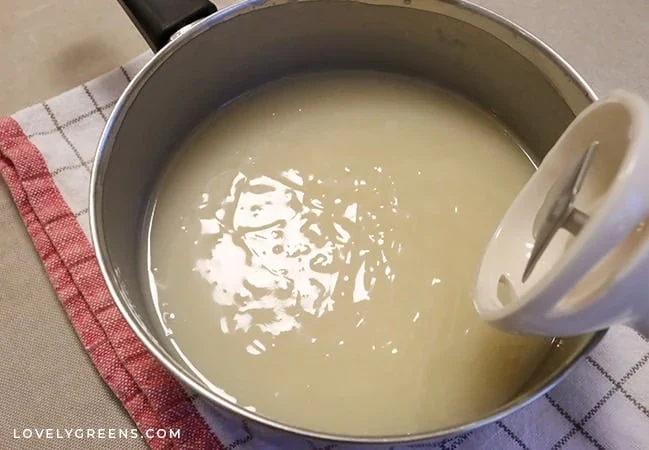
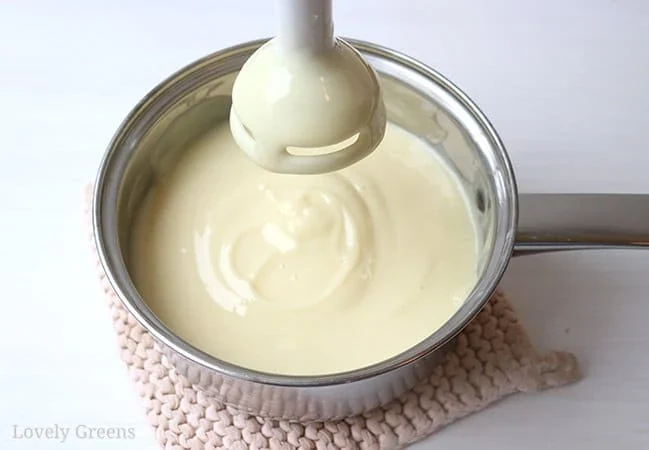
Lovely Greens’ process photographs show the visible difference between its light-trace example with a fairly level surface and its thicker example holding a raised ribbon around the blender. These are consistency references from the source, not a controlled comparison of water settings or a timing prediction.
For example, if a proven formula at its current setting allows a plain pour but not your planned multi-cup swirl, first check whether excessive stick blending or the fragrance is using up that time. Adding water may not solve fragrance-driven acceleration, and changing both the fragrance and concentration would make the next result harder to interpret.
Do not simply keep diluting until the batter stays thin. In Kevin Dunn's published experiments, some high-water olive-containing samples separated under the described processing conditions. A fluid appearance is not the same as a stable mixture. Any deliberate water adjustment still requires a method that establishes the emulsion before pouring.
Match Initial Firmness to the Mold and Cutting Method
Getting soap out of an individual cavity and cutting a loaf into bars are different handling tasks. A firmer young bar can help one and make the other less forgiving. Dunn specifically distinguishes the potential usefulness of lower-water soap in cavity molds from the greater water allowance that can suit soap needing to be cut.
Consider the observed problem before changing the formula. Is a cavity bar deforming during release, or is a loaf already crumbling when cut? Record mold material, dimensions, gel behavior and the actual age at which handling was attempted. If you change the water at the same time as the mold and temperatures, you will not know which change altered the result.
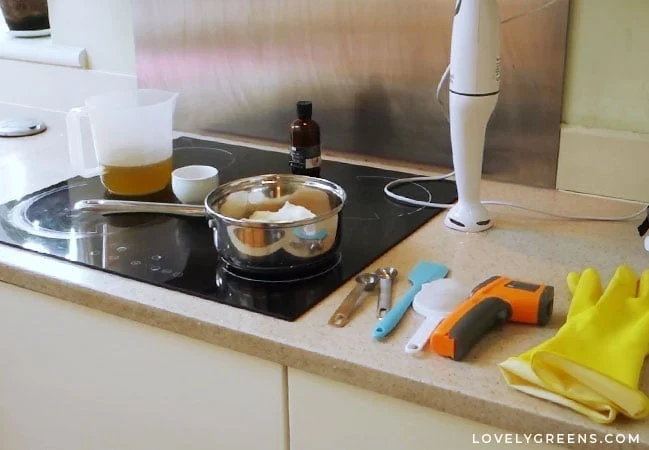
The photograph of Lovely Greens' prepared oil-mixing station illustrates the need to have the equipment and mold ready before the working window begins. It does not demonstrate the effect of one concentration against another; no such controlled comparison is being claimed for that image.
If your original recipe releases and cuts well, retain that setting while testing another variable. If it consistently stays too soft for the intended handling, review the actual formulation and water amount together rather than using a concentrated solution as an automatic cure for an unknown measuring or alkali problem.
Distinguish Initial Water from a Finished Cure
Less starting water can mean less moisture has to leave the bar, but it does not provide a universal shortened cure date. Dunn measured moisture and hardness separately in soaps made from different oils and a four-oil blend. Their times to reach a comparison point varied substantially.
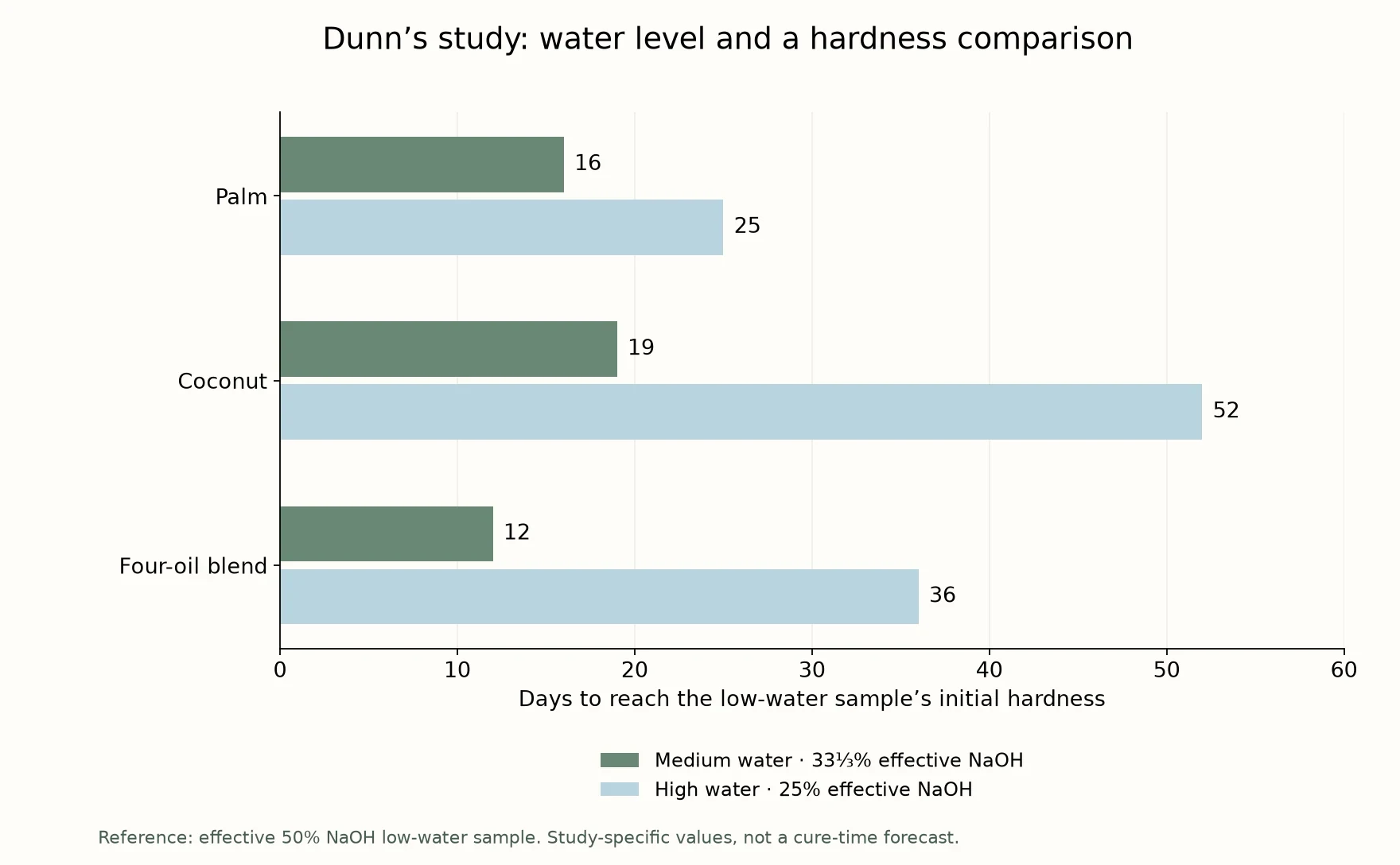
The chart in this section uses a specific result from that study: days for the medium- and high-water samples to reach the low-water sample's initial hardness. Medium water meant an effective 33⅓% concentration and high water meant 25%; the low-water reference used 50%. These were the study's categories, not recommended concentration settings for your project.
For palm soap, the comparison took 16 and 25 days; for coconut, 19 and 52; and for the four-oil blend, 12 and 36. The differences make the useful point: one recipe's response cannot be converted into a promise that another formula's cure is cut in half. The source used its specified small samples, processing equipment, heated hold and hardness-measuring method. It was not a trial of your home setup.
Furthermore, water loss is not the whole meaning of cure. Classic Bells describes water evaporation alongside slower development of the soap's solid and liquid structure. A bar that unmolds earlier or reaches a chosen mass does not automatically reproduce the lather, wear and other properties of an older comparison bar. Keep those observations separate.
Make One Deliberate Comparison
Start with a clearly identified, correctly calculated base formula and an actual baseline batch. Record its concentration, oil quantities, fragrance and other additions, batch size, temperatures, mold, mixing approach and curing location. Note when the batter became too thick for its intended work, when the soap could be released or cut, and what happened afterward.
Then select one reason to change the water. For instance, you might want to compare initial firmness because an otherwise successful cavity-mold formula deforms on release. Or you might need to investigate whether the established setting leaves enough time for a more involved design. Keep the remaining conditions as comparable as practicable, and record deviations rather than pretending they were controlled.
Calculate the new water amount from the chosen concentration while preserving the checked alkali requirement. Before mixing, confirm that the actual dissolving-water allocation and method are suitable; do not approach a solubility boundary just because the calculator accepts the arithmetic.
Compare outcomes at defined stages. “Released cleanly at this age” is a handling observation. “Lost this amount of mass by this date” is a drying observation. “Lasted longer in this comparison” is a use observation. None should be silently substituted for the others or treated as a chemical-safety test.
Use the Result to Choose the Next Setting
If the original concentration already supports the design and handling, keeping it is a valid decision. If a small deliberate change improves the target outcome without creating a new difficulty, record that result for the actual formula and conditions. It does not become a rule for every soap you make.
If the batch accelerates, separates or develops unexplained hard or soft areas, investigate those specific problems instead of making another immediate water change. Likewise, a batch that has simply not cured long enough should not automatically be reformulated to avoid waiting.
The best working concentration is one you can explain in relation to the chosen formula, process and observations. It leaves enough usable time, fits the mold and cutting plan, and supports the curing record you actually keep—not merely the fastest unmolding date in somebody else's recipe.