
Why Cold-Process Soap Can Develop an “Alien Brain” Surface
Select an image to view it at full size.
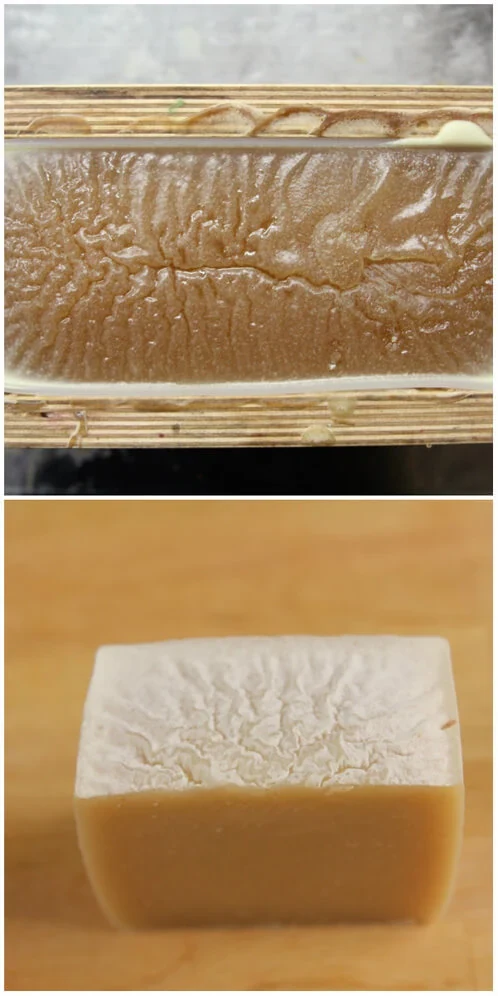
“Alien brain” is soapmakers' nickname for a deeply wrinkled or folded surface that authors commonly associate with an overheated batch. In Soap Queen's published example, a pumpkin-seed-oil soap developed that texture and was described as gelled throughout. Jan Berry shows another wrinkled example and likewise attributes it to overheating. These are useful documented appearances, rather than a temperature test for every loaf with an unusual top.
Check the batch's heat history and whether the change is limited to the surface. A wrinkled top, a pale powdery coating and liquid leaking from a cut bar are different observations. Do not conclude that an otherwise unexplained batch is suitable to use merely because somebody else's similar-looking soap had a cosmetic problem.
Recognize the Surface the Name Describes
The opening photograph is Soap Queen's actual example. Its surface has irregular folds rather than the smooth finish expected from an ordinary pour. The source identifies pumpkin seed oil in that batch and reports overheating and complete gel. That combination describes the example; it does not establish that pumpkin seed oil always produces wrinkles or that another oil cannot be involved.
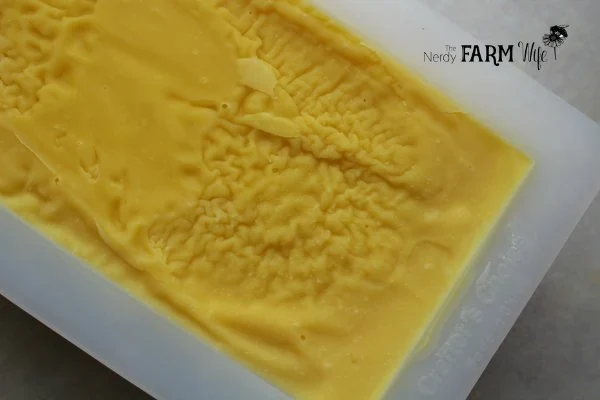
Jan Berry's separate example, shown in this section, gives another reference for the nickname. Compare the folds themselves, rather than trying to identify the cause from color alone. Color can also be influenced by the base oils, additions, fragrance and gel history. A pale or dark loaf can therefore need a separate heat assessment.
Record when the texture first appeared. A deliberately textured top made with a spatula is not a spontaneous wrinkling event. A loaf that rose, cracked and then settled has a different history from one that only developed a folded surface. A dated photograph taken while observing from a safe position is more useful than reconstructing that sequence days later.
Put Gel and Overheating in Context
Saponification generates heat. Jan Berry describes gel as the hotter stage that can make fresh soap look darker in the center as it develops. The important distinction is that gel and a particular surface defect are not interchangeable descriptions. Soap Queen's example had both full gel and wrinkling; that does not mean every gelled batch must develop an alien-brain top.
Similarly, a dark oval in a cut bar can record a partial-gel pattern without identifying why a top wrinkled. Inspecting one visual feature should not replace the record of mixing temperatures, mold arrangement and changes after the pour.
The two authors describe the association between excessive heat and the wrinkled appearance, but they do not provide a measured temperature threshold at which this surface must form. Avoid turning the nickname into a precise diagnosis such as “the loaf reached a particular temperature.” If no temperatures were recorded, retain that uncertainty in the batch notes.
Review Where Heat Could Have Built Up
Start with the actual recipe and mold arrangement. Write down the oil and lye-solution temperatures at mixing, batch size, mold material, covers or insulation, room conditions, and any added heat. Those details distinguish a warm, insulated loaf from small individual cavities in a cooler location.
Next check additions. Jan Berry specifically recommends paying attention to ingredients containing natural sugars, including milk, honey, pumpkin and beer, when investigating overheating. Soap Queen also reports rapid heat development alongside some accelerating or seizing fragrances. These are reasons to check the actual ingredients and supplier behavior notes, not evidence that a particular addition alone caused your batch's result.
Do not change every variable in the next batch. For example, if the same checked formula was recently poured into a larger, more heavily insulated mold, the changed mold arrangement deserves attention before replacing the entire oil blend. Record the difference so the next comparison has a clear purpose.
Keep Ash, Leaks and Formulation Questions Separate
Soap Queen's wrinkled example also had soda ash on its surface. A powdery coating can obscure the folds, but removing that coating would not explain or reverse the heat history that produced them. Treat appearance cleanup as a later cosmetic choice, after the batch's composition and condition are understood.
Both adopted authors describe their alien-brain examples as cosmetic. That conclusion belongs to the understood examples. It cannot certify an unknown batch with incorrect ingredient quantities, pockets of liquid, an unexplained deposit or serious separation. If one of those is present, do not use the surface nickname to dismiss it.
Fresh soap and residues still require suitable gloves, eye protection and controlled handling. Do not poke, taste or press a suspect area with bare hands to decide which category it belongs to. Keep the batch identified and protected while resolving any issue beyond the surface texture.
Plan a More Controlled Heat Profile Next Time
Choose a checked recipe and process appropriate to the mold and additions you will actually use. Jan Berry recommends cooler mixing conditions for a subsequent overheated batch, especially with sugar-containing ingredients, and monitoring the freshly poured soap. “Cooler” must still allow the formula's hard fats to remain appropriately melted; it does not mean chilling every recipe as far as possible.
Review insulation and any oven or other added heat as deliberate process choices. Repeating a cover arrangement without considering the changed batch, room or ingredients can make the comparison meaningless. For a small test, keep the formula and additions recorded while evaluating one planned change to the heat arrangement.
Monitor the next mold in its prepared protected location. New rising, cracking, overflow or leaking liquid is additional information, rather than just a more dramatic version of the same cosmetic wrinkle. Avoid trying to reshape a hot, unstable batch while it is still changing.
The useful outcome is a record that separates appearance from cause: what the folds looked like, when they formed, which heat-related conditions were present, and whether there were any independent mixing or formulation problems. That record helps you change the next process without claiming more certainty than the visible loaf can provide.