
Can Baking Soda Replace Lye in Soap Making?
Select an image to view it at full size.
No. Baking soda cannot replace sodium hydroxide in a cold-process soap recipe made from oils. Baking soda and sodium hydroxide are different chemicals, and exchanging one for the other does not preserve the recipe's saponification calculation. Keep the checked formula unchanged or choose a different soapmaking method; do not attempt a spoon-for-spoon substitution.
If your aim is to avoid handling raw lye, a suitable premade melt-and-pour soap base is a different starting material. That route begins with a formulated base, rather than asking baking soda to turn your oils into soap.
Check Which “Soda” the Label Means
The shared word soda can make two labels sound more alike than they are. Sodium hydroxide is also called caustic soda. Baking soda is sodium bicarbonate. A sodium hydroxide amount calculated for a recipe refers to the specified alkali, not any white powder with “soda” in its name.
PubChem lists sodium hydroxide's molecular formula as HNaO, commonly written NaOH, and sodium bicarbonate's as CHNaO3, commonly written NaHCO3. The different order of symbols in a database does not change the identity. The presence of sodium in both compounds does not make them interchangeable.
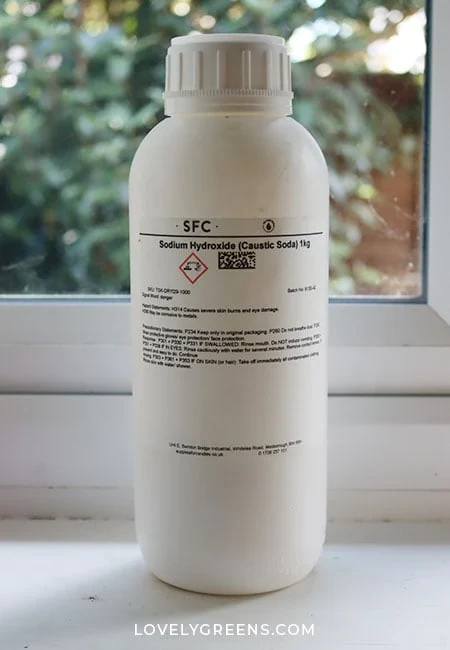
The opening photograph shows a labeled sodium hydroxide container in Lovely Greens' safety guide. Read the identity of your own actual material rather than identifying a powder by its appearance or by copying the shape of a photographed container. If the ingredient's identity or composition is uncertain, resolve that before using a recipe that depends on it.
Why the Difference Matters to the Recipe
Cold-process bar-soap recipes calculate sodium hydroxide against the oils' alkali demand. In the simplified triglyceride reaction described by chemist Kevin Dunn, one oil molecule reacts with three sodium hydroxide units to produce glycerol and three soap units. Sodium hydroxide is a reactant in that conversion. It is not included merely to make the mixture feel alkaline.
Elly's Everyday makes the practical distinction directly in its soapmaking FAQ: sodium bicarbonate is much less alkaline and will not perform the intended oil-to-soap conversion as a replacement for lye. Adding it to the oil mixture therefore does not create an equivalent version of the calculated recipe.
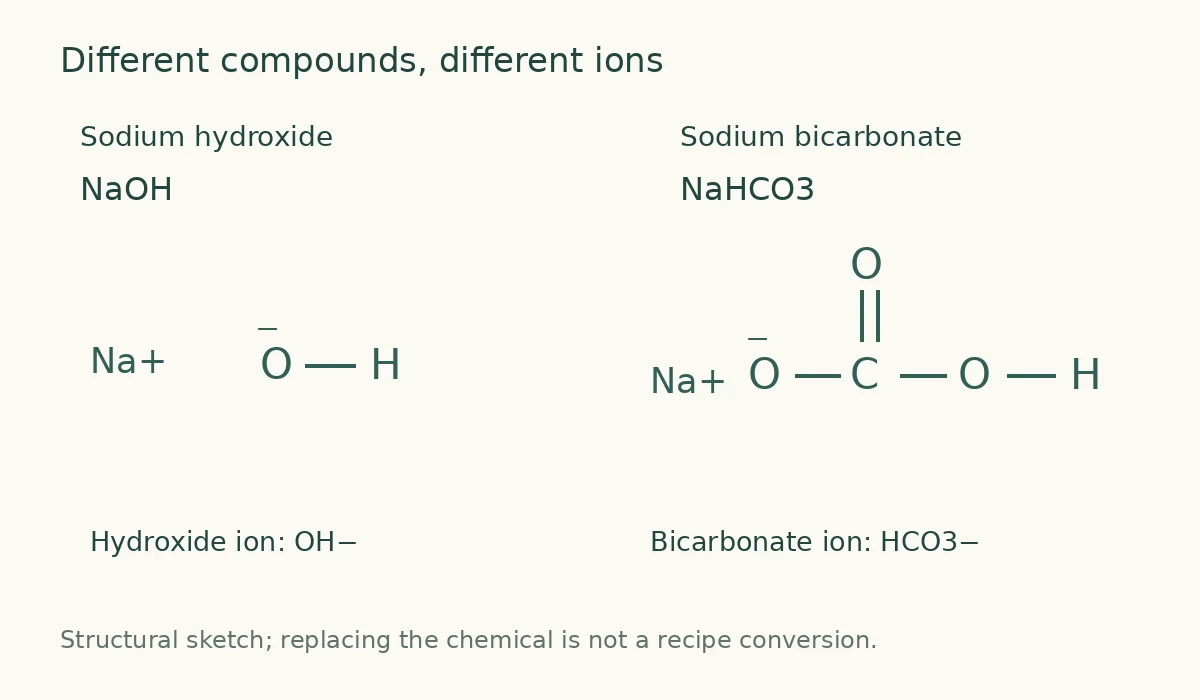
The structural sketch shows why the names describe different ions: hydroxide is OH−, while bicarbonate contains carbon and three oxygen atoms. You do not need to calculate the reaction from those structures to use a checked recipe. You do need to keep the identity of the ingredient consistent with the calculation.
Changing the amount of baking soda does not solve that identity mismatch. Nor should you add extra sodium hydroxide afterward based on the appearance of a failed mixture. Once the actual amounts or composition are uncertain, the original recipe no longer tells you what is in the vessel.
A Calculator Does Not Approve the Substitution
Suppose a checked formula supplies an NaOH quantity alongside water and particular oil weights. That NaOH line cannot be relabeled “baking soda” while leaving the other entries unchanged. The calculation was made for sodium hydroxide, and its relationship to the oils is part of the formula.
Soap Draftbook's calculator concerns its listed oils and NaOH/water settings. It does not calculate a baking-soda alternative to saponification. A number displayed in an alkali field cannot make a different chemical suitable for that role.
Before proceeding with a conventional recipe, match the oil identities, actual quantities, alkali identity and the purity basis expected by the calculation. If you cannot obtain the specified ingredient, pause that project. Choosing another method is a more useful response than trying to force an unsupported substitution into the original formula.
What If You Want to Avoid Handling Raw Lye?
Distinguish making soap from oils from working with soap that has already been made. Elly's introduction explains that melt-and-pour uses premade bases formulated to melt and accept additions before molding. It is a different process from cold or hot process, with its own base instructions and limitations.
Choose a base appropriate for that purpose and follow its supplier's instructions. Do not assume that a homemade bar can be melted in exactly the same way, or that adding unlimited oils and liquids to a base preserves its intended properties. The base is the starting material; baking soda is not a substitute for the chemistry that produced it.
This also explains why “I did not handle lye while making these bars” and “these oils became soap without an alkali reaction” are different claims. A maker can work with a premade base without personally weighing sodium hydroxide. That does not mean baking soda performed the original saponification.
For an oil-based cold-process recipe, the answer remains straightforward: use the correctly identified alkali required by the checked formula, with the necessary handling preparation, or choose a different project. Do not exchange baking soda for lye and treat the result as the same soap recipe.